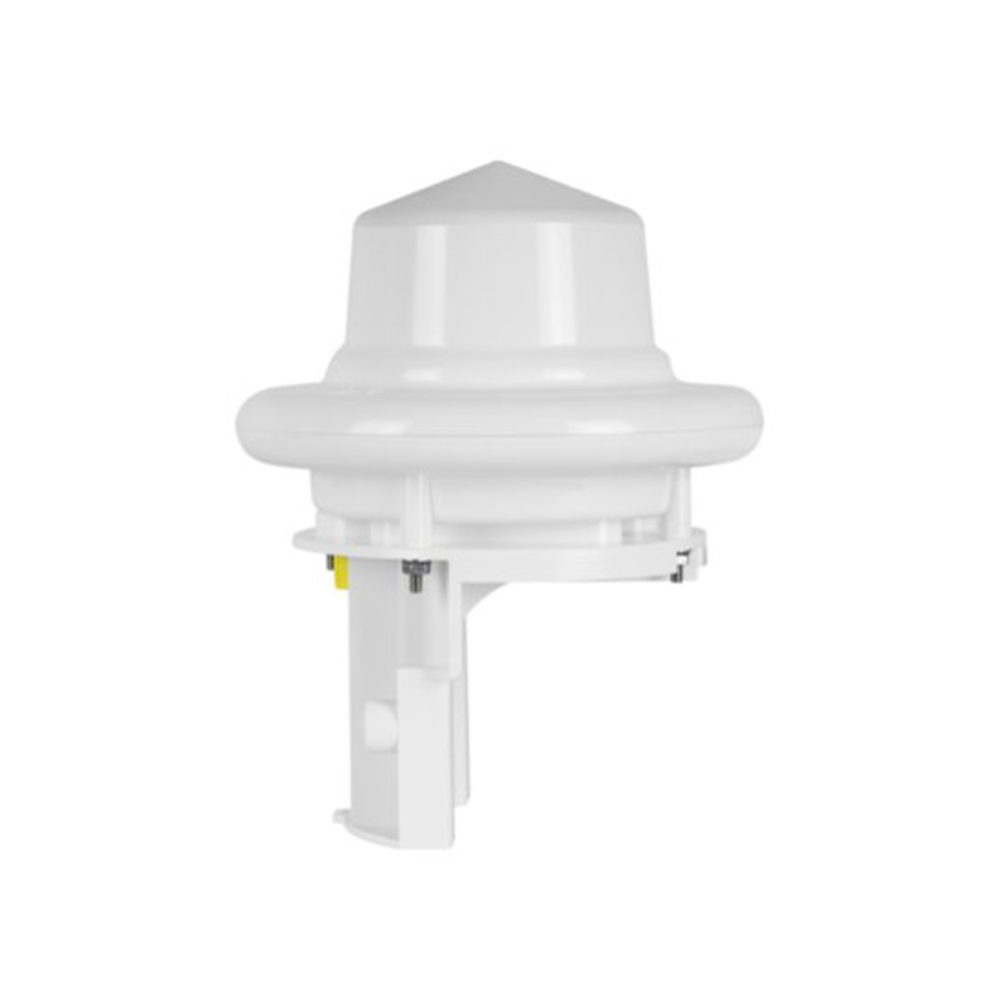
Doppler Radar – 3S-Doppler
The Doppler Radar serves as a tool to accurately measures the speed of various condensed water forms such as rain, freezing rain, hail, snow, and sleet. Its low-energy sensor efficiently detects precipitation right from the initial drop. With extensive applications across hydrology, water management, agricultural sciences, environmental studies, building automation, meteorology, airport operations, and traffic control, the radar's capabilities are virtually boundless.
Technical Specifications of Doppler Radar
| Item Code | 3S-Doppler |
| Measurement technology | 24GHz Doppler radar |
| Measured Parameters | Precipitation quantity and Precipitation type (Rain, snow, sleet, freezing rain, hail) |
| Precipitation | 0.01-200 mm/h |
| Resolution | 0.01 / 0 .1 / 0.2 / 0.5 / 1.0 mm (pulse interface) |
| Accuracy | ±0.16mm or ±10% of the measured value for liquid precipitation |
| Power Supply | 10 to 28 V DC |
| Power Consumption | 1 VA / 0.4 VA (low power mode) 9 VA (heating power) |
| Interface | RS-485 semi-duplex two-wire, SDI-12, pulse interface / UMB protocol, Modbus |
| Operating Frequency | 24 GHz |
| Operating Temperature Range | -40°C to +60°C |
| Types of precipitation | Rain, snow, sleet, freezing rain, hail, drizzle; No precipitation (SYNOP 4677) |
| Wind Speed | 70m/s |
| Dimensions | Ø150mm x 190mm |
| Weight | 0.6 kg |
| IP Rating | IP66 |
The doppler radar features radar technology and adjustable heating. The low-energy sensor effectively detects precipitation from the first drop. Doppler Radar is a device that precisely measures various forms of condensed water, including rain, freezing rain, hail, snow, and sleet.
This advanced precipitation meter measures precipitation rates in different regions of the world. All meteorological data is seamlessly transmitted to data loggers and instrument units via the Modbus RTU protocol over a 2-wire RS485 bus.
Applications Area of Doppler Radar
There are some applications areas where doppler radar is used and they are as follows;
- Hydrology
- Water management
- Agricultural sciences
- Environmental research
- Building automation
- Meteorology
- Airport operations
- Traffic control
What are the advantages of doppler radar?
Doppler Radar has many advantages. The main ones are as follows;
- Maintenance-free operation through ingenious technology without any moving parts
- Energy-saving sensor thanks to the improved ECO mode (0.4 VA)
- Extended heating capacity allows operation in summer as well as in winter
- Improved heating power with lower power consumption
- Very long service life and high operational reliability due to high quality components
- Extremely fast measurement from the first raindrop
- Detection of precipitation and rainfall (rain, freezing rain, hail, snow and sleet)
- Detection of drop size (0.3 to 5 mm)
- Differentiation between 11 classifications of drop sizes
- No maintenance or calibration, no additional hidden costs
- Designed for all common data loggers and data acquisition systems
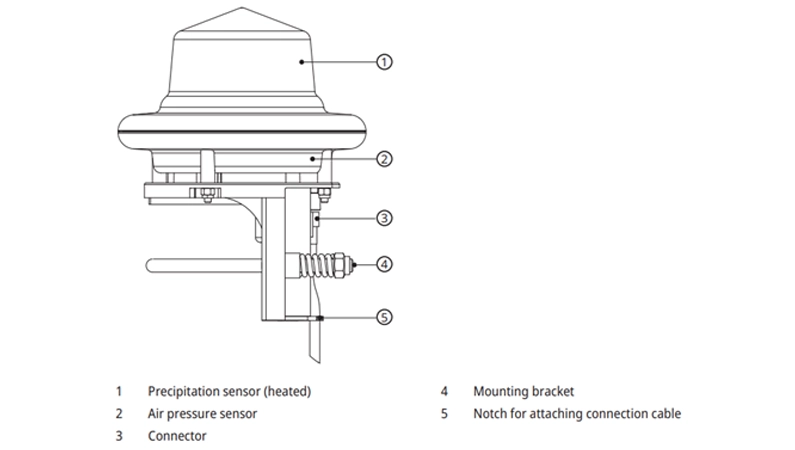
Product Overview
Doppler Radar consists of many parts. The main ones are as follows;
FREQUENTLY ASKED QUESTIONS (FAQ)
What measurement technology is used in the 3S-Doppler sensor and what is its operating frequency?
The sensor uses 24 GHz Doppler radar technology, with an operating frequency of 24 GHz.
Which meteorological parameters does this Doppler radar measure?
It measures precipitation quantity (rain rate) and precipitation type. Types include rain, snow, sleet, freezing rain, hail, etc.
What is the precipitation measurement range?
It measures precipitation intensity from 0.01 to 200 mm/h.
What is the power supply range of the sensor?
The sensor is powered by 10–28 V DC.
What is the operating temperature range of the sensor?
It operates from −40 °C to +60 °C.
What is the sensor’s IP class?
The sensor is rated IP66.
Which precipitation types can the sensor distinguish?
It can distinguish rain, snow, sleet, freezing rain, hail, drizzle, and “no precipitation.”
What is the difference between Doppler Radar and tipping bucket Rain Gauge?
There are many differences between Doppler radar and tipping bucket rain gauge. These differences generally include what they measure, how they operate, and their advantages and limitations. In a summary, doppler radar remotely measures precipitation and wind over large areas using microwaves, while a tipping-bucket rain gauge directly measures point rainfall via a mechanical tipping mechanism.
What is the warranty period of Doppler Radar?
The warranty period of Doppler Radar is one year.
What is the price of Doppler Radar?
The price of doppler radar is 1,440 EUR.
Where is doppler radar used?
Doppler radar is used in many applications such as hydrology, water management, agricultural sciences, environmental research, building automation, meteorology airport operations, traffic control.