
Plastic Wind Speed Sensor with Pulse Output – 3S-WS-PLS-P
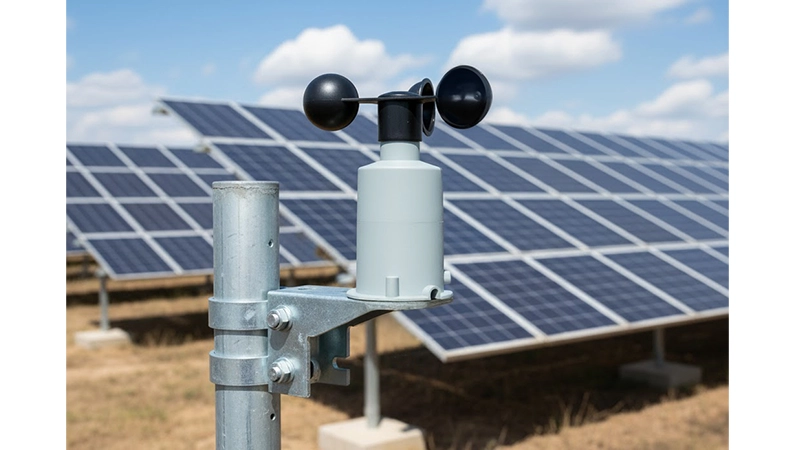
The Plastic Wind Speed Sensor with Pulse Output is a robust device specifically engineered for accurately measuring horizontal wind speed in diverse environmental and industrial applications. Featuring pulse output, this sensor provides precise data transmission to controllers, making it a perfect fit for seamless integration with existing SCADA or PLC systems.
According to IEC 61724-1:2021, wind speed plays a crucial role not only in estimating module temperatures but also in supporting warranty claims related to wind-related damage. In certain situations, monitoring wind gusts (typically lasting up to 3 seconds) is essential to assess structural resilience against design thresholds. To capture such events, the monitoring system needs a sampling period of 5 seconds or less, while logging both average and peak wind values.
TECHNICAL SPECIFICATIONS OF PLASTIC WIND SPEED SENSOR
| Item Code | 3S-WS-PLS-P |
| Sensor Type | Cup Star Anemometer (Reed Switch) |
| Measuring Range | 0,9 to 60 m/s |
| Accuracy | Below 5m/s 0.5 m/s and 10% of reading above 5m/s |
| Resolution | 0,1 m/s |
| Threshold | 0,9 m/s |
| Survival Speed | 60 m/s |
| Data Output | Reed Relay |
| Cable’s Length & Features | 1.5 m LIYY Cable, UV and Weather Resistant |
| Operating Temperature Range | -40°C to +85°C (Ice Free) – Model with heating is available (3S-WS-I-H) |
| Dimensions | Ø 136 x 151 mm |
| Weight | 0,2 kg |
| Housing Material | ASA |
| Cup Material | ABS |
| Mounting Method | Pipe or Ground Mounting |
| Standard | Compliant to IEC 61724-1:2021 |
What Are the Key Features of the Plastic Wind Speed Sensor?
- Durable and Lightweight: Designed with plastic materials to resist harsh weather conditions, ensuring long-term performance and minimal maintenance.
- Precise Pulse Output: Converts wind speed data into a digital pulse signal, offering high accuracy and seamless integration with data acquisition systems.
- Easy Installation: Simple setup with a plug-and-play design, reducing installation time and errors.
- IP Rating: With an IP54 rating, the sensor is protected against dust and water, making it ideal for outdoor installations in challenging environments.
- Broad Range: Suitable for a wide range of wind speeds, from calm breezes to high winds, ensuring versatility across different monitoring needs.
How Does the Wind Speed Sensor Work?
The sensor measures the wind speed through a rotating anemometer. The mechanical rotation is converted into pulses that represent the wind speed. These pulses are then transmitted to the connected monitoring system, where the data can be analyzed in real-time or logged for further processing.
Why Choose Our Wind Speed Sensor?
- High Accuracy: Provides precise wind speed data with minimal deviation, ensuring the reliability of the information.
- Weather Resistance: The plastic construction ensures resistance to corrosion, UV degradation, and other environmental factors, making it ideal for outdoor use.
- Long Lifespan: Built to withstand high winds, dust, and other outdoor elements, ensuring a long operational life with minimal maintenance needs.
- Flexible Output Options: Compatible with various monitoring systems through pulse output, allowing easy integration into SCADA or PLC systems.
What Are the Applications of the Plastic Wind Speed Sensor?
- Wind Energy Monitoring: Used in wind farms for monitoring wind speeds and optimizing turbine performance.
- Weather Stations: Ideal for use in meteorological stations to track wind conditions.
- Industrial Facilities: Used in facilities requiring real-time wind speed data to optimize operational efficiency and safety measures.
- Agricultural Monitoring: Helps in assessing weather conditions for agricultural operations, including irrigation systems.
How Should I Install and Maintain the Plastic Wind Speed Sensor?
Installation: The sensor should be installed at a height where wind speed can be accurately measured, away from obstructions like buildings or trees.
Maintenance: The sensor is low-maintenance due to its durable plastic housing. Regular cleaning is recommended to ensure optimal performance, especially if the sensor is used in dusty or polluted environments.
FREQUENTLY ASKED QUESTIONS (FAQ)
How can I connect the sensor to my system?
The sensor uses pulse output, which is compatible with any SCADA system and datalogger that accepts digital pulse inputs.
What is the maximum wind speed the sensor can measure?
The sensor is designed to measure wind speeds up to 60 m/s.
How is the sensor powered?
The sensor operates on a 12 to 30 V DC power supply, ensuring flexibility in various installations.
What is the warranty period of plastic wind speed sensor?
The sensor comes with a 2-year warranty covering defects in materials or workmanship.
What is the price of plastic wind speed sensor with pulse output?
3S-WS-PLS-P sensor is available between 50 EUR and 90 EUR.
What is the cable length of the sensor?
It comes with a 1.5 meter cable length. Custom lengths are available.
How to install plastic wind speed sensor?
The sensor is sent with 3 pieces of hex bolts. It can be mounted on a pipe or on the ground. The cables will be connected to receiver units and power supply. Follow the user manual for further details on installation and commissioning.