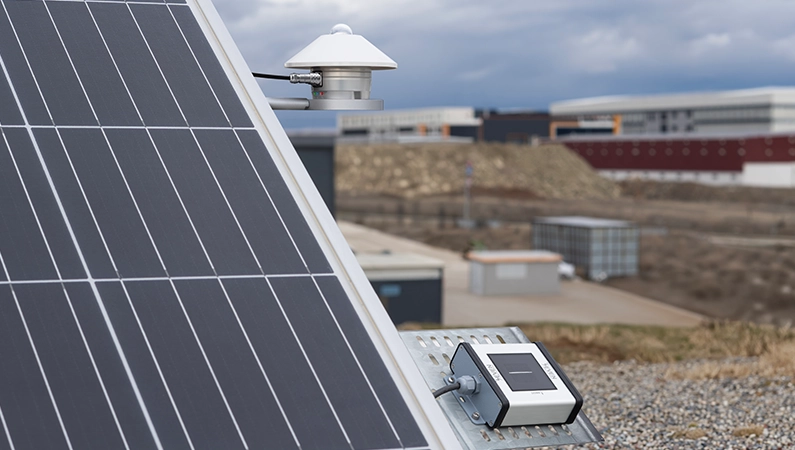
Accurate solar radiation measurement is the backbone of solar energy analysis, weather monitoring, and PV performance evaluation. However, not all irradiance sensors measure the same thing. Sensors such as pyrheliometers, pyranometers, irradiance sensors, and albedometers each serve a specific purpose and are designed for different measurement needs.
Why Are Different Solar Radiation Sensors Needed?
Solar radiation reaches the Earth in multiple forms:
- Direct beam radiation
- Diffuse sky radiation
- Reflected radiation from the ground (albedo)
As there isn’t a single sensor that can accurately measure all of these components at once, different sensors exist in the market to fulfill all the measurement requirements.
What Is a Pyranometer?
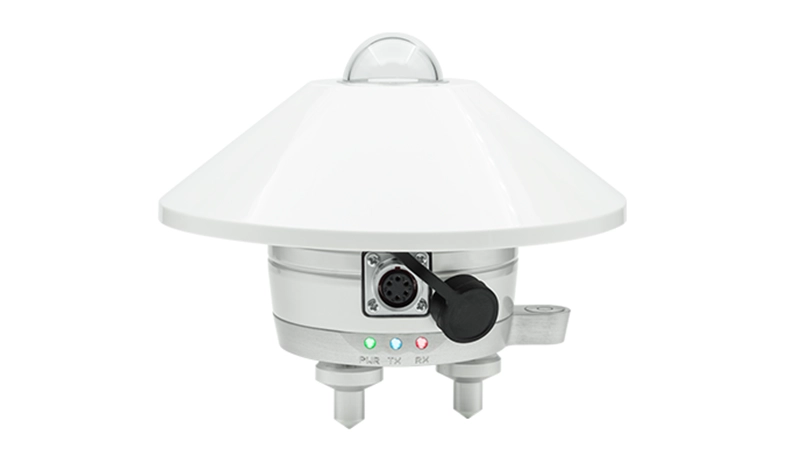
A pyranometer measures Global Horizontal Irradiance (GHI), which is the total solar radiation received on a horizontal surface.
What the Pyranometer Measures
The Pyranometer measures the Global Horizontal Irradiance (GHI) which includes both:
- Direct radiation
- Diffuse sky radiation
How the Pyranometer Works
These points may be used to explain the operational principle of the Pyranometer:
- Thermopile sensor used
- Usually enclosed by a glass dome
- Measures radiation coming from full hemispherical area (180°)
Typical Applications of the Pyranometer
Pyranometer has been utilized in several applications, including:
- Weather stations
- Solar energy measurement
- Performance Ratio (PR) measurement
- Climate and environmental studies
Pyranometer is highly used since it gives standardized and meteorological grade irradiance measurement.
What Is an Irradiance Sensor?
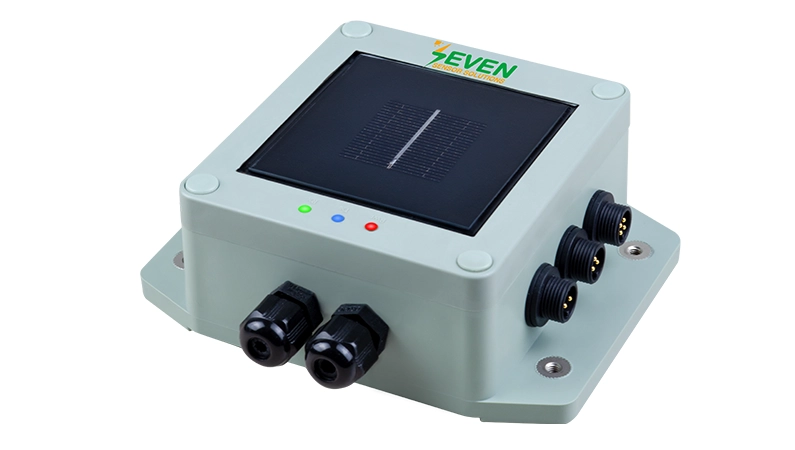
The irradiance sensor is basically a silicon irradiance sensor or reference cell. The main purpose of the irradiance sensor is to measure the POA Irradiance.
Important Features of Irradiance Sensors
- Uses reference cells
- Very fast response time
- Spectral response close to PV panels
Common Applications of Irradiance Sensors
The common applications for the Irradiance Sensors are as follows:
- Performance monitoring of PV system
- SCADA systems in solar power plants
- IV curve tracer
- Commissioning and maintenance testing
Unlike the pyranometers, irradiance sensors are favored over pyranometers when a PV-representative reading is needed instead of a weather-related one.
What Is an Albedometer?
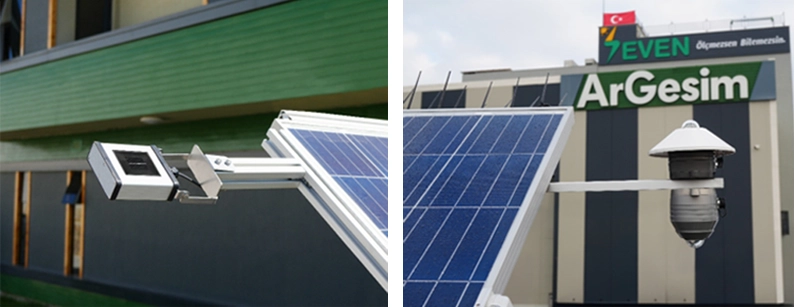
An albedometer measures surface reflectivity (albedo) by comparing incoming and reflected solar radiation.
How the Albedometer Works
Involves the use of two pyranometers or irradiance sensors
- One pointing upwards (incoming irradiance)
- Other pointing downwards (reflected irradiance)
The albedo value is determined by:
Reflected irradiance / incoming irradiance
Common Uses of an Albedometer
Bifacial photovoltaic installations
Studies involving snow, sand, or highly reflective surfaces
Climate and environmental research
Optimization of PV systems
Albedometers are especially useful for bifacial PV systems as the rear side irradiance influences the system’s output.
What Is a Pyrheliometer?
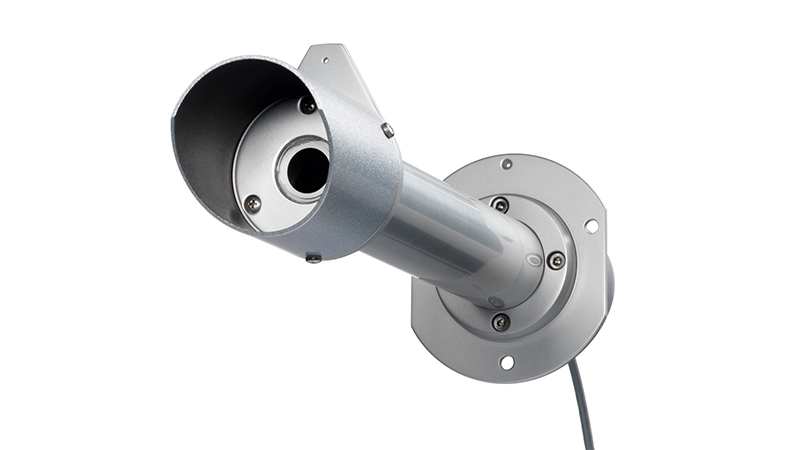
The pyrheliometer is a precise measuring device used for measuring DNI (Direct Normal Irradiance).
How the Pyrheliometer Works
We can summarize the working principle of the pyrheliometer in the following points:
- Uses a narrow field-of-view collimator
- Must be mounted on a solar tracker
- Measures radiation perpendicular (normal) to the sun’s rays
Typical Applications of the Pyrheliometer
The Pyrheliometer is used in many applications such as:
- Concentrated solar power (CSP) plants
- Solar resource assessment for tracking PV systems
- Meteorological and climate research
- DNI-based energy yield modeling
The pyrheliometer is not recommended for fixed installations without solar tracking as it measures only direct sunlight.
Key Differences between the different Sensors measuring Irradiance
| Instrument | Measures | Orientation | Typical Use |
| Pyrheliometer | Direct Normal Irradiance (DNI) | Sun-tracking | CSP, DNI studies |
| Pyranometer | Global Horizontal Irradiance (GHI) | Horizontal | Weather stations, PV monitoring |
| Irradiance Sensor | Plane-of-array or horizontal irradiance | Fixed | PV performance & IV testing |
| Albedometer | Reflected irradiance (albedo) | Up & down | Bifacial PV, surface studies |
Which Sensor Should You Use?
Which Sensor to Choose?
There are different types of sensors for measuring solar radiation: pyrheliometers, pyranometers, irradiance sensors, and albedometers. It is important to know what each of these sensors measures and what they do not measure to be able to choose the right one depending on whether you are testing your solar panel installation or conducting climate studies.
- CSP or DNI measurement modeling: Pyrheliometer
- Weather and resources data for GHI measurement: Pyranometer
- PV performance and IV curve measurements: Irradiance sensor (reference cell)
- Bifacial PV or reflectivity measurement: Albedometer
- Inaccurate use of a sensor may give inaccurate results about the performance of the system.
For additional information regarding various types of irradiance sensors, you can find information in our previously published article: https://www.sevensensor.com/solar-irradiance-in-pv-systems-poa-ghi-dhi-dni
FAQ: Pyrheliometer vs. Pyranometer vs. Irradiance Sensor vs. Albedometer
What are the main Radiation Sensors that exist?
The main sensors used to measure different radiations are: Pyranometer, Irradiance Sensor (Reference Cell), Albedometer, and Pyrheliometer.
Which sensor does DNI measurement for CSP or DNI model?
The pyrheliometer sensor should be used since it measures DNI and needs a solar tracker for sun alignment.
Which sensor should be used for weather station and standard solar resources measurements?
Pyranometer should be used because it measures GHI that consists of direct and diffuse radiation from the sky hemisphere.
Which sensor can be used for measuring PV system performance and SCADA (POA irradiance)?
Reference cell should be used when PV representative POA irradiance is needed when wants PV representative POA irradiance (rapid response and PV spectrum).