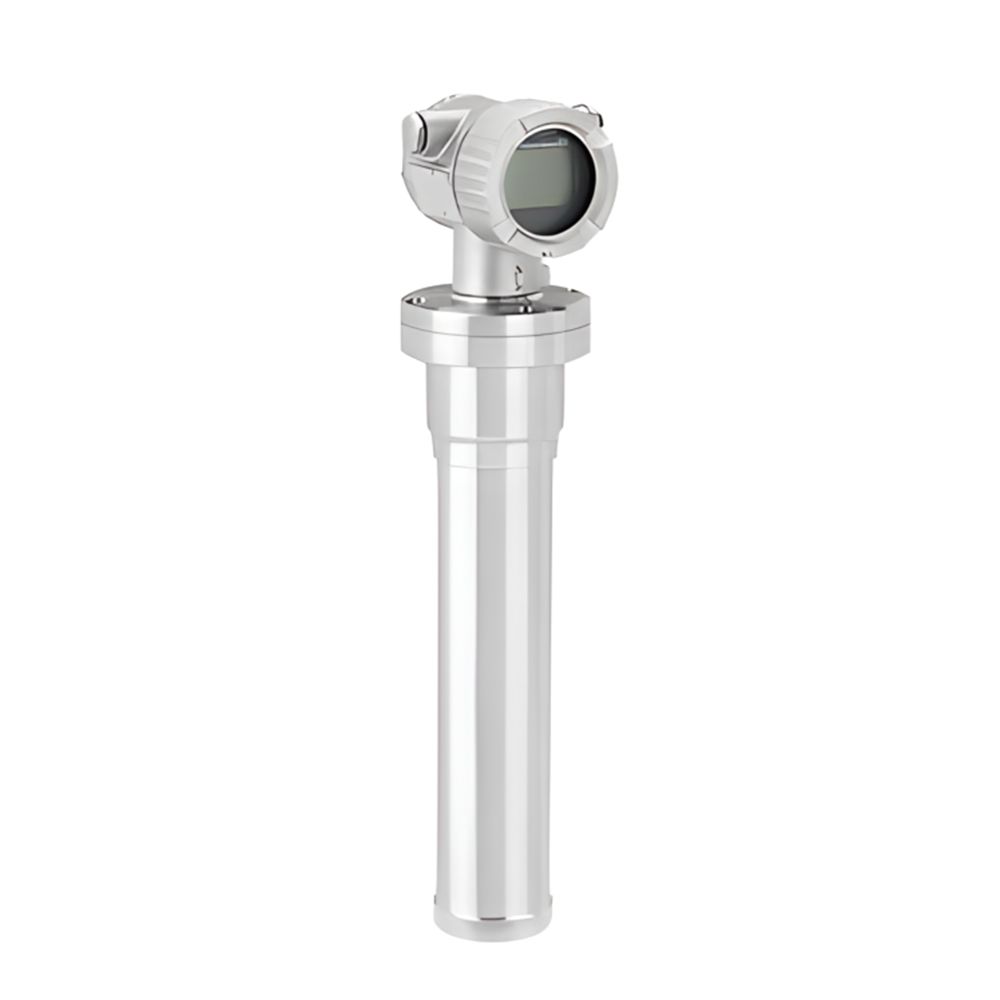
Radiometric Level Sensor
A radiometric level sensor is used for level measurements in conditions that are too challenging for many other technologies. As it measures from outside the vessel, it does not come into contact with the process material. This makes it ideal for measuring solids, liquids, suspensions and slurries in applications involving high temperatures, pressures, dust, corrosion, abrasion or toxic substances.
TECHNICAL SPECIFICATIONS OF RADIOMETRIC LEVEL SENSOR
| Product Type | Radiometric Level and Density Measurement Sensor |
| Measurement Principle | Radiometric measurement |
| Application | Non-contact point level detection, continuous level, interface, density and concentration measurement |
| Suitable Media | Liquids, solids, suspensions and sludges |
| Installation Type | Non-contact measurement through vessel walls |
| Measurement Range | Unlimited measuring range / cascade option |
| Accuracy | ±1% |
| Process Temperature | No limitation due to non-invasive measurement |
| Process Pressure | No limitation due to non-invasive measurement |
| Output Signal | 4–20 mA with HART protocol |
| Operating Modes | 4.0–20.5 mA, NAMUR NE043: 3.8–20.5 mA, US mode: 3.9–20.8 mA |
| Power Supply | 14–35 VDC non-Ex / 14–30 VDC Ex-i |
| Technology | 2-wire loop-powered compact transmitter |
| Detector Options | NaI(Tl) crystal or PVT scintillator |
| Ambient Temperature Range | NaI(Tl): -40°C to +80°C / PVT standard: -40°C to +60°C / PVT high-temperature version: -20°C to +80°C |
| Response / Dead Time | 250 ms unmodulated / 400 ms modulated for current output |
| Time Constant | Adjustable from 0.0 to 999.9 s |
| Reading Cycle | Acyclic: max. 3/s, typical 1/s; Cyclic burst: max. 3/s, typical 2/s |
| Ingress Protection | IP66/IP68, NEMA Type 4X/6P when housing is closed |
| Housing Material | 316L stainless steel or aluminum |
| Main Wetted Parts | None, non-contact |
| Communication Protocol | HART; optional Bluetooth via SmartBlue app |
| Functional Safety | SIL2 / SIL3 according to IEC 61508 |
How Does a Radiometric Level Sensor Work?
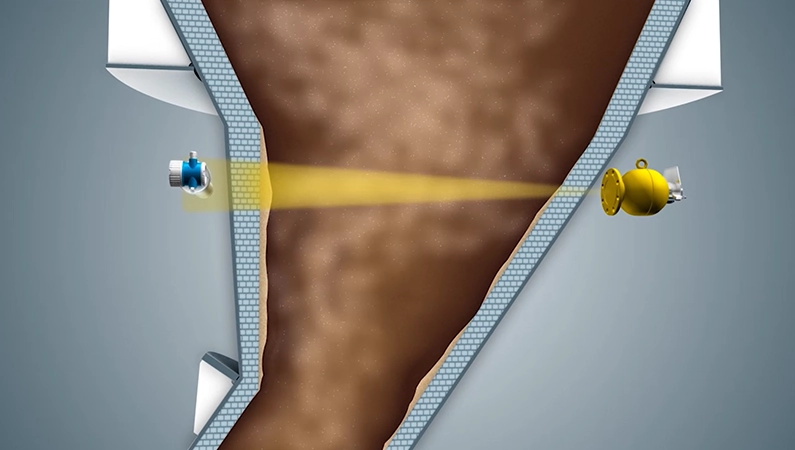
A radiometric level sensor measures the amount of radiation passing through a vessel. A radiation source is placed on one side of the vessel and a detector is placed on the other. As the level inside the vessel changes, the amount of radiation reaching the detector changes too. The system then converts this change into a level signal. Since the measurement is taken from outside the vessel, the sensor does not come into direct contact with the product.
Why Use a Radiometric Level Sensor?
Radiometric measurement is often the preferred choice when other level instruments may not perform reliably. It is a practical solution for demanding processes involving:
- High temperatures
- High pressure
- Dust or vapour.
- Corrosive or abrasive materials
- Toxic process media.
- Complex vessel design
It is also suitable for various measurement tasks, including point level detection, continuous level measurement, interface measurement, and density measurement.
Where Is a Radiometric Level Sensor Used?
Radiometric level sensors are commonly used in industrial vessels and process units where non-contact measurement is required. Typical applications include:
- Reactors
- Autoclaves
- Separators
- Acid tanks
- Cyclones
- Silos
- Tanks
- Pipelines
These sensors are ideal for harsh process environments where direct contact measurement is difficult or impractical.
Which Materials Can Be Measured by the Radiometric Level Sensor?
Radiometric level sensors can be used with:
- liquids
- Solids
- suspensions
- slurries
This makes them a flexible option for many industries, particularly where difficult process conditions require one measurement principle to be used.
What Can a Radiometric Level Sensor Measure?
Depending on the application, a radiometric level sensor can be used for:
- Point level detection
- Continuous level measurement
- Interface measurement
- Density measurement
This wide measurement range makes radiometric technology useful in many different process control and monitoring applications.
What Are the Main Advantages of the Radiometric Level Sensor?
Radiometric level sensors provide reliable, non-contact measurement in challenging process conditions where conventional sensors may not perform effectively.
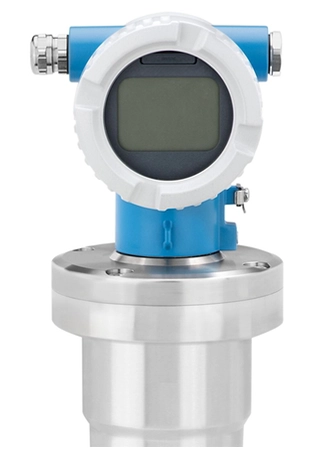
Non-Contact Measurement
The system measures from outside the vessel, meaning it does not come into contact with the material. This makes it ideal for aggressive, abrasive or hazardous products.
Reliable in Extreme Conditions
Radiometric measurement is ideal for harsh process conditions, such as corrosion, abrasion, viscosity and toxicity. It is also used in processes involving extremely high temperatures and pressures.
Suitable for Difficult Vessels
It is an excellent choice for reactors, autoclaves, separators, acid tanks and cyclones, where the design of the vessel or the operating conditions can make other technologies more difficult to use.
Flexible Measurement Applications
The same technology can support point level, continuous level, interface, and density measurement. That gives more flexibility in plant design and operation.
Designed for Functional Safety
The system is designed according to IEC 61508 and approved for SIL2/3, making it suitable for demanding safety-related measurement tasks.
Less Verification Effort
With Heartbeat Technology, verification becomes easier and plant shutdowns can be kept to a minimum.
High Ambient Temperature Resistance
Its innovative sensor technology allows use in ambient temperatures up to +80°C (+176°F) without additional cooling.
Remote Operation with Bluetooth
Bluetooth® wireless technology allows remote access and operation outside the radiation beam area.
When Is a Radiometric Level Sensor the Right Choice?
A radiometric level sensor is usually the right choice when:
- The process is too hot or too pressurized for contact sensors
- The product is corrosive, abrasive, or toxic
- Dust, vapor, or difficult vessel geometry affect other technologies
- The vessel cannot be opened easily
- Reliable non-contact measurement is needed over time
In these cases, radiometric measurement can offer stable performance and dependable process monitoring.
What Should Be Considered Before Installation?
Radiometric systems use a radioactive source, so installation and operation must follow strict safety rules and local regulations. Proper shielding, installation, maintenance, and approved handling procedures are important parts of the application.
| Feature | Radiometric Level Sensor |
| Measurement type | Non-contact |
| Suitable media | Liquids, solids, suspensions, slurries |
| Main functions | Point level, continuous level, interface, density |
| Common applications | Reactors, autoclaves, separators, acid tanks, cyclones, silos, tanks, pipelines |
| Best for | High temperature, high pressure, corrosive, abrasive, dusty, or toxic processes |
| Installation position | Outside the vessel |
| Safety note | Requires regulatory compliance and proper radiation safety procedures |
Frequently Asked Questions (FAQ)
What is a radiometric level sensor used for?
It is used for level measurement in challenging process conditions where non-contact measurement is required. It can also be used for interface and density measurement.
Does a radiometric level sensor touch the material?
No, as the measurement is made from outside the vessel.
What materials can Radiometric Level Sensor measure?
It can be used with liquids, solids, suspensions and slurries.
Where is Radiometric Level Sensor commonly used?
In reactors, autoclaves, separators, acid tanks, cyclones, silos and pipelines, for example.
Why is Radiometric Level Sensor preferred for harsh applications?
It performs well in extreme process conditions, such as high temperatures, high pressures, corrosion, abrasion, viscosity, toxicity, dust and vapour.
Are there any safety requirements?
Yes, because the system uses radioactive material, it must be installed and operated in accordance with safety regulations and approved procedures.