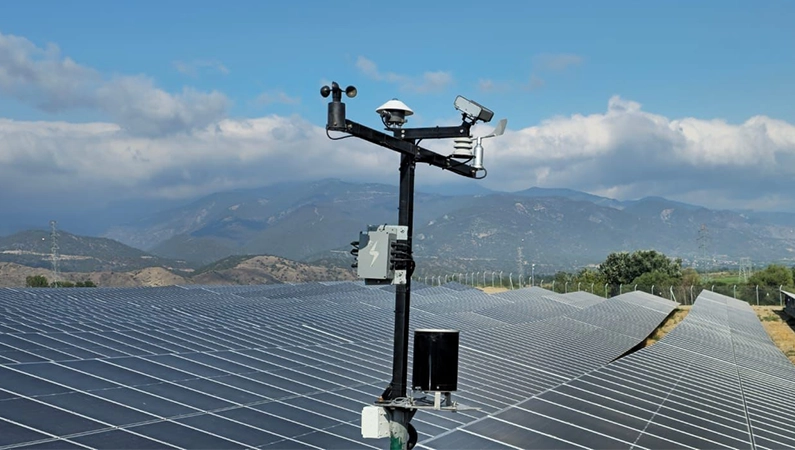
As already covered in the comprehensive guide about how to select sensors based on the requirements stated in the IEC 61724-1:2021, all the logic of the selection procedure was explained step by step.
Here comes the implementation part. The purpose of this article is to demonstrate the application of the above-stated logic in actual practice, using case studies. Each of the examples used considers the same basic set of parameters, such as plant size, its structure, technology, etc.
Example 1: Small, Simple Fixed-Tilt PV Plant
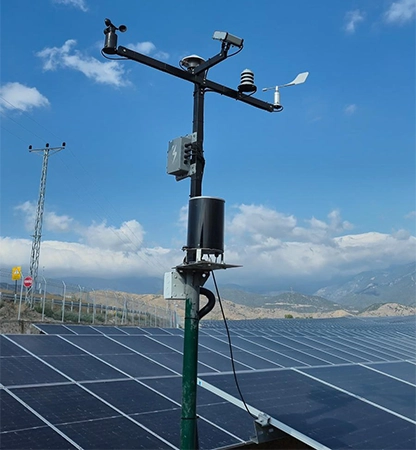
What is the AC capacity?
20 MW
What is the IEC Multiplier?
As per the table 3 of IEC61724-1:2021; 2
How many Azimuths?
1
How many Tilt Angles?
1
Is it a Uniform Site?
Yes
Is it Bifacial?
No
Is it a Tracker plant?
No
Is it Soiling sensitive?
Yes
Is it Snowy?
No
What does it all mean?
It is a small simple plant, therefore the IEC base quantity is sufficient. As per Table 2 of IEC61724-1:2021, the typical Class A quantity is as follows:
- POA (Irradiance Sensor): 2
- GHI (Thermopile Pyranometer): 2
- Module Temperature: 6
- Ambient Temperature: 2
- Wind Speed: 2
- Wind Direction: 2
- Soiling Ratio: 2
Example 2: Medium Plant with Dual Orientation
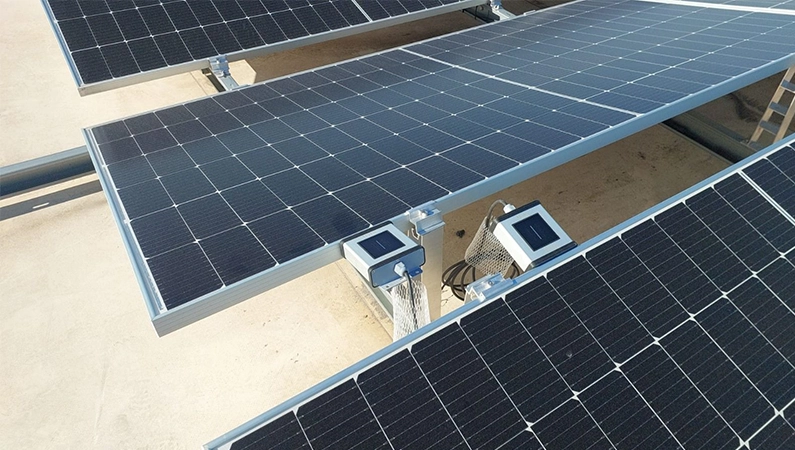
What is the AC capacity?
75 MW
What is the IEC Multiplier?
As per the table 3 of IEC61724-1:2021; 3
How many Azimuths?
2
How many Tilt Angles?
1
Is it homogeneous site?
No, due to dual azimuths for the plant
Is it bifacial?
No
Is it a tracker plant?
No
Is it a soiling sensitive area?
Medium
Is it a snowy site?
No
Conclusion:
This means that two azimuth groups exist for this plant, thus a monitoring solution should represent both of them. As per Table 2 of IEC61724-1:2021, the typical Class A quantity is as follows:
- POA (Irradiance Sensor): 3 × 2 = 6 (both azimuths)
- GHI (Thermopile Pyranometer): 3
- Module Temperature: 3 × 3 × 2 = 18 (both azimuths)
- Ambient Temperature: 3
- Wind Speed: 3
- Wind Direction: 3
- Soiling Ratio: take into account 6 if conditions are different by azimuth
Example 3: Large Bifacial Fixed-Tilt Project
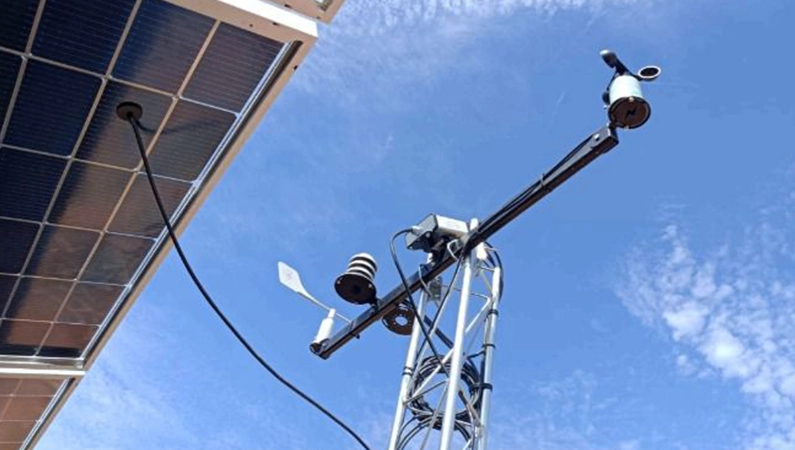
What is the AC capacity?
150 MW
What is the IEC multiplier?
As per the table 3 of IEC61724-1:2021; 4
How many different azimuth orientations are there?
1
How many different tilt orientations are there?
2
Is the project uniformly distributed?
No, due to two tilt groups
Is it a bifacial project?
Yes
Is it a tracker project?
No
Are soiling issues severe?
Yes
Is it a snowfall region?
No
What this implies
In addition to standard sensors, bifacial monitoring sensors are required. Diverse tilt orientations need to be included. As per Table 2 of IEC61724-1:2021, the typical Class A quantity is as follows:
- POA (Irradiance Sensor): 4 × 2 = 8 (spread across tilt groups)
- GHI (Thermopile Pyranometer): 4
- Module temperature: 4 × 3 × 2 = 24 (spread across tilt groups)
- Ambient temperature: 4
- Wind speed: 4
- Wind direction: 4
- Albedo: 4 (using albedo measurement method)
- Rear-side irradiance: 4 × 3 × 2 = 24 (using rear-side measurement technique)
- Soiling ratio: 4
Example 4: Tracker plant in Snowy Environment
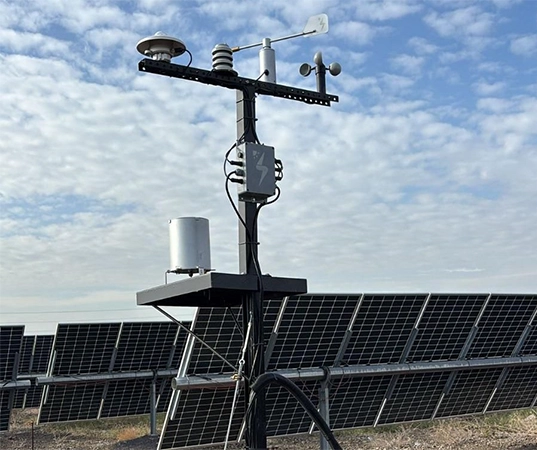
What is AC capacity (MW)?
220 MW
What is IEC multiplier?
As per the table 3 of IEC61724-1:2021; 4
What is the number of azimuth angles?
1 operating tracker geometry
What is the number of tilt angles?
Depends, since the trackers move
Is it uniform?
It’s not entirely uniform, since the tracker blocks can be different
Is it Bifacial?
Yes
Is it a Tracker plant?
Yes, single-axis
Is it Snowy environment?
Yes
Implications:
This is an advanced installation that requires a set of base IEC sensors as well as sensors for the tracker system, snow conditions, and bifaciality. As per Table 2 of IEC61724-1:2021, the typical Class A quantity is as follows:
- POA irradiance (Irradiance Sensor): 4
- Global irradiance (Thermopile Pyranometer): 4
- Module temperature: 12
- Ambient temperature: 4
- Wind speed: 4
- Wind direction: 4
- Tracker tilt angle: 4
- Snow: 4
- Soiling ratio: 4
- Albedo/ rear-side irradiance: depending on methodology
- Cloud sensor: 4 (Recommended for variable conditions)
Case Study Analysis Summary:
The cases provide us with a simple approach to follow:
Step 1: Start with AC rating → identify IEC Multiplier
Step 2: Identify Azimuth and Tilt → Multiply critical sensors if necessary
Step 3: Identify technology → Bifacial/Tracker
Step 4: Identify site hazards → Soiling/Snow/Variability
Step 5: Adjust the sensor setup according to real plant operations
The following table shows a summary of the above-mentioned cases
| Example | AC Size | IEC Multiplier | Azimuths | Tilt Angles | Bifacial | Tracker | Snow |
Typical Starting Quantity |
|
1 |
20 MW | 2 | 1 | 1 | No | No |
No |
POA: 2 GHI: 2 Module temp: 6 Ambient temp: 2 Wind speed: 2 Wind direction: 2 Soiling: 2 |
|
2 |
75 MW | 3 | 2 | 1 | No | No |
No |
POA: 3 x 2 = 6 GHI: 3 Module temp: 3 x 3 x 2 = 18 Ambient temp: 3 Wind speed: 3 Wind direction: 3 Soiling: consider 6 if conditions differ by orientation |
|
3 |
150 MW | 4 | 1 | 2 | Yes | No |
No |
POA: 4 x 2 = 8 GHI: 4 Module temp: 4 x 3 x 2 = 24 Ambient temp: 4 Wind speed: 4 Wind direction: 4 Albedo: 4 Rear-side irradiance: 4 x 3 x 2 = 24 Soiling: 4 |
|
4 |
220 MW |
4 | 1 tracker geometry | Variable | Yes | Single-axis |
Yes |
POA: 4 GHI: 4 Module temp: 12 Ambient temp: 4 Wind speed: 4 Wind direction: 4 Tracker tilt angle: 4 Snow: 4 Soiling: 4 Albedo or rear-side irradiance: based on method Cloud sensor: 4 recommended |