
Snow Sensor – 3S-SS-MB
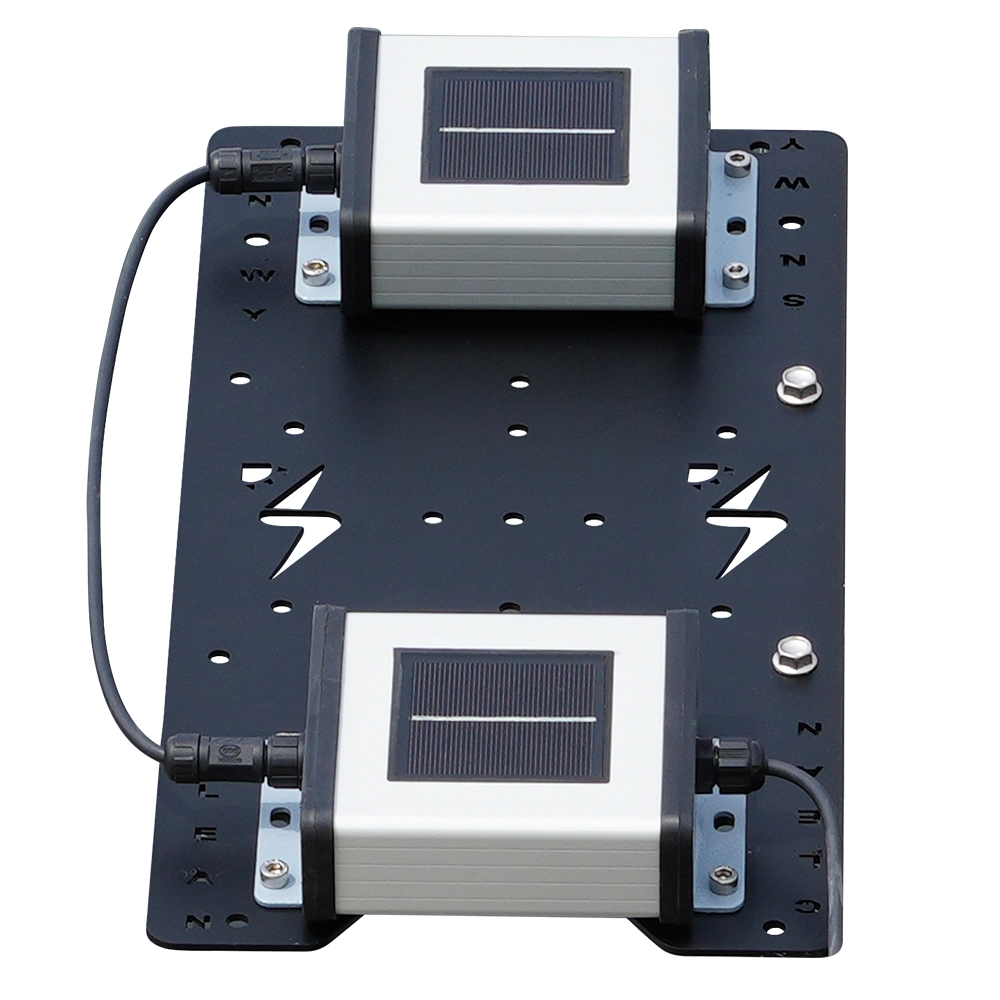
3S-SS-MB is the world's first and only PV-based snow sensor that measures energy loss caused by snow accumulating on solar panels. Because it uses real photovoltaic cells, it reacts to snow and light exactly as the panels do. If the snow percentage read from the sensor is 10%, it means there is a 10% energy loss at the facility due to snow.
Suitable for both ground and rooftop projects, the sensor demonstrates its true potential when used in solar tracker systems. By measuring the snow accumulation rate and transmitting it to the tracker control center, it enables the panels to be adjusted to snow-falling mode.
Technical Specifications of Snow Sensor
| Item Code | 3S-SS-MB |
| Snow Formation Rate | 0% – 100% |
| Resolution | 5% |
| Uncertainty | ≤ 2% |
| Radiation Range | 0 – 1600 W/m² |
| Data Output | RS485 (up to 38400 Baud) |
| Communication Protocol | Modbus RTU (SunSpec compatible) |
| Output Speed | 1/s |
| Operating Temperature Range | -40°C to +85°C |
| Operating Humidity Range | 0% – 100% RH |
| Power supply | 22 – 30 V DC (24 V recommended) |
| Power Consumption | 0.82 A max @ 24 V DC (0.02 A max with heating off) |
| Cable | 3 m LIYYC11Y PUR cable, UV and weather resistant. |
| RS485 Interface | 2-wire, half-duplex |
| Galvanic Insulation | 1000 V between the power supply and the RS485 line. |
| IP Class | IP65 |
| Dimensions | 200mm x 412mm x 44mm (W x L x H) |
| Weight | 1845 g |
| Calibration | Under AAA class solar simulator, according to IEC 60904-2 and 60904-4 (ISFH-Germany reference cell) |
| Origin | TÜRKİYE |
What is The Effect of Snow on Solar Power Plants?
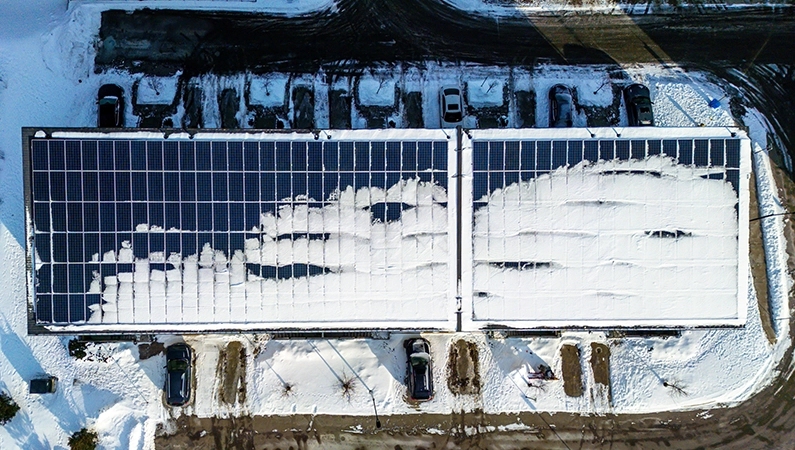
Snow creates not just one problem, but two separate problems simultaneously at a solar power plant.
The first is production loss. Snow covering the panel surface prevents sunlight from reaching the cells. Even a thin layer of snow significantly reduces production, and the panels cannot function properly until the snow melts.
Secondly, there is the mechanical load. Accumulated snow places a heavy load on the panels and supporting structure. This load is particularly stressful for mobile solar tracking systems and floating PV sites and can lead to damage over time.
The first step in managing these two problems is measuring the snow cover. Without knowing how much snow there is, it’s impossible to make the right decision about when to intervene. Snow sensors make this decision data-driven.
Working Principle of the SEVEN Snow Sensor
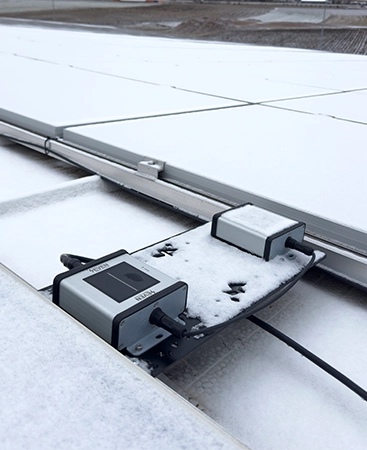
At the heart of the snow sensor there are two reference cells. Because these cells operate on the same principle as the panels in the field, they react to snow and light in the same way as the panels. This is what it means for the sensor to be ‘PV-based’. It measures how snow cover affects production not through an indirect guess, but through the same physical behavior as the panel itself.
The two cells perform different functions:
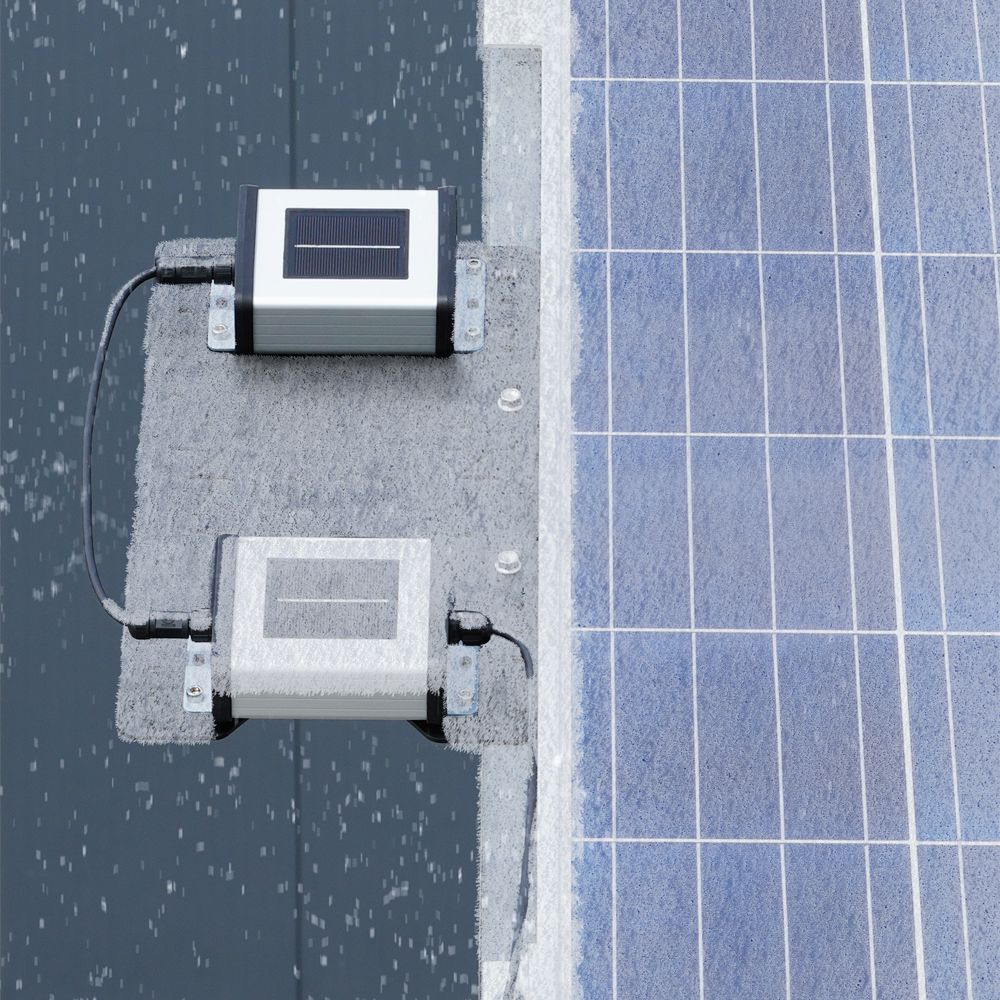
- The snowy cell is left exposed, much like panels, and snow falls on it. This represents how much the snow reduces production.
- The snow-free cell is heated by a heater inside the box. Snow doesn’t accumulate on it, and it always remains clean. It serves as a reference point for the question, ‘What would production be like without snow?’
The measurement process proceeds in the following steps:
- Both cells measure the solar irradiance in W/m².
- The cell covered in snow will have a lower reading due to the snow on its surface. A cell without snow, however, will receive the actual irradiance.
- The system compares the irradiance values of the two cells.
- This comparison is converted into the snow ratio on the panels.
- The result is transmitted via Modbus RTU as a value between 0% and 100%.
In short, the snow ratio is calculated as below.

The less light the snow-covered cell receives, the higher the rate. As the rate approaches 100%, it means the panels are covered with many cm of snow.
How are SEVEN Snow Sensors Integrated with Tracker Systems?
In solar tracking systems, snow presents a twofold problem. It reduces production by covering the panels and also puts extra strain on the system by adding load to the mounting structure. This is where 3S-SS-MB comes in, working in conjunction with the tracker control center.
The process works as follows:
- The system continuously monitors the snow ratio measured by the sensor.
- When the snow ratio reaches the threshold defined by the user, the control center sends a command to move the PV panels to a suitable angle, such as 90 degrees, so that the accumulated snow can slide off.
- As the panels rotate to this angle, the snow is removed from the panel surface. Since the sensor is mounted on the same moving structure, this movement also helps clear the snow-covered cell of the sensor.
- Once the snow has fallen off, the system is free from snow accumulation. The operator can then rotate the panels back to the desired operating position to achieve maximum energy production.
The most important benefit of this cycle is the prevention of unnecessary movement. Rotating the panel towards the sun while there is snow cover both wastes energy and provides no benefit. Thanks to the sensor, the tracker only moves when necessary and for the right purpose. This saves energy and relieves the structure of snow load.
Snow Sensor Installation in Fixed and Tracker Systems
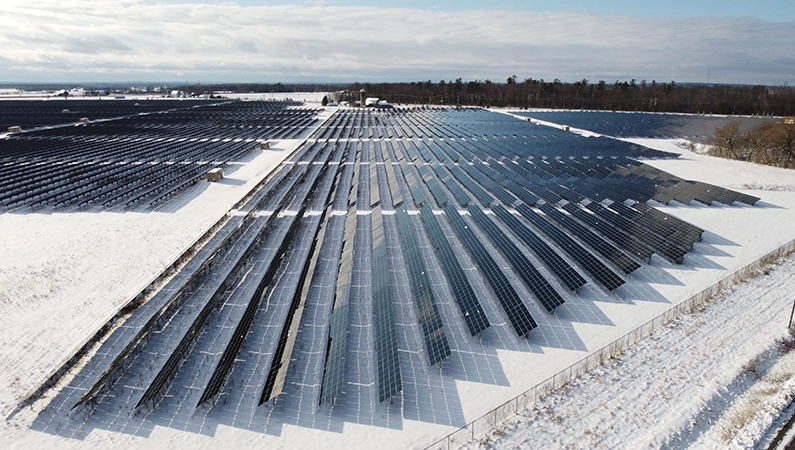
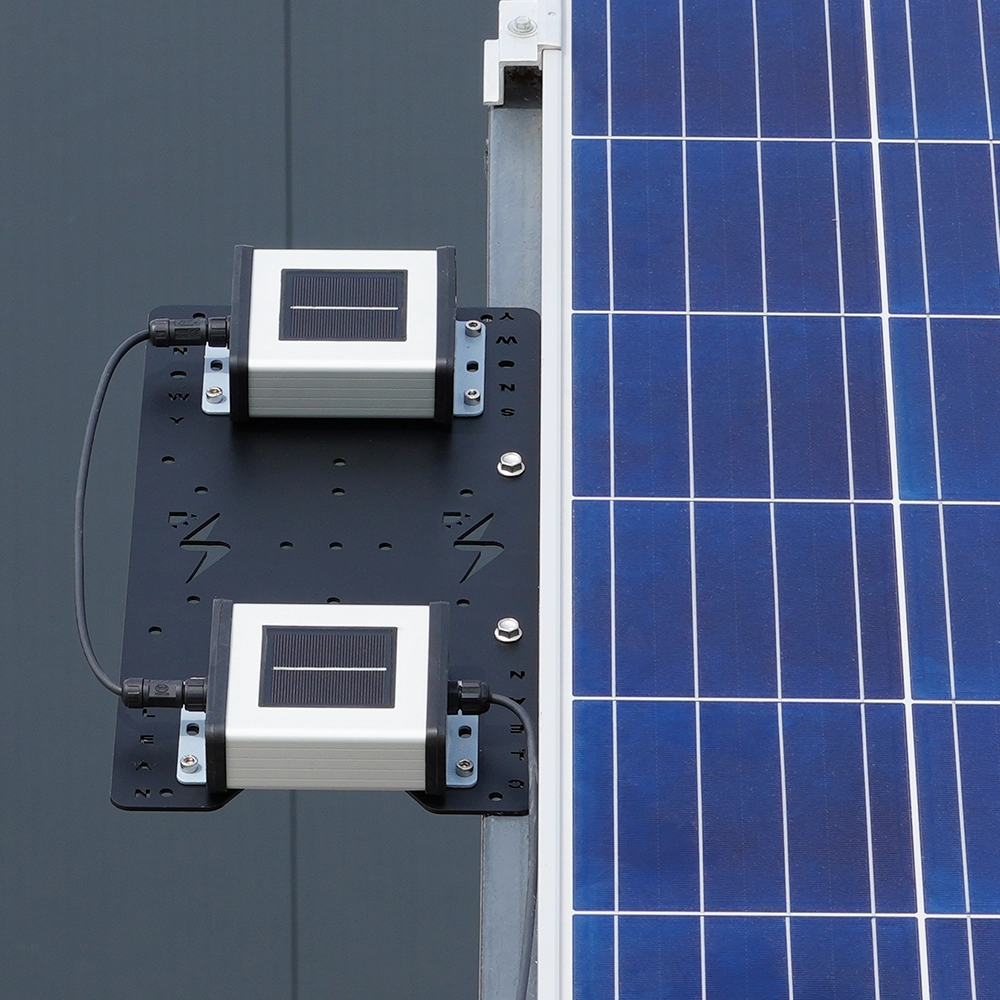
The basic rule for installation is simple: the snow sensor must be positioned in the same direction and at the same angle as the panels. The sensor will only provide accurate results if it observes the same conditions as the panels.
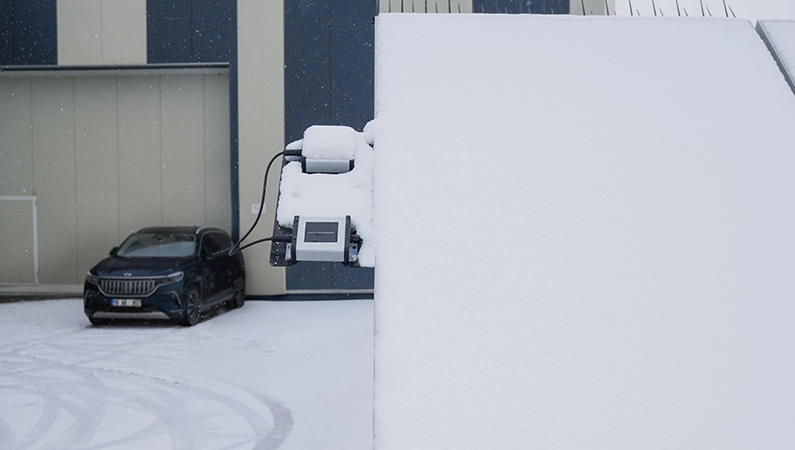
In tracker systems, the sensor is mounted directly onto the tracker and rotates at the same angles as the system. Thus, the sensor is covered by as much snow as the panels. In fixed systems, the sensor is placed at a fixed point in the same direction and at the same angle as the panels.
In both cases, the following points should be considered:
- Position the sensor at least 10 times the height of any obstacles. Shadows and obstacles will interfere with the measurement.
- Avoid heat sources such as chimneys and vents. These sources can melt the snow and confuse the measurement.
- Avoid dark, reflective, or heat-trapping surfaces.
The materials required for assembly are supplied by SEVEN.
What are the Advantages of SEVEN Snow Sensor?
- It is the world’s first and only PV-based snow sensor.
- It takes measurements with real PV cells, giving an exact replica of the response from the panels.
- It easily connects to monitoring systems via Modbus RTU output over RS485 and SunSpec compatibility.
- With its UV-resistant junction box and IP65 protection rating, it is ready for the field.
- Installation materials are included with SEVEN customer support available.
Frequently Asked Questions (FAQ)
What does a snow sensor measure?
It measures the percentage of energy loss caused by snow cover on the panels. The reading directly indicates the snow accumulation rate, and therefore the approximate energy loss.
Why is it called 'PV-based Snow Sensor'?
Because the measurement is done with photovoltaic cells, and the sensor reacts to light in the same way as the panels in the field, the result represents the actual loss experienced by the panels.
How does the Snow Sensor work?
It uses two reference cells. One is left open to the snow, the other is kept clean by heating. The irradiance readings of the two cells are compared, and the difference is converted into the snow ratio.
What is the function of the heater?
It prevents snow accumulation in the snow-free reference cell. Thus, that cell becomes a clean reference for the question 'what would production be if there were no snow?'.
How does SEVEN Snow Sensor work with tracker systems?
The sensor transmits the snow accumulation rate to the tracker control center. When the rate reaches a predetermined threshold, the panels are adjusted to an angle that will dispense snow. This prevents the tracker from operating unnecessarily while there is snow.
Can SEVEN Snow Sensor also be used in fixed systems?
Yes. In fixed systems, the sensor is mounted at a fixed point, aligned with the direction and angle of the panels.
Which output and protocol does SEVEN Snow Sensor use?
It uses Modbus RTU (up to 38400 Baud) over RS485 and is SunSpec compliant.
What power supply does SEVEN Snow Sensor need?
It operates with 22-30 V DC, but we recommend 24 V. Due to the heater, the supply range starts at 22 V.
What protection class does Snow Sensor have?
It has an IP65 protection rating.
What is the operating temperature range of the 3S-SS-MB?
It operates between -40°C and +85°C.
What is the price of SEVEN Snow Sensor?
The price of the sensor varies between 522 – 950 EUR depending on the order.
What are the delivery times of SEVEN Snow Sensor?
Delivery time is 2–3 weeks for small orders and 8–10 weeks for bulk orders.
What is the warranty of the SEVEN Snow Sensor?
SEVEN Snow Sensor is covered by a two-year warranty.