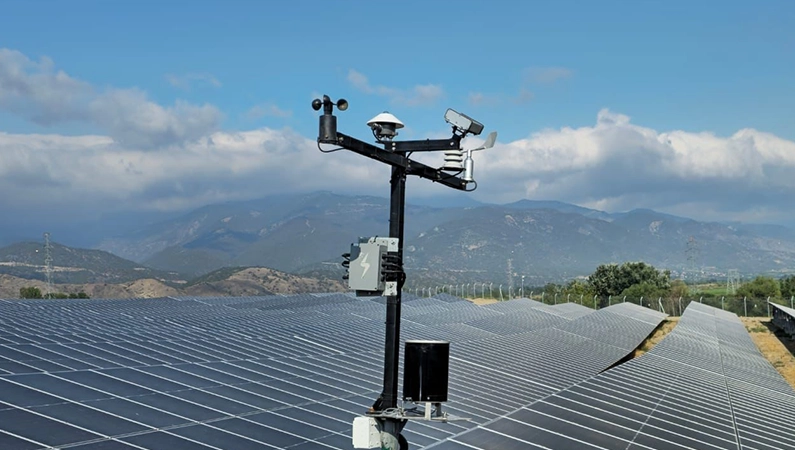
Irradiance sensors and pyranometers are used daily in solar PV facilities, weather stations, monitoring systems, laboratories, and performance analysis.
They measure solar irradiance, but their importance goes beyond that. They indicate how well the PV facility is operating.
That is the reason why recalibration is crucial.
If the irradiance sensor or pyranometer starts drifting, the performance data obtained from the PV facility will be inaccurate. A minor measurement mistake can influence performance ratio estimation, energy yield analysis, soiling assessment, and technical reports.
And now the question is straightforward:
How often do you need to recalibrate irradiance sensors and pyranometers?
While IEC61724-1 recommends the recalibration once per two years for Class monitoring systems, the frequency of calibration can also depend on:
- The sensor type
- The application
- The precision requirements
- The environmental conditions
- The sensor manufacturer’s recommendations
Why Recalibration is Important
Solar irradiance sensors function outside in challenging environmental circumstances. Sensors are subjected to:
- High temperature
- Low temperature
- Moisture
- Contamination
- Particles
- Atmospheric conditions
- Solar flux
- Other factors
Such conditions can influence the performance of even highly accurate sensors after prolonged field use.
Recalibration ensures that the sensor measures accurately. Recalibration also ensures the reliability of monitoring information obtained at PV facilities.
Recalibration is especially critical since the irradiance data is applied for:
- Performance ratio estimation
- Yield analysis
- Maintenance and operation diagnosis
- Warranty discussion
- Sensor comparison
If the irradiance measurements are flawed, then the findings made based on such flawed irradiance measurements may also not be correct.
When to Recalibrate Your Irradiance Sensor?
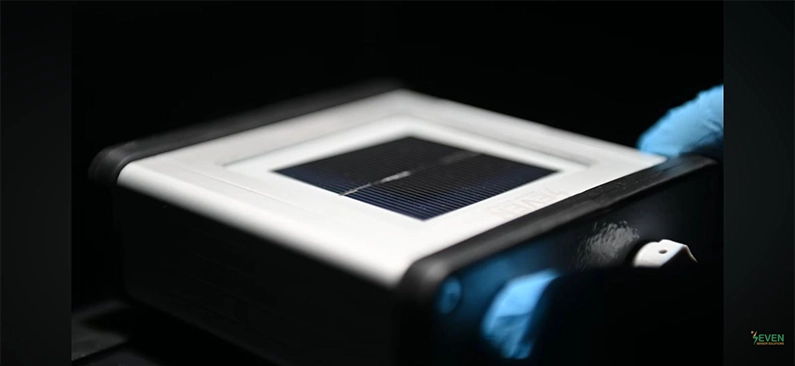
There are four situations in which you should consider having your irradiance sensor recalibrated.
-
When the Manufacturer’s Recommendation has been Reached
First, follow the calibration recommendation issued by the manufacturer.
It is the easiest way to handle this matter, and also the one that holds water from the quality management perspective.
SEVEN recommends the recalibration of Irradiance Sensors once per two years as stated by the standard IEC61724-1:2021.
SEVEN offers the service of recalibrating irradiance sensors in its labs with a Class AAA sun simulator, in line with the standards IEC 60904-2 and IEC 60904-4, with respect to the calibration cell calibrated by ISFH institute, Germany. However, SEVEN offers an easy-to-use interface enabling users to recalibrate their sensors in their countries and enter new calibration
-
If the Sensor is used for Critical Performance Measurement
Second, consider if your irradiance sensor is used for purposes such as calculating the performance ratio, performing contractual performance measurements, warranty discussion, or reporting.
Here too, the more crucial the data is, the more necessary the recalibration will become.
-
If the Sensor has been Exposed to Harsh Environmental Conditions
Sensors located in desert, coastal, humid, industrial, dusty, or hot environments may need extra care.
Although the official recalibration interval hasn’t been reached yet, harsh environment can be a reason for recalibration.
-
If the Output of the Sensor is Strange
Finally, you should consider having your irradiance sensor recalibrated if its output data looks like something is wrong.
Examples include:
- Low irradiance output
- High output
- The difference from other sensors around it
- Poor correlation with PV output
- Strange behavior after cleaning
- Troublesome daily curve shape
-
Repair or Rerun Has Taken Place on the Sensor
Calibration or verification might be necessary if a sensor has been repaired, modified, reconfigured, reinstalled or damaged in some way prior to being put back into use.
-
Use of a Sensor as a Reference Instrument
In the case where a sensor is used as a reference device for calibration of other instruments, calibration plays an increasingly significant role. The maintenance of such reference devices must be conducted with extreme care, since the error of such a device will influence the errors of many other measurements.
When Should You Recalibrate a Pyranometer?
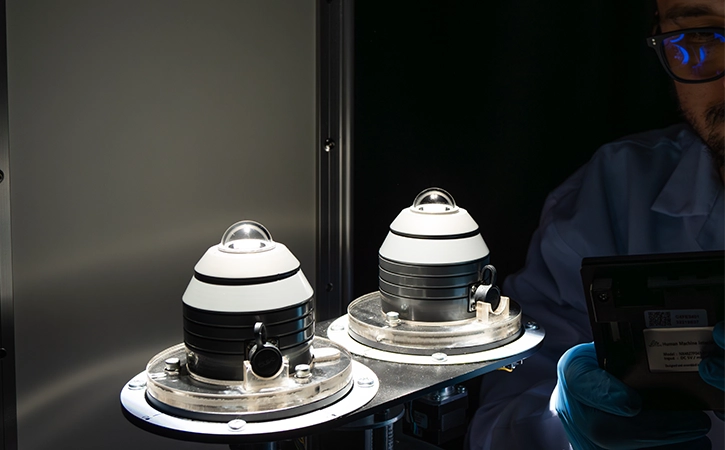
A pyranometer needs to be calibrated based on manufacturer recommendations, user’s quality system, and the significance of measurement application.
According to SEVEN, its pyranometers can be easily recalibrated by any PV laboratory across the world using the handy configuration tool, and recalibration at SEVEN’s recommendation is done every five years because of precise diffusers.
Pyranometers need to be tested or recalibrated under the following circumstances:
- When the measurement results become inconsistent
- Damaged dome/diffuser
- Severe exposure to environmental conditions
- Improper cleaning
- Contraction and official reports
- Transfer to new projects
Consequences of Skipping Calibration Steps
The solar panel system will keep gathering data; however, the data collected will be inaccurate.
This will result in serious issues.
Misleading Performance Ratio
The solar power plant’s performance ratio will become misleading.
If the irradiance is overestimated, the performance ratio will indicate poor performance of the solar system.
If irradiance is underestimated, the performance ratio will indicate high performance of the solar system.
Faulty Detection
The performance ratio is usually used to detect faulty performance of solar panels. If there is no proper calibration of sensors, actual faults will go undetected.
Unreliable Documentation
Technical studies, operational and maintenance reports, financial reports, and performance reports rely on accurate data.
Skipping the calibration process might affect the reliability of these reports.
Disputes During Warranty Claims
During the discussion of warranty claims, inaccurate irradiance data might lead to disputes.
Recalibration Planning for a bulk of sensors
Whereas, a business that owns one or two sensors will not mind sending them for recalibration whenever needed.
However, a company with lots of irradiance sensors or pyranometers will require a better solution.
Some of the issues associated with a large number of sensors include the following:
- High recalibration cost
- Sensor shipping & customs charges
- Down time for the sensors
- Recalibration scheduling issues
- Different acquisition years for different sensors
- Different recalibration schedules for individual sensors
For companies with numerous sensors, setting up an in-house calibration lab can prove to be more economical and convenient.
Through our calibration lab setup & training services, we help companies set up a calibration laboratory of their own for calibrating their pyranometers and reference cells using all the necessary tools and training.
Most often, this approach is very economical for companies after calibrating around 100 to 200 irradiance sensors or pyranometer
Checklist for Practical Recalibration
Before determining when to recalibrate, ask yourself the following questions:
- What is the recommendation from the manufacturer?
- Is the sensor used for performance ratio calculation?
- Is the sensor used for contractual reporting?
- Has the sensor been subject to harsh conditions?
- Are the readings from the sensor consistent?
- Are there other sensors nearby for comparison?
- Has the sensor been fixed, relocated, or subjected to damage?
This checklist assists organizations in avoiding both under-calibration and over-calibration.
FAQ: Irradiance Sensor and Pyranometer Recalibration
When should irradiance sensors be calibrated?
Calibration should be conducted based on the recommendations of the producer, project-specific needs, quality system necessities, and importance of the measurements. As per IEC 61724-1:2021, the irradiance sensors must be recalibrated once per two years for Class A monitoring systems.
When should pyranometers be calibrated?
Recalibration of pyranometers must be conducted based on the producer's recommendations and applications needs. For example, SEVEN recommends a five-year recalibration interval for pyranometers produced by SEVEN.
Why is recalibration needed?
Recalibration ensures measurement precision, accuracy, reliability, and confidence as well as PV performance analysis.
What would happen if a pyranometer was not calibrated?
It would still measure irradiance, but the measurement could become inaccurate. It would affect performance ratio calculations, technical reports, and fault detection.
Can SEVEN pyranometers be calibrated elsewhere than at SEVEN facilities?
Yes. According to SEVEN, the pyranometers manufactured by the company can be recalibrated in any PV laboratory all over the world via the SEVEN configuration tool.
Is there an option to calibrate SEVEN irradiance sensors locally?
Yes. There is a special user interface that enables users to conduct the calibration process at their convenience and enter new values of calibration into the system.
Is recalibration important for PV performance ratio?
Yes, because the performance ratio relies on precise information about the irradiance. An inaccurate measurement of irradiance will cause errors in calculating the performance ratio.
Can firms establish their calibration lab?
Yes. SEVEN and BallastCo assist firms that plan to create a calibration facility for their pyranometers and reference cells.
When does in-house calibration make sense for the company?
An in-house calibration facility is profitable for companies that have more than 100-200 sensors, and they depend on the prices of external calibration facilities.