In our modern world, within the information and technology society, energy—required in every field of our lives such as industry, health, technology, communication, social life, and education—has become the most valuable and important resource today. Energy resources are divided into two categories: non-renewable and renewable energy sources. The rapid depletion of fossil fuels such as coal, oil, and natural gas, which are non-renewable energy sources and still the most preferred today, along with the environmental issues they cause—particularly global warming—bring forth the concepts of both the rational and economic use of these resources and energy efficiency.
Considering environmental and other disadvantages, the search for alternative energy sources has accelerated and focused on solar energy, which is a reliable, environmentally friendly, and almost limitless renewable energy source. Physical formations and the flow of matter and energy in the world, whether direct or indirect, are only possible thanks to solar energy. Solar energy undergoes transformations to create different forms of energy, such as wind and ocean energies. It is known that fossil-based energies and underground materials of biomass nature consist of accumulated solar energy.
In recent years, the direct conversion of solar energy into electrical energy using photovoltaic panels has ensured that it holds a significant place in the average total energy production of countries. The efficiency of photovoltaic panels can be categorized into two main groups. The first of these is the raw material used in panel production and the method of production. The second group consists of the climatic data and the climatic structure of the region where the panels are installed.
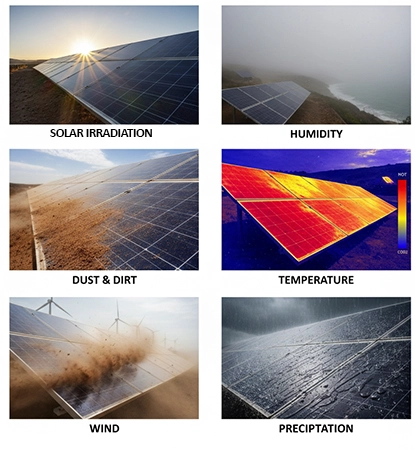
The climatic conditions affecting the efficiency of photovoltaic solar systems and the power of solar panels are as follows:
- Solar Irradiation
- Humidity
- Dust and Soiling
- Temperature
- Wind
- Precipitation
Is Dust the Hidden Thief in Your Solar Panels? How Can We Prevent Efficiency Losses of Up to 32%? Is It Possible to Stop Energy Losses by Measuring Dust Ratios?
Photovoltaic (PV) panels can convert solar energy into electrical energy with an efficiency of 6% to 35%, depending on the properties of the semiconductor material from which they are manufactured. Numerous factors affect the production efficiency of PV panels.
These include panel tilt, orientation (angle), temperature, shading, solar irradiation intensity, wind speed and direction, dust, dirt, humidity, snow load, and other associated losses.
One of the most significant factors affecting the electrical energy production efficiency of solar panels is the contamination of the panel surface by dust, mud, leaves, etc. (soiling).
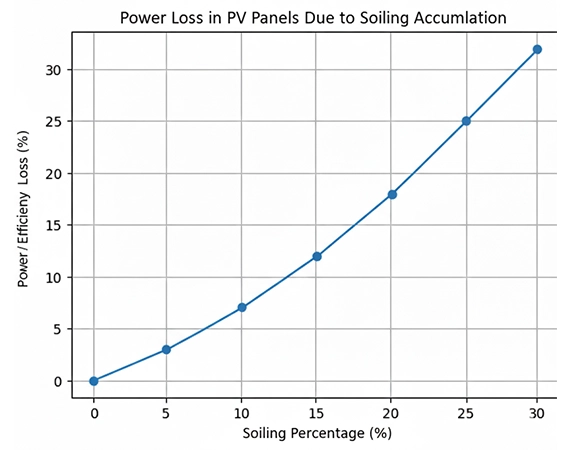
Numerous studies have demonstrated that yields are negatively affected by 4% to 32% as a result of contamination and dust accumulation on panel surfaces.
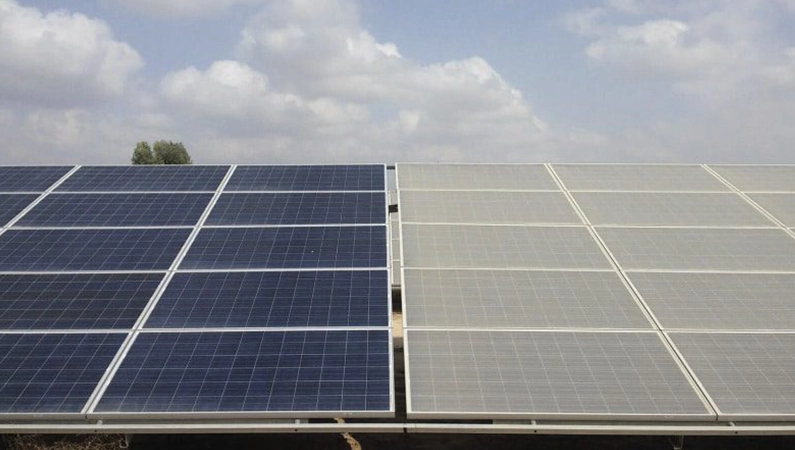
Dust is characterized as a formation possessing biological, chemical, electrostatic, and physical properties. Each geographical region has distinct characteristics and dust densities. By settling on or covering the PV panel surface through various means, dust prevents solar radiation from reaching the panel surfaces, thereby negatively impacting the panels’ energy production.
Furthermore, it adversely affects the efficiency of the PV energy system by increasing panel temperatures and causing negative effects such as the abrasion of the panel module glass.
There are several factors and parameters that influence the soiling process and the amount of dirt/dust accumulation on solar panels. Some of these include the properties, size, and weight of the dust, as well as the surface roughness of the panel.
Factors such as the orientation of the panel relative to solar radiation and the prevailing wind direction influence the accumulation and amount of dust on the panels. Regular cleaning of the panels will increase the power output of the PV system. However, since daily cleaning of PV panels incurs additional costs such as labor, deionized (pure) water, or cleaning fluids, the most ideal solution is to clean the panels at specific intervals or when the dust ratio increases.
Furthermore, although monthly cleaning may not be entirely sufficient, it is evident that there will be a significant increase in efficiency compared to PV panels that are never cleaned. To minimize efficiency losses caused by dust and soiling, the most appropriate cleaning period is established by installing a system capable of monitoring the dust ratio of the PV system. Different geographical regions with varying characteristics will have an impact on soiling density, sunshine duration, and the required cleaning frequency. Additionally, seasonal variations also affect overall yield.
For this reason, to reduce losses caused by soiling and to decide when the site should be cleaned, Seven Sensor offers solutions with both automatic and manual soiling sensors. Thanks to these sensors, the soiling ratio of the site can be monitored, and optimum cleaning schedules can be created based on this data. Thus, it facilitates optimal cleaning planning according to the specific conditions of the site.
For more details about the product:
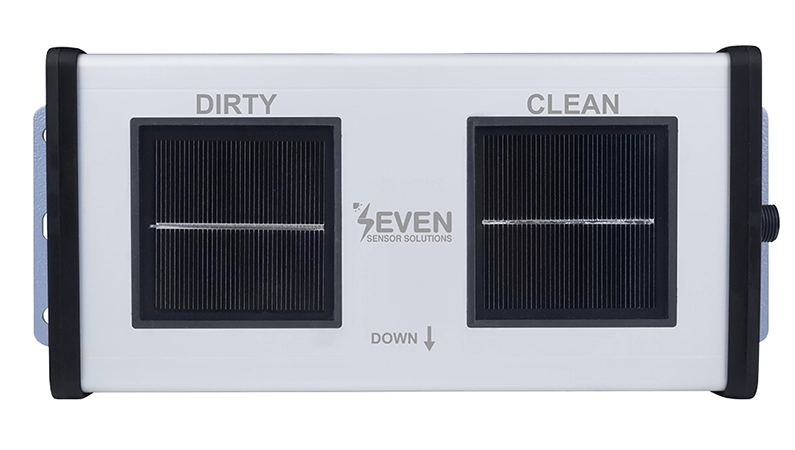
Manual Soiling Sensor : Manual Soiling Sensor with Modbus Output – 3S-SMS-MB-M | Seven Sensor
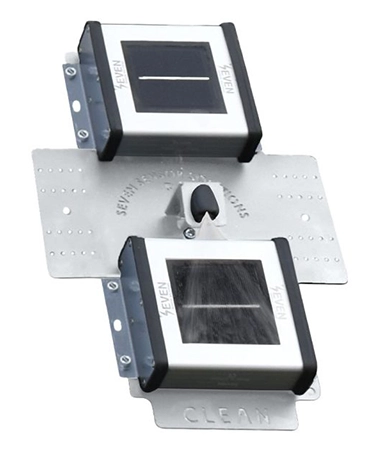
Automatic Soiling Sensor : https://www.sevensensor.com/automatic-soiling-sensor
It is of great importance to minimize the effects of dust and soiling, which are among the most critical parameters for increasing the efficiency of PV power plants, which constitute the highest number of renewable energy installations in our country.
Frequently Asked Questions (FAQ)
Does dust cause efficiency loss in solar panels?
Yes. Dust and dirt on the panel surface block solar radiation, directly reducing energy production.
How much efficiency loss can occur due to soiling?
According to various studies, this loss can range from 4% to 32%.
Does dust only affect irradiation?
No. Dust increases the panel temperature, can cause abrasion on the glass surface, and increases the risk of hot-spots.
What are the benefits of using a dust sensor?
It reduces unnecessary cleaning costs and determines the optimal cleaning time by providing data-driven insights.
How does dust damage the panels?
It reduces production by preventing sunlight from reaching the cells, increases the panel temperature, and causes the glass surface to wear out (abrade) over time.