Huawei Weather Station
SEVEN provides complete weather station solutions for solar power plants that are compatible with all Huawei SmartLogger models. Each system includes the sensors needed to monitor and analyze PV plant performance using Huawei monitoring platforms such as Enspire, NetEco, or FusionSolar.
SEVEN Sensor also works as a solution partner for Huawei distributors, and the compatibility of our sensors with Huawei SmartLoggers has been approved by Huawei headquarters.
The required sensors in your weather station
| Product Photo | Sensor |
|---|---|
|
|
|
|
|
|
|
|
|
|
What Sensors are Typically Included in a Huawei Weather Station Setup?
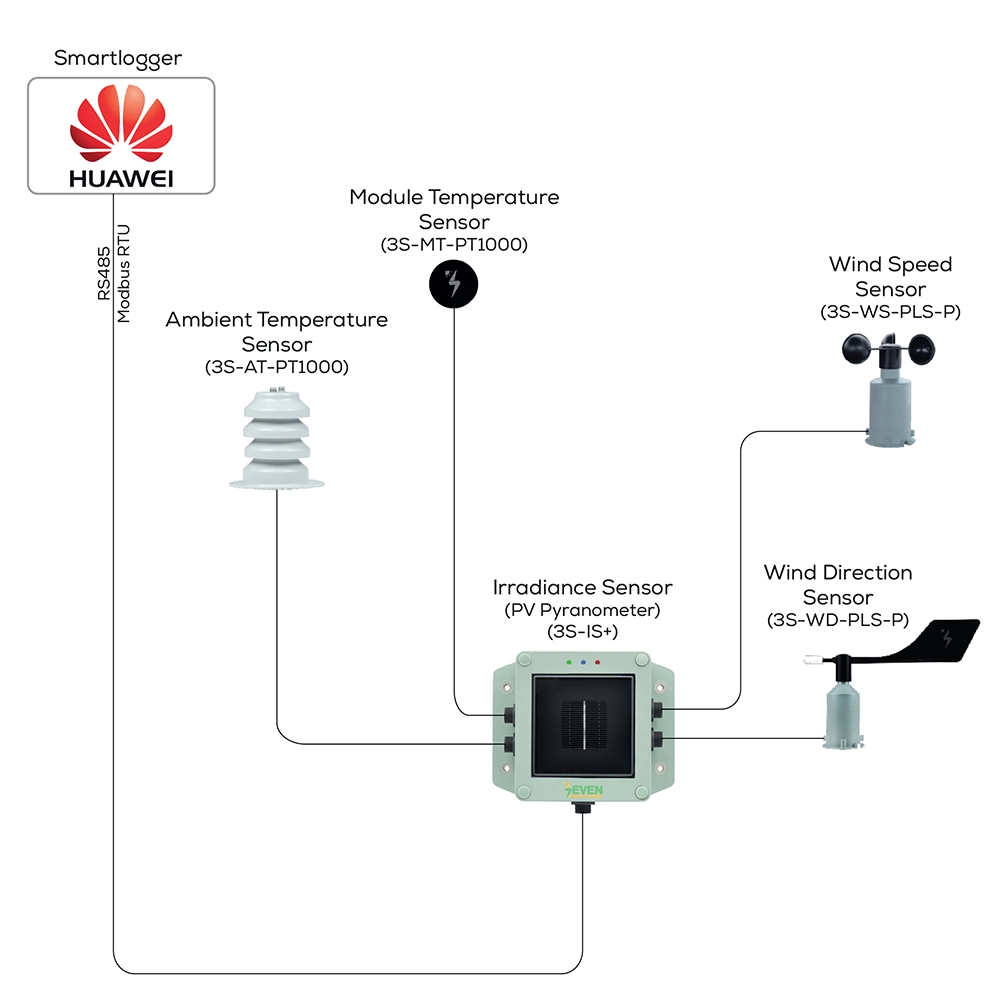
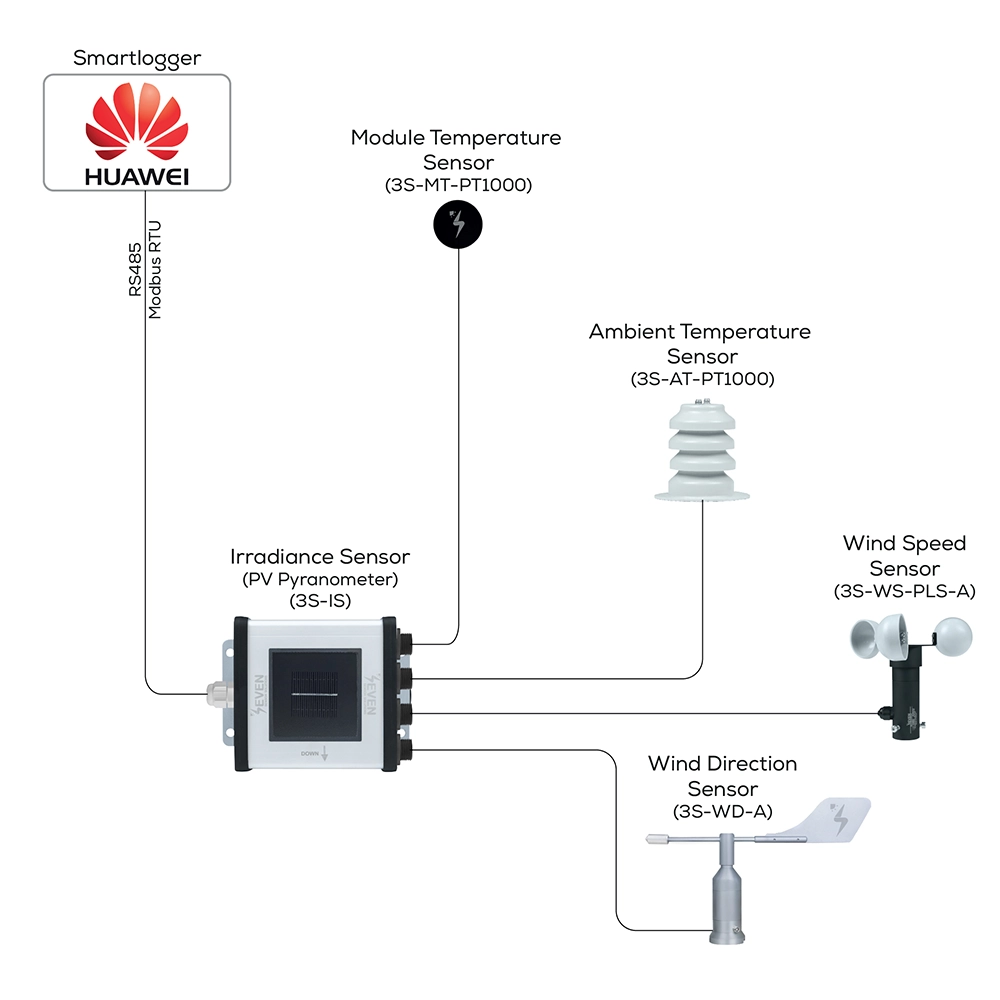
If you’re using Huawei SmartLogger1000, SmartLogger3000, etc. and want weather data you can actually use for PV performance analysis, this weather station setup is built around a simple idea: measure the site conditions that directly explain energy yield (irradiance, temperatures, wind) and send them to Huawei via RS485 Modbus RTU.
The standard sensors used for the Huawei weather station are as follows:
- Irradiance Sensor (PV Pyranometer / Reference Cell)
Measures solar irradiance (radiation). This PV pyranometer is crucial for solar applications. The SEVEN irradiance sensor is designed as a sensor box and includes an internal cell temperature sensor to provide a compensated irradiance value. It also has up to four input ports for additional sensors, and an RS485 output port for connection to the Huawei SmartLogger. - Ambient Temperature Sensor
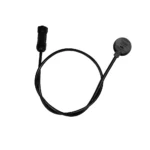
Important for understanding how production is affected by temperature. Since PV module temperature can vary significantly from ambient temperature, this sensor provides valuable data for PV plant analysis. - Module Temperature Sensor
Typically used to measure surface temperature. It is installed on the back of the PV panel and provides module temperature data. Monitoring module temperature is important, as it is one of the factors used to calculate the Performance Ratio (PR). - Wind Speed Sensor
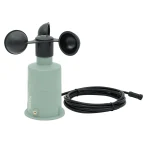
Measures wind speed and transmits the data to the Huawei SmartLogger. - Wind Direction Sensor
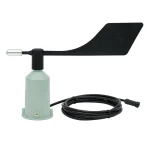
Used to determine wind direction (orientation of the wind).
In addition, other sensors can be connected to the SEVEN irradiance sensor box, such as a humidity sensor, which measures relative humidity in a photovoltaic plant.
We support customers globally with shipping options based on destination and project needs. If you’d like assistance beyond hardware delivery, our engineers can also help with commissioning and verification (including remote support after installation).
How Does the Sensors Help Monitor Performance Ratio (PR) in Huawei?
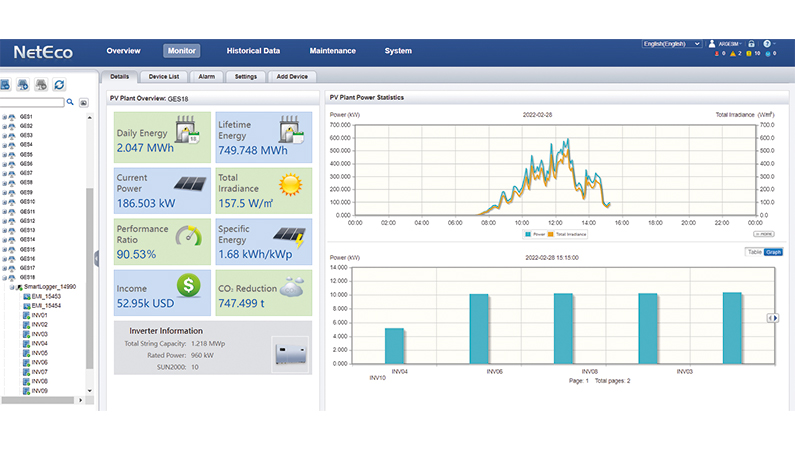
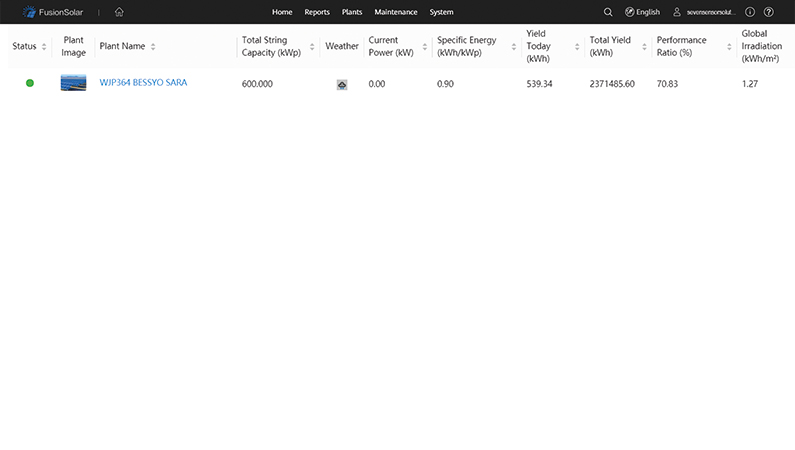
Once sensors are connected to the Huawei SmartLogger, the monitoring workflow typically runs through Enspire and then into NetEco or FusionSolar. With irradiance and temperature data available, PR and related performance metrics become much easier to interpret because you can compare plant output against the actual on-site conditions.
A simple real-world example:
- If energy drops but irradiance also drops → it’s likely weather-driven.
- If irradiance is stable but energy drops → you have a stronger signal to investigate (soiling, inverter behavior, shading, string issues, etc.).
How Does the Sensor Connect to Huawei SmartLogger?
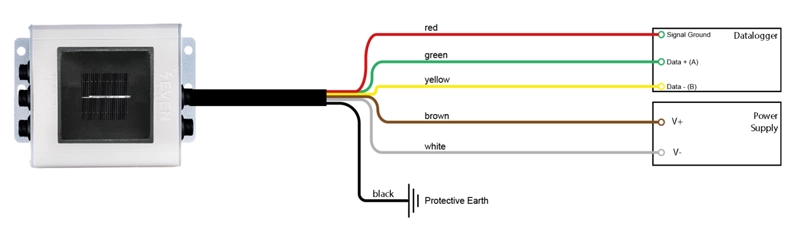
The weather station communicates with SmartLogger using RS485 and Modbus RTU.
A typical wiring approach is:
- RS485 A / Data (+), RS485 B / Data (–), and RS485 Data Ground connected to a SmartLogger COM port
- The sensor box is powered via DC Supply. The sensors can be powered between 12–30 VDC, with 24 VDC recommended
How do you Commission Sensors into Huawei System?
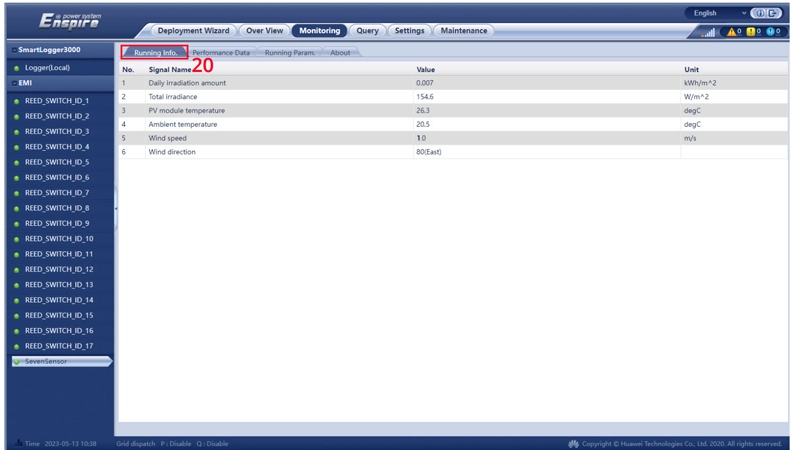
For full details, please refer to our step-by-step guide and the commissioning video. Here’s a brief overview of the process:
- Install and mount the sensors at the PV plant according to the recommended placement guidelines described in our user manual.
- Connect the RS485 communication lines and power wiring to the Huawei SmartLogger and an appropriate power supply.
- In Enspire, configure the RS485 communication parameters (e.g., baud rate, parity, device address) and add the Sensor box as a device.
- Configure the parameters to be monitored using the register addresses provided in our Modbus maps.
- Verify the live measurements in the SmartLogger Running Info, then confirm that the data is successfully visible in FusionSolar / NetEco.
If you prefer, our engineers can support the setup remotely after installation.
Which Irradiance Sensor Models are Compatible with Huawei Smartloggers?
The models below are compatible with Huawei Smartloggers.
| Model | Communication | External Sensor Options |
| 3S-IS-LR | RS485 Modbus RTU | No external sensor can be connected |
| 3S-IS | RS485 Modbus RTU | No external sensor can be connected |
| 3S-IS-1 | RS485 Modbus RTU | Ambient Temperature Sensor OR Module Temperature Sensor |
| 3S-IS-2 | RS485 Modbus RTU | Ambient Temperature Sensor OR Module Temperature Sensor Wind Speed Sensor |
| 3S-IS-2T | RS485 Modbus RTU | Ambient Temperature Sensor Module Temperature Sensor |
| 3S-IS-3 | RS485 Modbus RTU | Ambient Temperature Sensor Module Temperature Sensor Wind Speed Sensor |
| 3S-IS-4-WD | RS485 Modbus RTU | Ambient Temperature Sensor Module Temperature Sensor Wind Speed Sensor Wind Direction Sensor |
| 3S-2IS | RS485 Modbus RTU | Ambient Temperature Sensor 2 Module Temperature Sensor Wind Speed Sensor |
| 3S-3IS | RS485 Modbus RTU | Ambient Temperature Sensor 3 Module Temperature Sensor Wind Speed Sensor Wind Direction Sensor |
| 3S-4IS | RS485 Modbus RTU | Ambient Temperature Sensor 4 Module Temperature Sensor Wind Speed Sensor Wind Direction Sensor |
Frequently Asked Questions (FAQ)
Is this weather station compatible with all Huawei SmartLogger models?
It’s designed for Huawei SmartLogger integrations and it’s compatible with SmartLogger 1000 / 1000A / 2000 / 3000A.
How does the weather station communicate with SmartLogger?
The weather station communicate with SmartLogger via RS485 using Modbus RTU.
What is the delivery time for a Huawei Weather Station?
Delivery schedules are determined by the specific order volume. For a single standard set including irradiance, module temperature, ambient temperature, wind speed, wind direction sensors, the typical shipping lead time is one week.
What is the price of the Huawei Weather Station?
Since every solar project has different needs, the price varies based on the sensors you choose. For a full professional setup including irradiance, module temperature, ambient temperature, wind speed, direction, you’re looking at a range between 470 EUR and 1045 EUR.
What measurements are typically included in the standard Huawei weather station setup?
Irradiance, ambient temperature, module temperature, wind speed, and wind direction are standard PV meteo inputs.
Do I need special settings to see the data in FusionSolar / NetEco?
The sensor box is not be auto-detected in the system and is configured manually in Enspire before data appears in the monitoring platforms such as FusionSolar and Neteco. You can follow our Youtube video and follow setting instructions for detailed configuration steps.
Can I include or exclude sensors to Huawei Weather Station as per my requirements?
Irradiance sensor box functions as a hub and can support sensor inputs up to four. You can customize this station with any sensor you want.