EnCombi Weather Station
SEVEN provides a complete set of weather stations for solar power plants compatible with all ENCombi controller models. These weather stations include various sensors required to monitor PV, PV/Generator, and Microgrid solar power plants using the ENCombi ECcloud and ECweb monitoring systems. SEVEN Sensor has cooperated directly with ENCombi for the product compatibility and interface. Therefore, we got approval directly from the ENCombi headquarter.
The required sensors in your weather station
| Product Photo | Sensor |
|---|---|
|
|
|
|
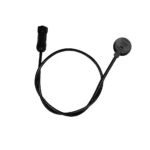
|
|
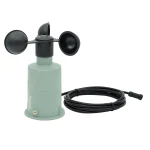
|
|
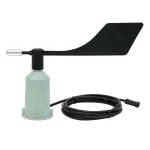
|
|
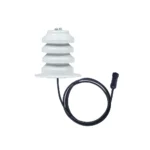
|
|
How Can Weather Stations be Utilized with ENCombi Controllers?
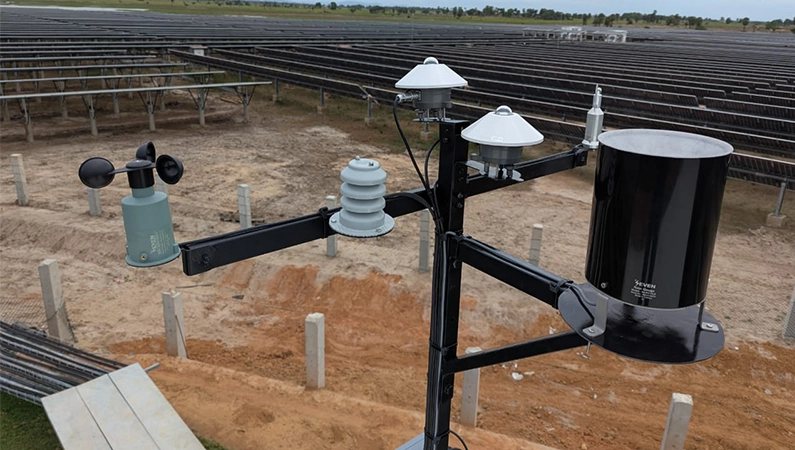
Most weather stations have sensors that simply record data, which is then displayed on a screen. In ENCombi installations, however, sensor data goes a step further.
Irradiance and other meteorological data are fed into the ENCombi controller’s decision algorithm. Knowing how much solar energy is currently reaching the site, the controller can predict the direction of PV production and manage resources accordingly.
This is especially important in generator and microgrid systems. For example, preparing the system for a change in PV production before it decreases due to a cloud migration helps to more efficiently balance resources such as generators, batteries, and loads.
In short, the weather station is not just a tool to show what’s happening here, but a component that contributes to how the system works.
In which types of power plants is ENCombi Weather Station used?
ENCombi controllers can manage different installation types. The contribution of the weather station varies depending on the type of power plant.
| Central Type | Contribution of the Weather Station |
| PV power plants | Irradiance and temperature data support production monitoring, performance-ratio calculations, forecasting and comparison of expected production with actual production. |
| PV/generator systems | Weather data supports PV-production monitoring and forecasting. The ENcombi controller uses actual PV, load and generator measurements to coordinate generator operation and help reduce fuel consumption. |
| Microgrids | Meteorological data supports PV forecasting and energy-resource optimization, particularly in systems containing generators or battery storage. It is a valuable input, although it may not be mandatory for basic real-time control. |
Are SEVEN Weather Station and ENcombi Directly Compatible?
SEVEN collaborated directly with ENCombi to ensure the weather station’s seamless operation with ENCombi controllers and received official approval from ENCombi headquarters for the product. As a result, the weather station is fully compatible with ECpv, ECpvH, and ECpvX controllers, as well as ECcube, ECcubeH, and ECcubeX control systems.
How to Monitor ENCombi Weather Station with ECcloud and ECweb?
Monitoring is carried out via ENCombi’s ECcloud and ECweb systems. Data from the weather station is displayed on these interfaces along with production data.
This allows both field conditions and the system’s response to those conditions to be monitored from a single point. Performance evaluation becomes much more meaningful when production and environment data are read together.
How to Install and Connect ENCombi Weather Station?
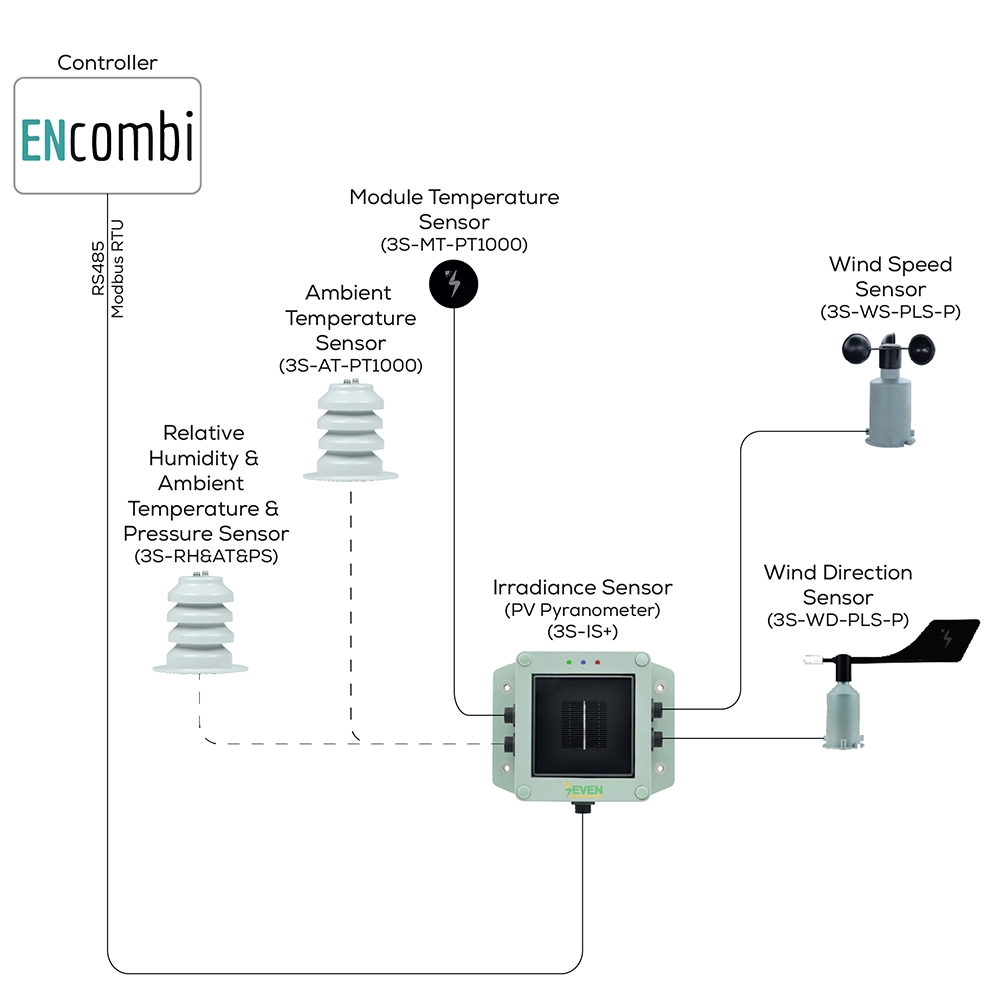
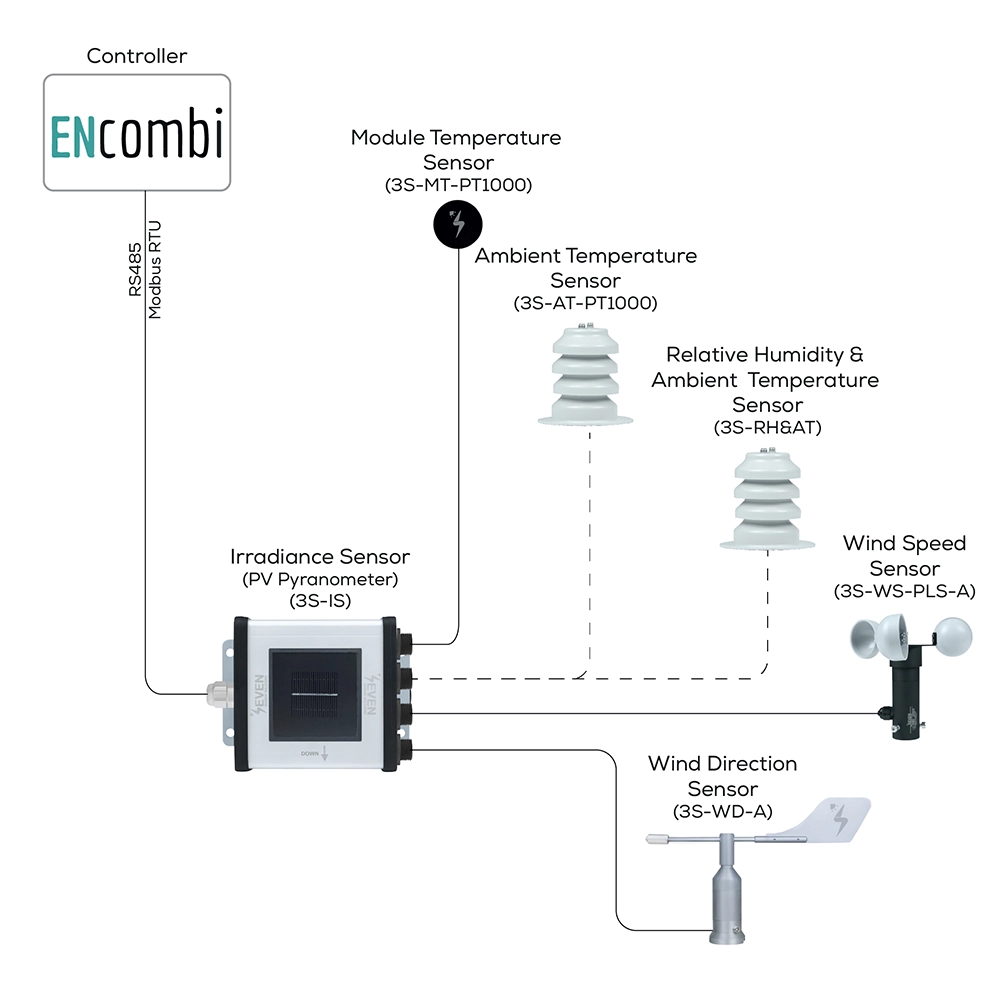
The weather station connects to the ENCombi controller via RS485 using Modbus RTU. Since the sensors are grouped on the irradiance sensor, only one RS485 line goes from the field to the controller.
- Mount the sensors following the instructions in the manual.
- Connect the single RS485 line to the ENCombi controller and other wires to power supply. The sensors operate with 12–30 VDC, 24 VDC is recommended.
- Begin configuring the sensor by defining the weather station as a Modbus RTU device on the controller and configure the communication parameters using the Modbus Map.
- Verify that the data appears on ECcloud and ECweb.
If needed, our team can provide remote support for commissioning.
Which Irradiance Sensor Models are compatible with ENCombi Controllers?
Since the irradiance sensor acts as a hub, the number of external sensors you connect determines which model to choose. The table below summarizes what can be added to each model. All models connect to ENCombi via RS485 Modbus RTU.
| Model | Connectable External Sensors |
| 3S-IS / 3S-IS+ | External sensors cannot be connected (irradiance only). |
| 3S-IS-1 / 3S-IS-1+ | Ambient Temperature OR Module Temperature Sensor |
| 3S-IS-2 / 3S-IS-2+ | Ambient/Module Temperature Sensor + Wind Speed Sensor |
| 3S-IS-3 / 3S-IS-3+ | Ambient Temperature + Module Temperature + Wind Speed Sensor |
| 3S-IS-4-WD / 3S-IS-4-WD+ | Ambient Temperature + Module Temperature + Wind Speed + Wind Direction Sensor |
| 3S-IS-4-RH / 3S-IS-4-RH+ | Module Temperature + Wind Speed + Relative Humidity & Ambient Temperature |
| 3S-IS-5 / 3S-IS-5+ | Module Temperature + Wind Speed + Wind Direction Sensor + Relative Humidity & Ambient Temperature |
| 3S-IS-6+ | Module Temperature + Wind Speed + Wind Direction Sensor + Relative Humidity & Ambient Temperature & Pressure |
| 3S-2IS / 3S-3IS / 3S-4IS | For large sites with multiple orientations. |
Frequently Asked Questions (FAQ)
Is this weather station compatible with the ENCombi Controllers?
SEVEN is compatible with ECpv, ECpvH, and ECpvX controllers, as well as ECcube, ECcubeH, and ECcubeX control systems. Compatibility has been directly certified by ENCombi.
How does a weather station communicate with ENCombi Controller?
Sensors communicate with the ENCombi Controllers via RS485 using Modbus RTU.
What measurements are included in a standard ENCombi Weather Station?
Irradiance, module temperature, wind speed, wind direction, and relative humidity & ambient temperature are standard meteorological inputs of ENCombi Weather Stations.
Can I add or remove sensors from ENCombi Weather Station as needed?
Yes. The irradiance sensor box functions like a hub and supports up to four sensor inputs. This allows you to customize the station with the sensors you need.
What is the delivery time for the ENCombi weather station?
Delivery time varies depending on the order quantity. For a single standard set including irradiance, module temperature, relative humidity & ambient temperature, wind speed, and wind direction sensors, the typical shipping time is approximately one week.
What is the price of the ENCombi weather station?
Since every solar project has different needs, the price varies depending on the sensors you choose. For a complete professional installation including irradiance, module temperature, wind speed, wind direction, and relative humidity & ambient temperature the range is approximately between 645 EUR and 1175 EUR.
What is its purpose in a microgrid or generator-based system?
Weather data helps forecast PV production under changing conditions and supports the controller in optimizing the balance between PV, generators, batteries, and electrical loads.
Where is the monitoring of ENCombi Weather Station carried out?
Monitoring is done through ENCombi's ECcloud and ECweb systems.