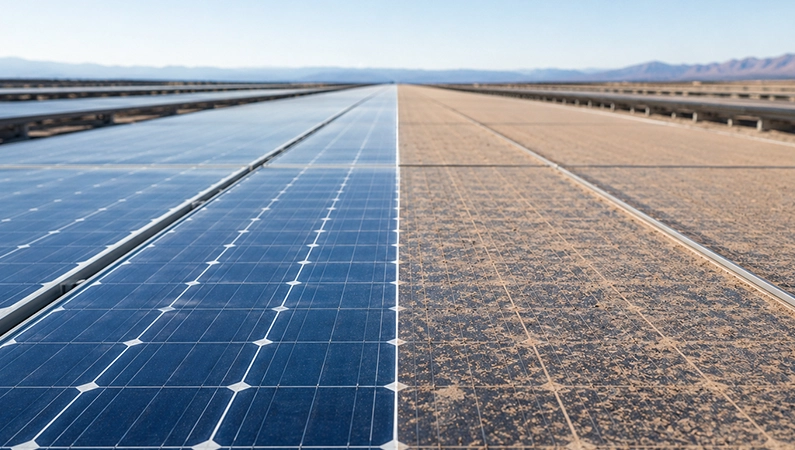
Solar panels in power plants accumulate dust. Because this dust accumulation is not measured and the necessary cleaning is not carried out, an average of $6 billion worth of energy is lost worldwide every year. However, if dust accumulation is monitored and panel cleaning is done at the right time, a large portion of this loss can be prevented.
$6 billion is more than the gross domestic product of approximately 30 countries. Just think what could be done with that money:
- You can make significant and lasting investments in Somalia, a country struggling with poverty.
- You can provide access to basic needs such as clean water, food, medicine, and shelter for more than 2 million people living in Gaza and use it as a significant fund for the reconstruction process, especially in health and education.
- In Syria, where the war has recently ended, you can help raise funds for the country’s reconstruction.
All of this is just a comparison to show the magnitude of the amount wasted each year due to the failure to measure dust accumulation on solar panels. If dust accumulation were monitored and the necessary measures taken, this savings could be used for very productive investments.
What is a soiling sensor?
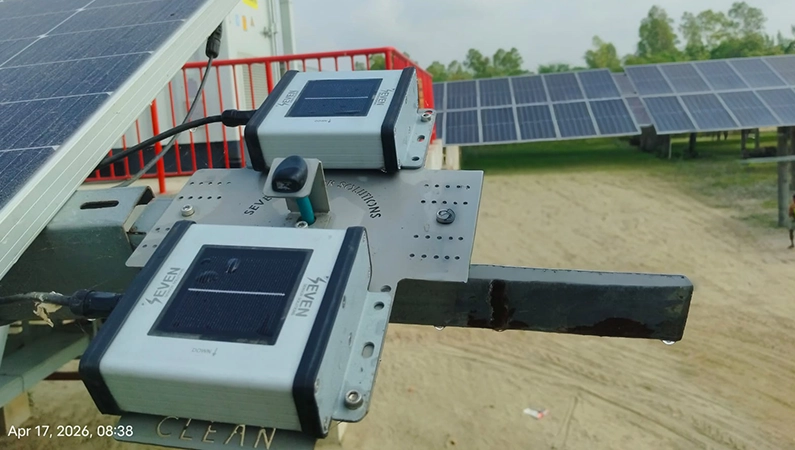
These sensors measure the energy loss caused by dirt and dust accumulating on the surface of PV panels in solar power plants (SPPs).
For example, a PV system with a soiling ratio of 10% means it is not producing 10% of the energy it should. This translates to a 10% inefficiency for every moment the panels are not cleaned and remain dirty.
How does soiling affect production?
Let’s consider the effect of dust using an analogy. You have a very important meeting . At the end of this meeting, you will sign a deal and earn $2 million. However, you are late for the meeting. You have a car on autopilot, the road is completely clear, and the highway speed limit is 140 km/h. Despite this, you are going at 50 km/h, you are about half an hour late, and you miss the meeting and don’t get the project.
So you’re experiencing a huge loss because you’re not fully utilizing the resources at your disposal. A solar power plant that’s gathering dust but isn’t being cleaned is in the same situation. It can’t produce the energy it could, simply because the right precautions weren’t taken at the right time.
When should the panels be cleaned?
Cleaning solar panels restores lost power. However, panel cleaning is a costly process, so knowing when to clean them is important. Cleaning too early means unnecessary expense, while cleaning too late means lost production.
This is where the soiling sensor comes in. By continuously measuring the dust level on the panels, it indicates when cleaning is needed based on data. This way, you clean the panels precisely on time, based on actual dust level data, not guesswork.
Frequently Asked Questions
How does a soiling sensor work?
Typically, two reference measurements are compared: one kept clean and another left to contaminate under the same conditions as the panels. The difference between the two measurements gives the soiling ratio on the panels, and this ratio is reported as a percentage.
What does a 10% soiling ratio mean?
This means that approximately 10% of the energy in the facility is lost due to dust. In other words, the system is unable to produce 10% of the energy it is capable of producing.
How often should I clean the panels?
There is no fixed frequency. This depends on the rate at which the area becomes dusty. The most accurate approach is to monitor the dust level with a soiling sensor and clean when a predetermined threshold is reached.
Which plants are suitable for soiling sensors?
The sensor is suitable for both large-scale ground-mounted power plants and commercial and rooftop installations.
What is the difference between manual and automatic soiling sensors?
The automatic soiling sensor cleans the reference surface regularly with its own cleaning system and continuously calculates the ratio. With the manual soiling sensor, cleaning is done by the user when a measurement is to be taken, and it is a more economical option.