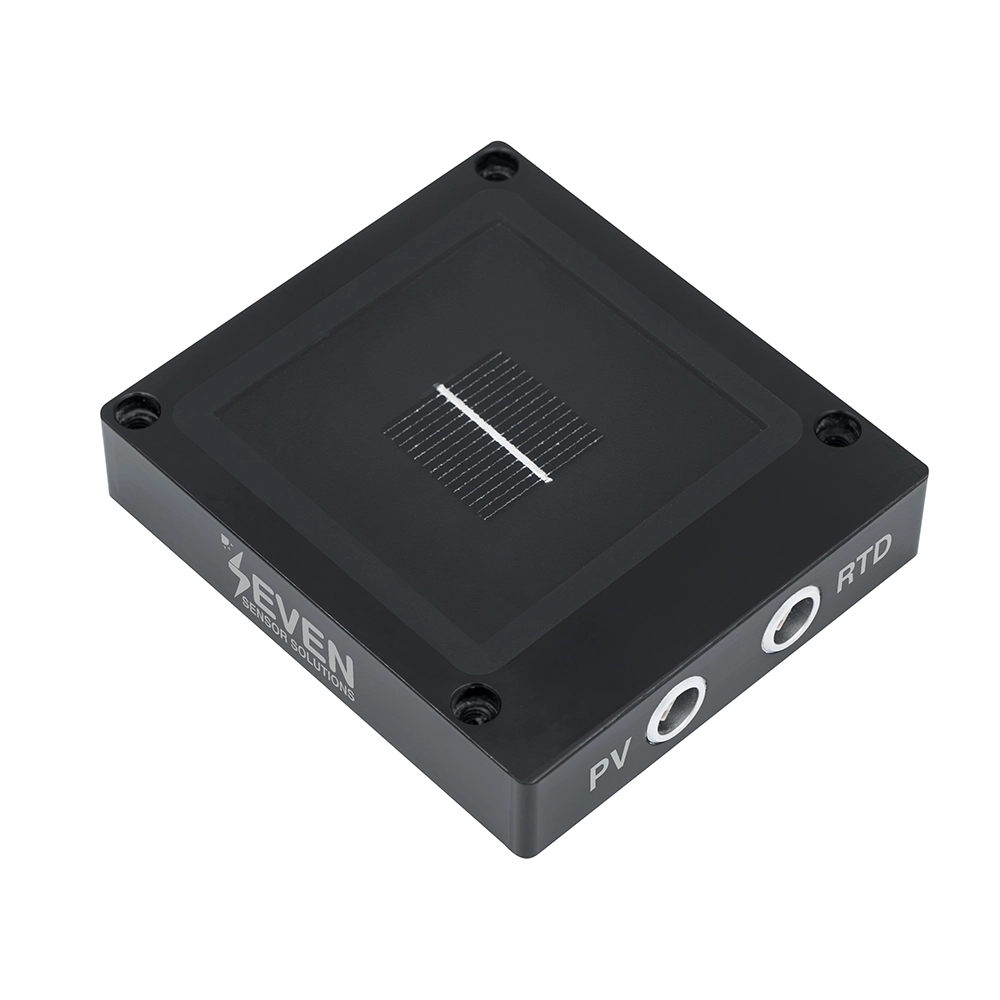
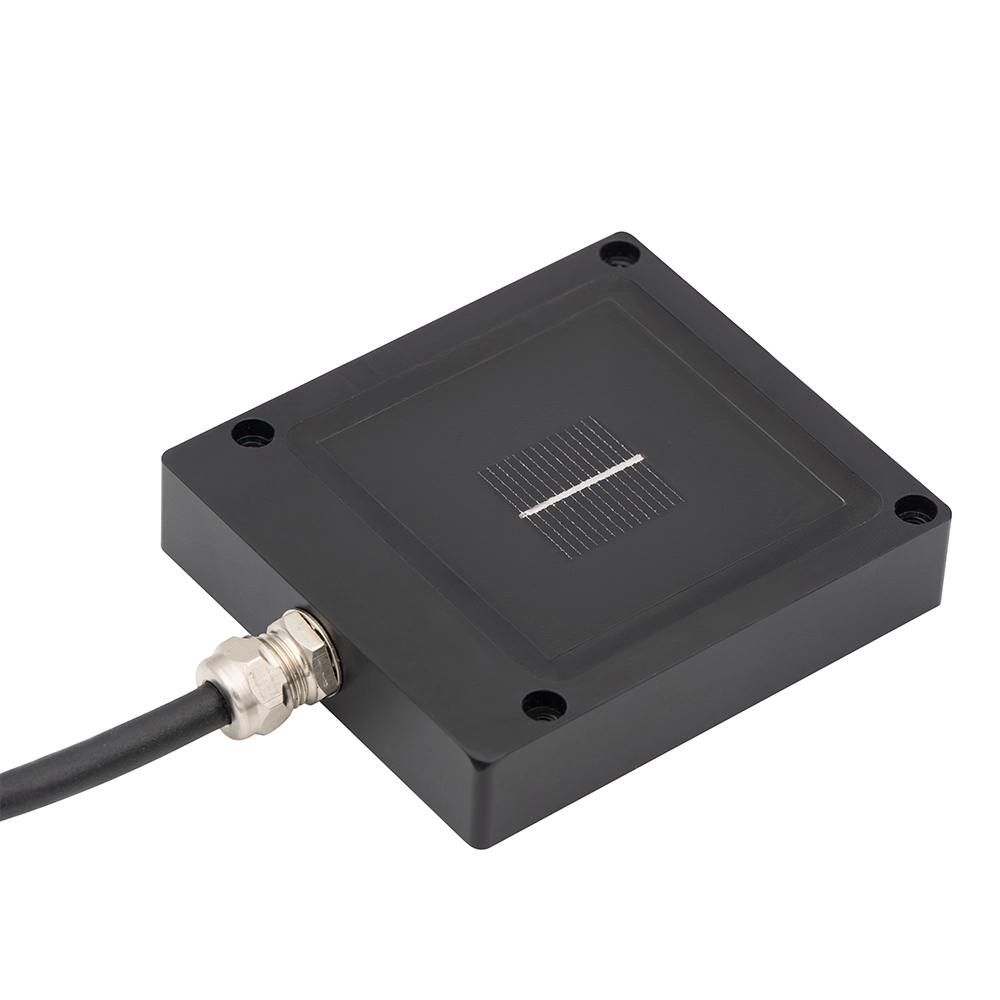
WPVS Reference Cell – 3S-WPVS
The WPVS (World PV Scale Standard) Reference Cell is a high-precision sensor designed for accurate irradiance measurement and calibration in photovoltaic (PV) applications. It is mainly used in laboratories and solar testing environments to calibrate solar simulators and verify PV module performance under standard test conditions.
As part of the SEVEN sensor family, the WPVS is built using a monocrystalline silicon reference cell, ensuring that its response to light closely matches real PV modules. This makes it a reliable solution for both research and industrial PV testing applications.
The sensor provides irradiance and cell temperature measurements, helping engineers and technicians achieve consistent and traceable results in solar testing processes.
TECHNICAL SPECIFICATIONS OF WPVS REFERENCE CELL
| Item Code | 3S-WPVS-IV, 3S-WPVS-L |
| Reference Cell | Monocrystalline Silicon (20 mm x 20 mm) |
| Field of View | 162° |
| Data Output | mV (via integrated precision shunt resistor) |
| Electrical Connection | 1 m 2x2x0.22 mm LI2Y(St)C11Y-TP Cable, UV and Weather Resistant |
| Cell Temperature Sensor Type | PT1000 Class A as per EN 60751 |
| Connection | M8 connector (standard) / LEMO connector (optional) |
| Box Dimensions | 70 x 79 x 16 mm (W x L x H) |
| Weight | 250,8 g |
| IP Rating | IP68 options |
| Sensor Housing Material | Anodized Aluminum |
| Compliant Standard | IEC 60904-2 |
| Calibration | Each sensor is calibrated under Class AAA Sun Simulator as per IEC 60904-2 and IEC 60904-4 by using a reference cell calibrated by ISFH-Germany |
What Does a WPVS Reference Cell Do?
A WPVS reference cell is used to measure solar irradiance in controlled and real-world environments. Unlike pyranometers, it uses an actual solar cell, which means it reacts to light in the same way as PV modules.
The WPVS measures irradiance in “sun units”, where:
1 sun = 1000 W/m² at 25°C
This makes it especially useful for:
- Calibrating solar simulators
- Testing PV modules under standard conditions (STC)
- Verifying irradiance levels during laboratory testing
- Supporting quality control processes in PV manufacturing
Because of its PV-matched behavior, the WPVS ensures more realistic and reliable measurements compared to generic irradiance sensors.
How Does the WPVS Reference Cell Work?
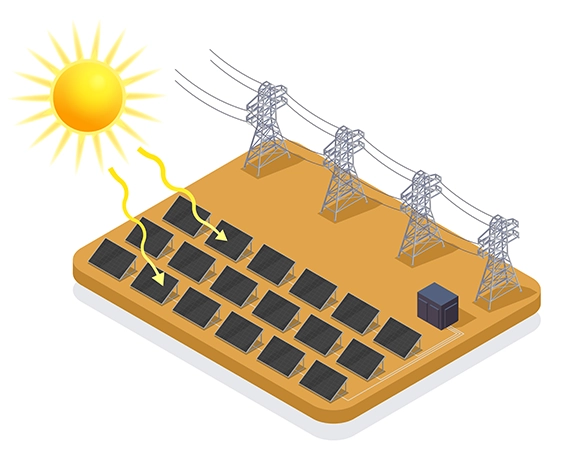
The WPVS operates using a simple but highly precise measurement principle:
- A monocrystalline solar cell absorbs incoming light
- The cell generates an electrical current proportional to irradiance
- A precision shunt resistor converts this current into a measurable voltage (mV)
- A PT1000 temperature sensor located under the cell measures temperature
- Both irradiance and temperature signals are transmitted via analog output
This combination allows accurate correction and monitoring of environmental conditions during PV testing.
Available Models of WPVS Reference Cell
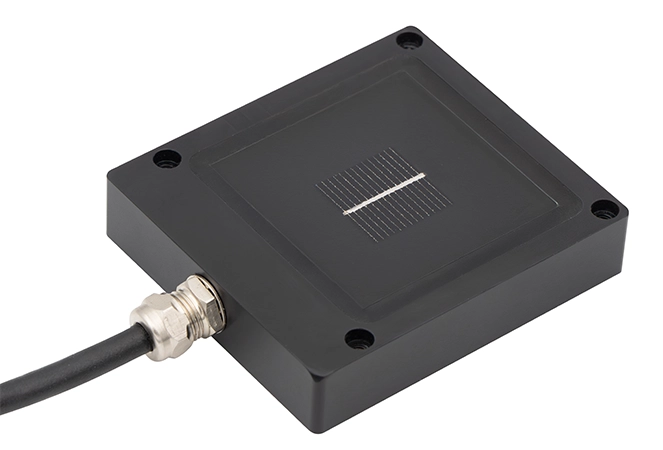
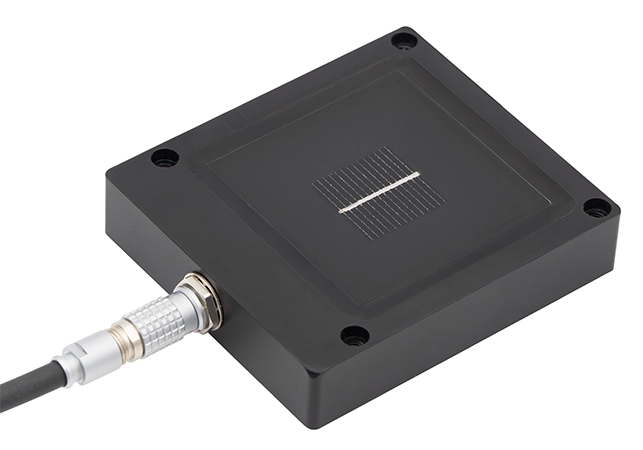
All WPVS models share the same measurement principle and calibration quality. The main difference is the connector type.
 |
 |
|
| Model | 3S-WPVS-IV | 3S-WPVS-L |
| Output Type | Analog (mV) | Analog (mV) |
| Connector | M8 Metal Gland | Lemo EGG.0B.306.CLL |
Why Choose the WPVS Reference Cell?
By using a calibrated reference cell like WPVS, labs and manufacturers can ensure:
- High measurement accuracy: Manufactured according to IEC 60904-2 standards and calibrated with high-precision equipment.
- Traceable calibration: Each unit is calibrated using a Class AAA solar simulator and a reference cell certified by ISFH (Germany).
- PV-matched response: Uses real solar cell technology, ensuring accurate comparison with PV modules.
- Robust and durable: IP68-rated aluminum housing ensures long-term reliability in both indoor and outdoor environments.
- Compact and lightweight: Small size and low weight make installation simple and flexible.
- Easy integration: Analog output and standard connectors allow quick connection to test systems and dataloggers.
- Flexible connection options: Available with M8 or LEMO connectors depending on project requirements.
- 5-year warranty: Reliable long-term performance supported by SEVEN.
Optional Albedo WPVS Reference Cell
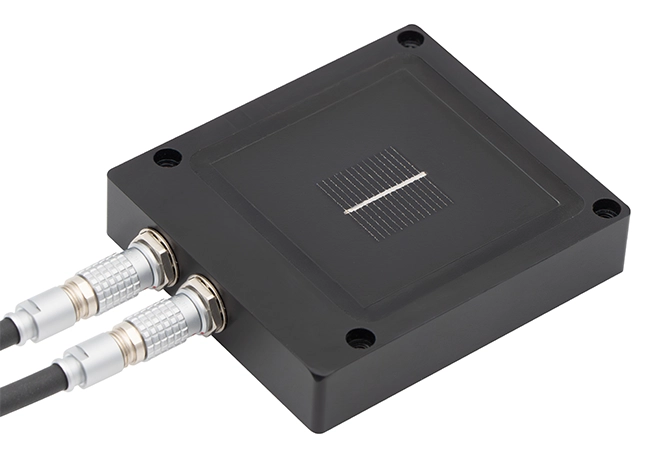
The WPVS can also be manufactured as an albedo version, designed for advanced PV analysis.
This configuration includes:
- One sensor measuring incoming irradiance (POA)
- One sensor measuring reflected irradiance
This is particularly useful for:
- Bifacial PV systems
- Albedo measurement
- Performance ratio calculations
Solar albedo is defined as the ratio of reflected irradiance to incoming irradiance, which is critical for optimizing bifacial panel performance.
Applications of WPVS Reference Cell
The WPVS is widely used in:
- Solar panel testing laboratories
- PV module manufacturing facilities
- Solar simulator calibration setups
- Research and development centers
- Quality assurance processes
- Bifacial PV system performance analysis
How Is the WPVS Reference Cell Used in Practice?
The WPVS Reference Cell is mainly used in solar testing laboratories and PV manufacturing facilities where accurate and repeatable measurements are critical.
Solar Simulator Calibration
In PV labs, solar simulators are used to replicate sunlight under controlled conditions. Before testing any solar module, the simulator must be calibrated.
The WPVS is placed under the simulator light, and:
- It measures the irradiance level produced by the simulator
- The output signal (in mV) is compared to the expected 1 sun (1000 W/m²) level
- The simulator intensity is adjusted until the correct irradiance is achieved
This ensures that all PV module tests are performed under standard test conditions (STC).
PV Module Testing

During PV module testing:
- The WPVS is installed next to or in the same plane as the module
- It continuously measures irradiance and cell temperature
- These values are used to validate test conditions and correct measurement results
Because the WPVS uses a real solar cell, it reacts to light similarly to the module under test, improving accuracy.
Frequently Asked Questions (FAQ)
What is the main purpose of the WPVS reference cell?
It is used for accurate irradiance measurement and calibration in PV testing and solar simulator environments.
Does the 3S-WPVS sensor measure temperature?
Yes, it includes a built-in PT1000 Class A temperature sensor.
Is the SEVEN WPVS Reference Cell suitable for outdoor use?
Yes. With IP68 protection, it can operate reliably in harsh environmental conditions.
What standards does SEVEN WPVS Reference Cell comply with?
IEC 60904-2 for reference cells and calibration procedures.
What is the warranty of the SEVEN WPVS Reference Cell?
All WPVS reference cells come with a 5-year warranty.
How are the WPVS sensors calibrated?
Each irradiance sensor is calibrated under a Class AAA Sun Simulator as per IEC 60904-2 and IEC 60904-4, using a reference cell calibrated by ISFH-Germany.
Where can I recalibrate the WPVS sensor?
SEVEN Sensor provides calibration services at its facilities. Calibration is performed using a Class AAA Sun Simulator, in accordance with IEC 60904-2 and IEC 60904-4 standards, and referenced against a calibration cell certified by the ISFH Institute in Germany.
Additionally we offer user-friendly interface where users can recalibrate the sensors in their home country and enter the new calibration values into the system.
What is the price of SEVEN 3S-WPVS?
The price of the SEVEN 3S-WPVS depends on the model. The 3S-WPVS-IV is priced at 350 EUR, while the 3S-WPVS-L is priced at 860 EUR.
Does the WPVS sensor include a cable?
Each unit comes with a 1 m 2x2x0.22 mm LI2Y(St)C11Y-TP cable (UV and weather resistant). Other lengths are available on request.