Portable Soiling Sensor – 3S-SMS-P
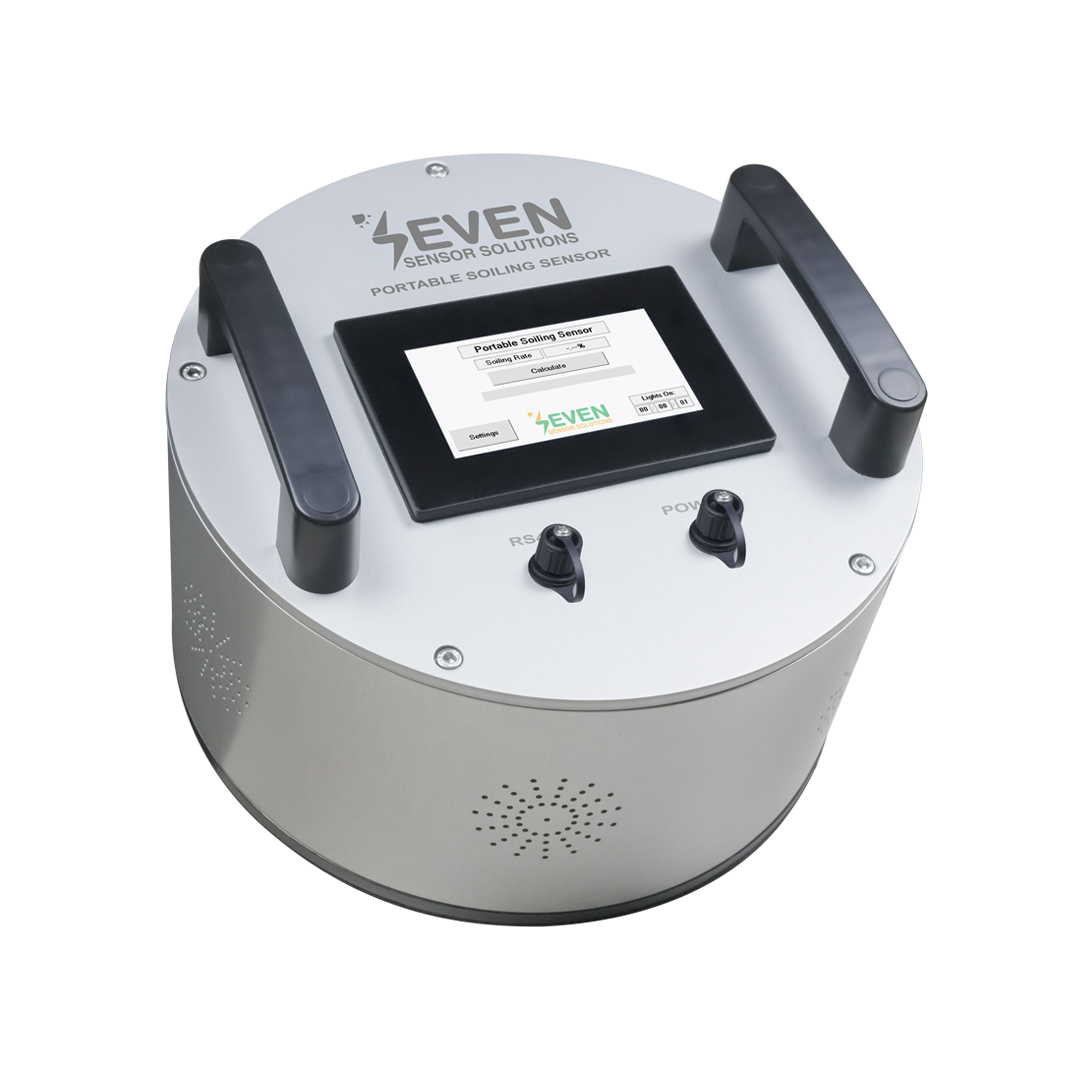
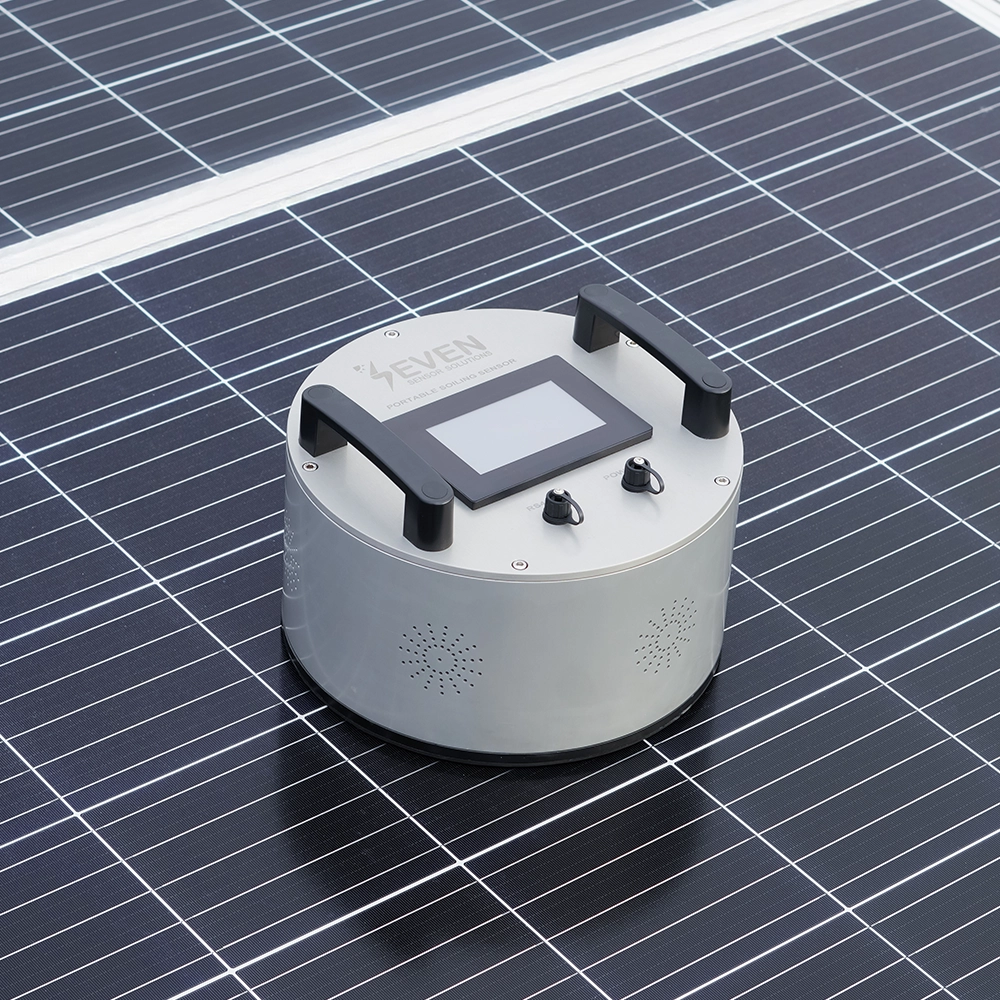
The Portable Soiling Sensor is an innovative product developed by SEVEN Sensor, based on patented technology designed specifically for measuring on-site soiling levels on solar panels in PV (photovoltaic) systems. This sensor accurately measures the amount of soiling on solar panels, helping to optimize the efficiency of solar power plants. With its compact and durable design, the sensor combines cutting-edge optical technology and advanced electronics to deliver precise and reliable soiling level measurements.
TECHNICAL SPECIFICATIONS OF PORTABLE SOILING SENSOR
| Item Code | 3S-SMS-P |
| Soiling Ratio | 1% – 20% |
| Resolution | 0.1% |
| Uncertainty | ≤ 2% |
| Data Output | RS485 |
| Operating Temperature Range | -10°C to +50°C |
| Operating Humidity Range | 0 … 90 % RH |
| Power Supply | 12 V 24 Ah Lithium Battery |
| Working Time | 5 hours |
| Battery Charging Time | 3 hours |
| Portable Soiling Sensor Dimensions | Ø 280 mm x 180 mm (D x H) |
| Portable Soiling Sensor Weight | 4 kg |
| Battery Box Dimensions | 220 mm x 232 mm x137 mm (W x L x H) |
| Battery Box Weight | 3.6 kg |
What Problem Does the Portable Soiling Sensor Solve?
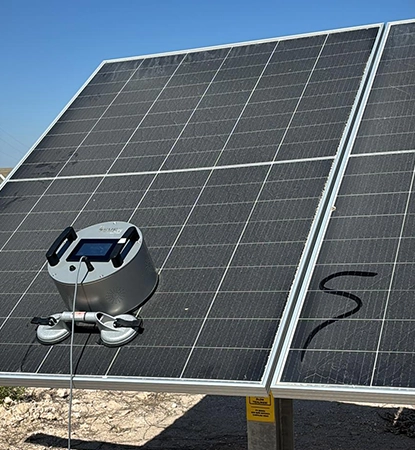
The 3S-SMS-P Portable Soiling Sensor is a handheld tool that lets you measure soiling ratio directly on a solar panel whenever you want. Instead of installing a fixed soiling station you can walk into the field, place the device on a panel, and get a clear on-screen soiling percentage within minutes.
Soiling rarely looks the same across an entire plant. One block may be dusty from a nearby road, another may be clean after wind or rain. If you rely only on visual checks or a single fixed sensor, you can easily clean too early, too late, or miss the worst-affected area.
With a portable sensor, you can spot-check multiple strings or zones in one visit, measure the real loss level, and decide cleaning priority based on numbers rather than guesswork.
It is built for PV operators, O&M teams, and cleaning companies who need fast, reliable decisions on when and where to clean.
How Does the Portable Soiling Sensor Work?
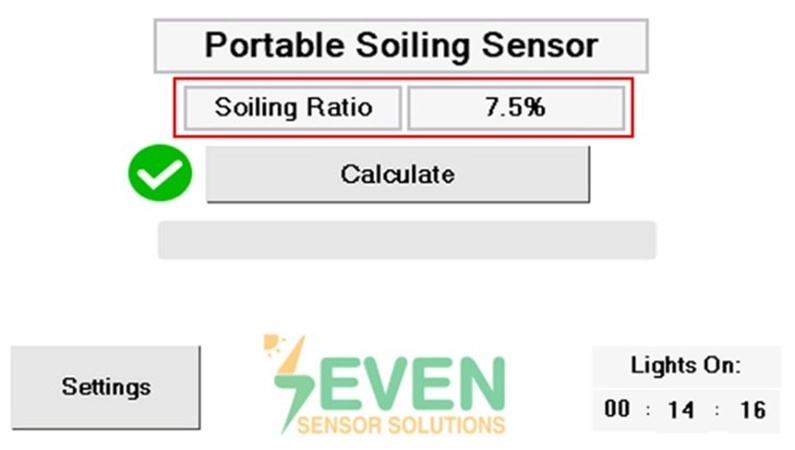
The device operates using the principles of light reflection and scattering to assess the accumulation of soiling on panel surfaces. Users can input key parameters such as panel cell color, dust tone, and dust color via the integrated LCD touchscreen. The lamps reflect stable light with a high lumen value onto the panel surface and reflected light is detected and measured by high-precision sensors housed within the device’s mechanical structure. The collected data is processed by a microcontroller and displayed digitally on the screen, enabling easy interpretation of the results.
The 3S-SMS-P stands out for its portability and ease of use. It is powered by a rechargeable battery, offering up to 5 hours of operation, making it ideal for field use in solar energy systems.
How Do You Take a Measurement in the Field with the 3S-SMS-P?
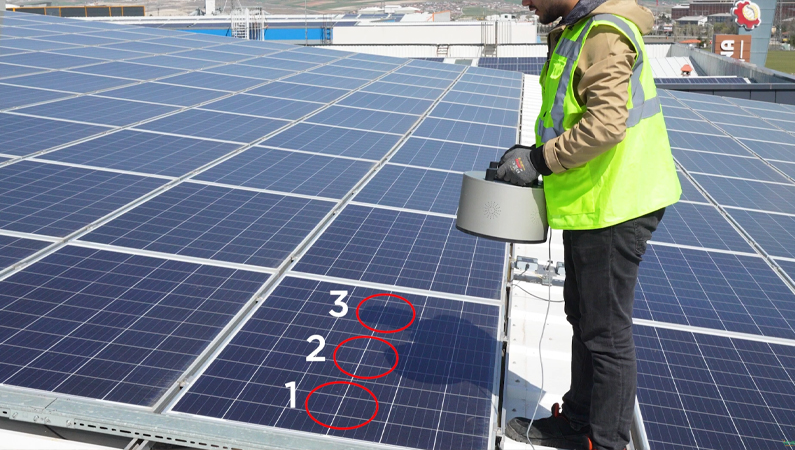
The measurement process is designed to be simple and repeatable:
- Take three readings on a soiled panel at bottom-center, middle, top-center
- Clean the same panel thoroughly.
- Take three readings again at the same three positions.
The sensor uses these two sets of readings (before and after cleaning) to calculate the soiling ratio.
This “same-panel before/after” method is important because:
- Even panels of the same model can have slightly different reflection characteristics.
- Measuring on the same module keeps the comparison consistent and improves accuracy.
Who Typically Uses the 3S-SMS-P Portable Soiling Sensor?
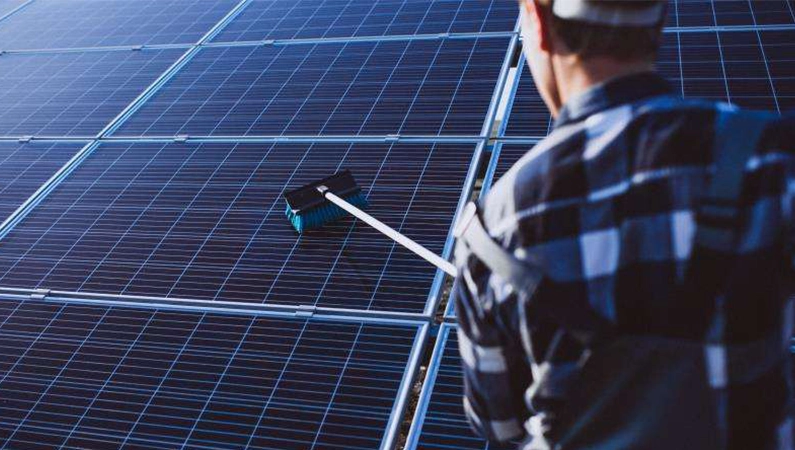
The 3S-SMS-P is especially useful for:
- Cleaning companies that want to identify where cleaning is needed.
- PV owners/O&M teams with many sites.
- Multi-region operators who want the same method across fleets and climates.
What are the Key Benefits of the Portable Soiling Sensor?
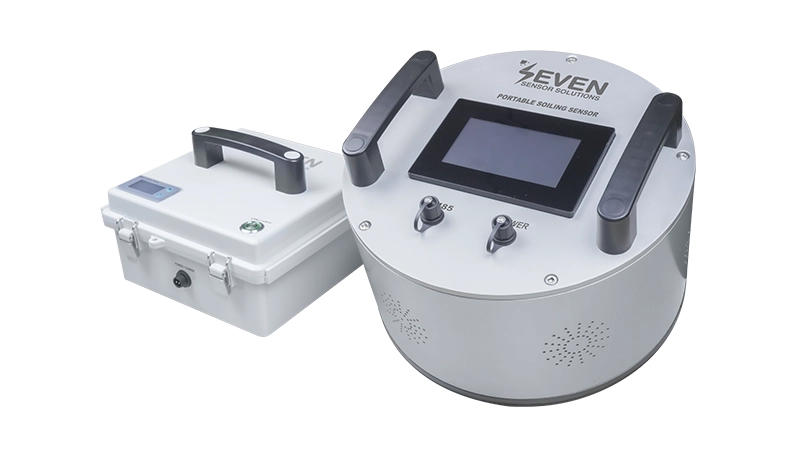
- Portable and field-ready: carry it to any block and measure on the spot.
- Instant results on LCD with no external software needed for routine checks.
- Accurate soiling ratio regardless of the soil and panel color.
- Patent-pending technology designed specifically for PV soiling measurement.
- Quick decision support for cleaning timing and priority.
- Free firmware/software updates and SEVEN support.
Frequently Asked Questions (FAQ)
How accurate is the Portable Soiling Sensor measurement?
The uncertainty is ≤ 2%, thanks to SEVEN’s optical calibration and same-module before/after method.
What does the soiling ratio on the Portable Soiling Sensor indicate?
It shows the percentage of energy loss on a specific PV module due to dust accumulation. Higher soiling ratio = higher production loss.
How long does the Portable Soiling Sensor battery last in the field?
The sensor offers up to 5 hours of continuous operation.
Why do I have to measure the same panel before and after cleaning when using the Portable Soiling Sensor?
Because reflection characteristics can differ slightly from panel to panel. Using the same module keeps the calculation consistent and improves accuracy.
How long does one measurement take for the Portable Soiling Sensor?
Each reading takes about a minute. A full soiled-plus-clean sequence on one panel typically fits within a short on-site check of 15 minutes.
What panel and dust types does the Portable Soiling Sensor support?
Before measuring, you simply select a few parameters on the LCD:
Panel cell color: black or blue
Soil color: brown, white, or gray
Soil color tone: light, medium, or dark
By choosing these options, the sensor adapts its calculation to different PV cell finishes and typical dust/soil colors found in the field, ensuring more accurate and consistent soiling measurements across various sites and environments.
Does the 3S-SMS-P store data?
The measured data is not stored. Routine use is through the LCD display.
How often should I recalibrate the Portable Soiling Sensor?
The sensor should be calibrated every 500 hours of use or 2 years, whichever comes first. You can contact SEVEN Sensor for calibration procedures.
Why does the 3S-SMS-P Portable Soiling Sensor measure only between 1% and 20% soiling ratio?
The sensor is optimized for where soiling really matters in practice. Below 1%, the energy loss is usually lower than the cleaning cost, so most users ignore it. Above 20%, the module is already heavily soiled and should be cleaned immediately—there’s no need to distinguish between, for example, 25% and 30%. The 1–20% range is where the optical method is most stable and where PV operators actually make cleaning decisions.
What’s Included in the 3S-SMS-P Box?
Standard package includes the portable head, battery box, charging adapter, power cable, communication cable, and a USB-to-RS485 converter for firmware/configuration tasks. We also provide an optional carrying case upon request.
What are the delivery times for the 3S-SMS-P?
It depends on the order quantity. For small orders, the typical delivery lead time for the Portable Soiling Sensor is approximately 2–3 weeks.
What is the price of portable soiling sensor?
The portable soiling sensor comes at a unit price of 2900 EUR.