Solplanet Weather Station
SEVEN offers a complete weather station solution compatible with Solplanet dataloggers for solar power plants. Solplanet Ai-Logger 1000 is a powerful and scalable data logger capable of managing up to 80 different devices simultaneously, including PV inverters, hybrid inverters, smart meters, and weather stations. Thanks to its integrated web page, the entire power plant is managed from a single point, and remote performance monitoring can be performed by connecting to Solplanet Cloud.
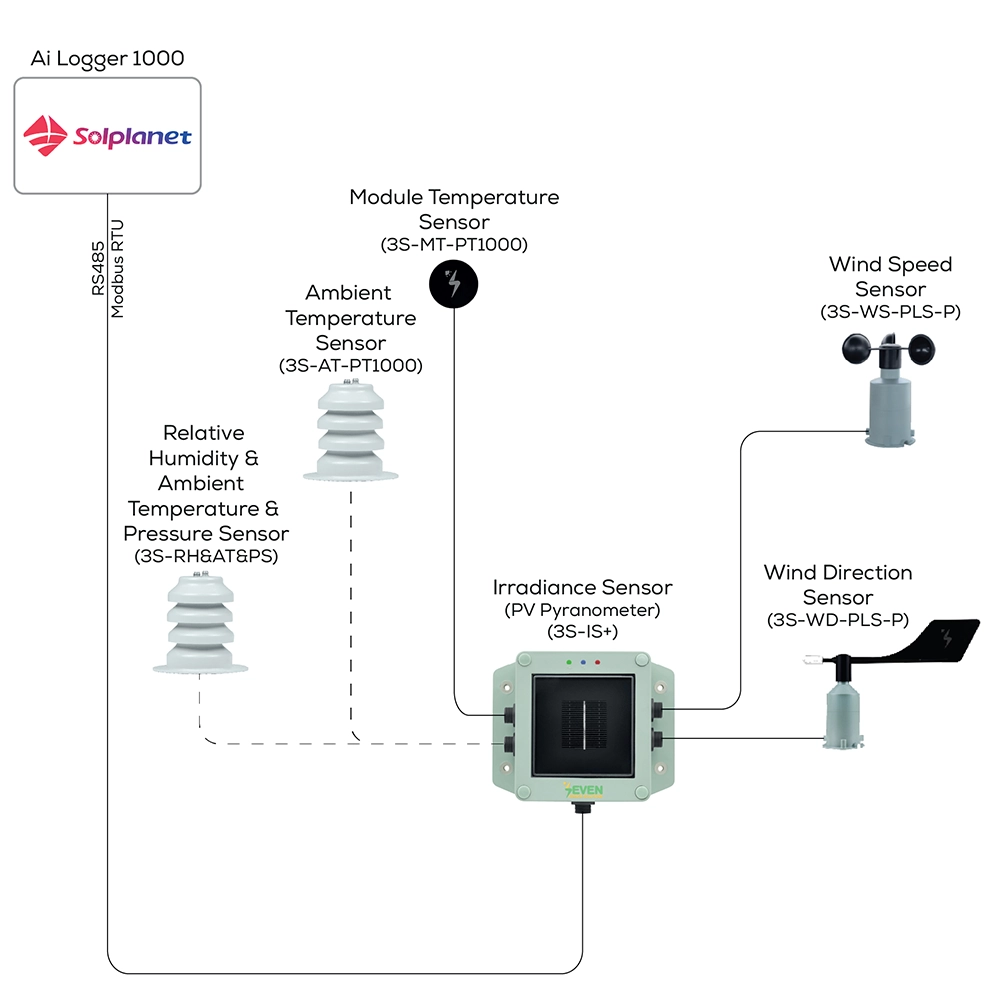
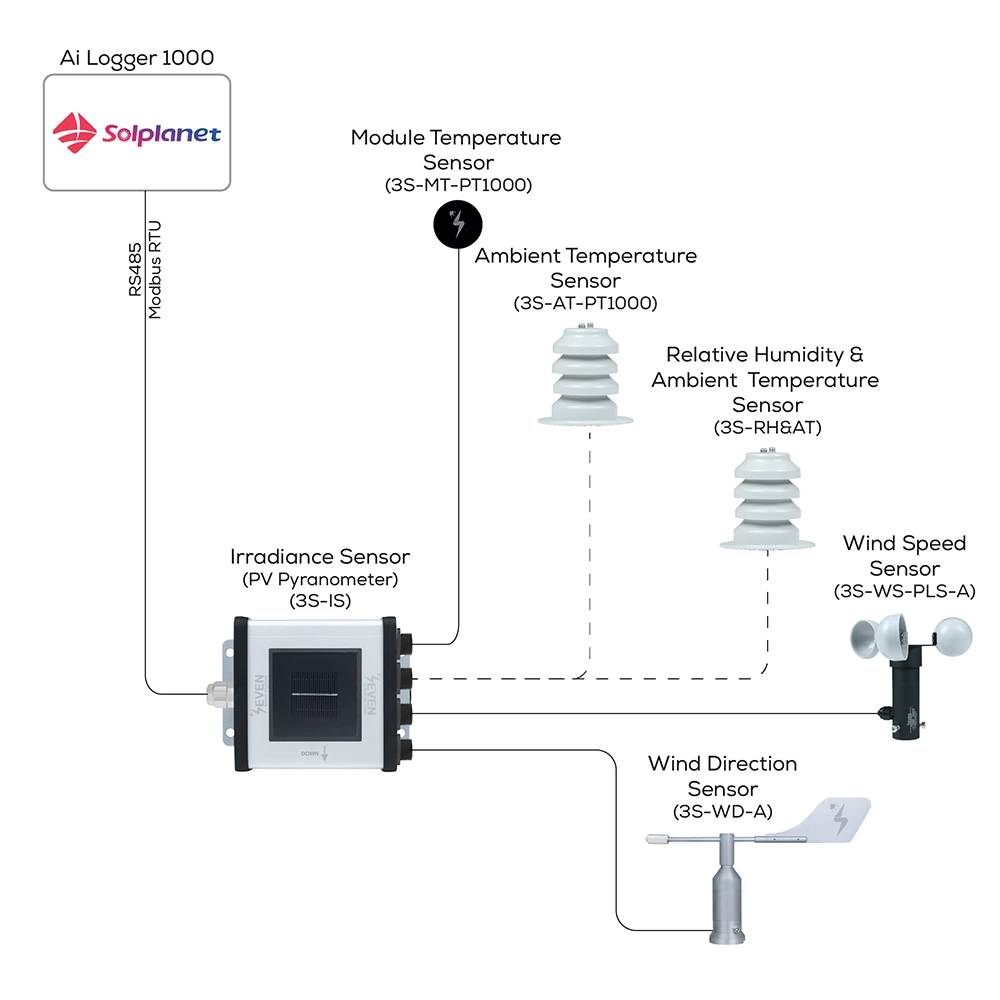
SEVEN irradiance sensor functions as a sensor box and a hub. External sensors are connected to this sensor, and all collected data is transmitted to the Ai-Logger 1000 via a single RS485 Modbus RTU line.
The required sensors in your weather station
| Product Photo | Sensor |
|---|---|
|
|
|
|
|
|
|
|
|
|
|
|
What sensors are included in the Solplanet Weather Station setup?
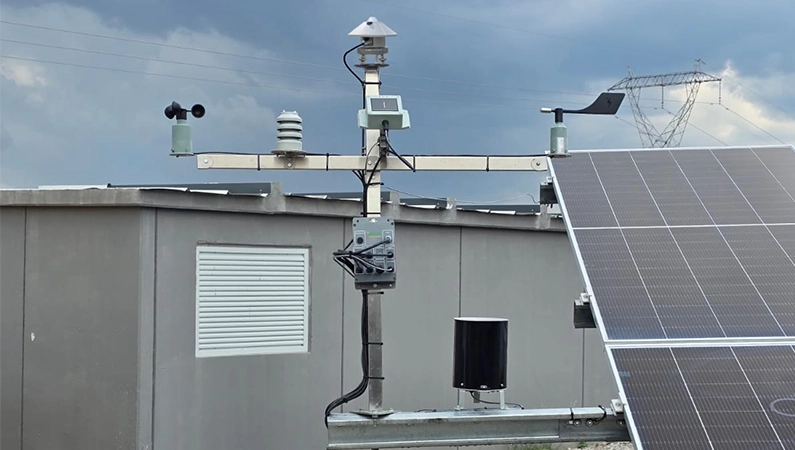
The logic of the setup is simple. Measure field conditions that directly explain energy production and send the data to the Ai-Logger 1000 via RS485 Modbus RTU. A standard Solplanet weather station is built around the following sensors.
- Irradiance Sensor (PV pyranometer / reference cell): Measures solar irradiance, the most important input for a PV power plant. The SEVEN irradiance sensor is designed as a sensor box with an integrated cell temperature sensor that provides a temperature-compensated irradiance value. It also features up to four input ports for additional sensors and an RS485 output to a datalogger.
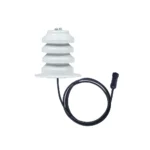
- Ambient Temperature Sensor: Indicates how the production process is affected by temperature. This sensor is mounted inside a solar radiation shield which has four aspirated plates that allow air to pass freely. The shield has the ability to protect the ambient temperature sensor from radiation and other sources of radiant heat.
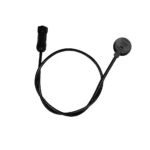
- Module Temperature Sensor: Mounted on the back of the panel to measure surface temperature. It is the most recommended sensor after the irradiance sensor as it provides the back of module temperature value which is used in the calculation of the Performance Ratio of the PV Plant.
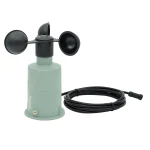
- Wind Speed Sensor: Also known as an anemometer, is used to measure wind speed in solar power plants and transmits the value to the datalogger.
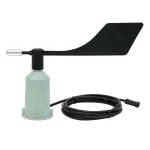
- Wind Direction Sensor: Measures the direction of the wind.
How do Solplanet Weather Station help monitor performance ratio (PR)?
When sensors send their data to the Ai-Logger 1000, reading metrics like PR becomes much easier. This is because you can compare the plant’s production to the conditions the plant actually experiences.
A simple example:
- If irradiance production is decreasing and irradiance is also decreasing, the cause is most likely the weather.
- If output drops while irradiance remains constant, this is a stronger indication to investigate dust accumulation, inverter behavior, shading, or string issues.
How to connect and monitor the Solplanet weather station?
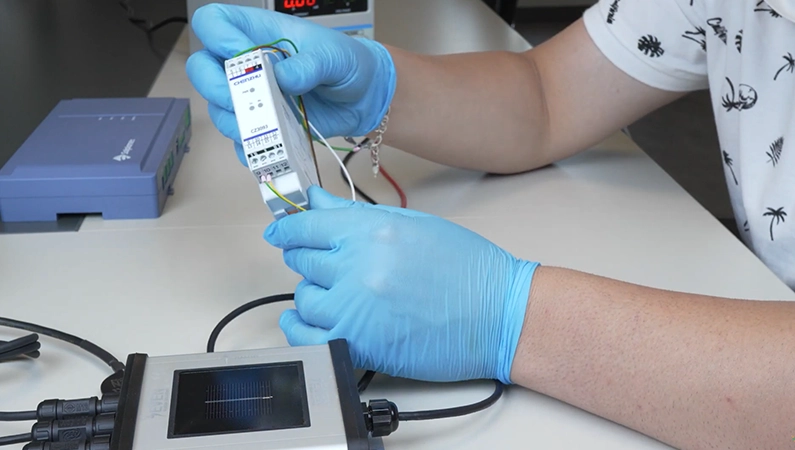
RS485 isolator is used for connection of SEVEN Sensor Box with Ai Logger 1000. SEVEN Sensor Box is connected to the isolator. The data cables from the isolator are then connected to the Ai Logger 1000 COM port.
The green wire of the cable from the Sensor Box (RS485 A / Data (+)) is connected to section 9 of the RS485 isolator and the yellow wire of the cable from the sensor box (RS485 B / Data (-)) is connected to section 10 of the RS485 isolator.
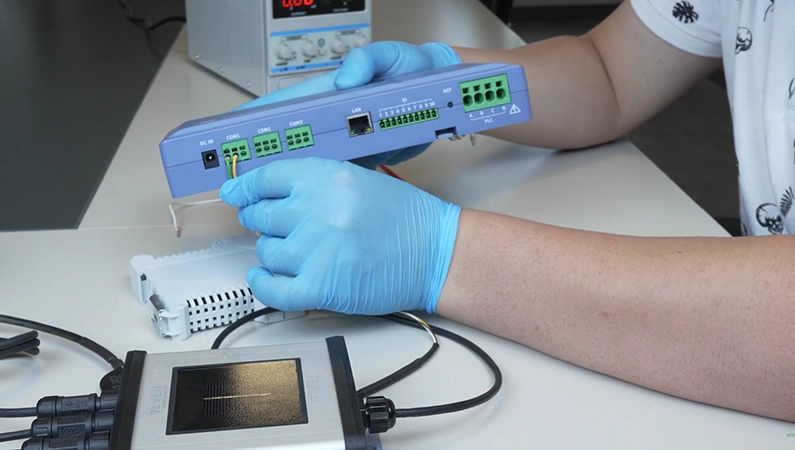
The cable connected to the 1st part of the isolator is connected to the COM port (RS485 A/Data(+)) on the 1000 data logger, and the cable to the 2nd part of the isolator is connected to the COM port (RS485B/Data(-)) of the 1000 data logger.
Because the irradiance sensor functions like a hub, a single RS485 line transmits all measurements to the Ai-Logger 1000. Since the Ai-Logger 1000 can manage up to 80 devices simultaneously, the weather station, inverters, and meters are all monitored through a single interface within the same system.
Ai-Logger 1000 has a built-in web page. From this page, you can manage the entire power plant from a single point and view irradiance, temperature and wind data from the weather station.
Furthermore, Ai-Logger 1000 connects to Solplanet Cloud. This allows you to monitor the status of the power plant and weather data remotely, without being on-site. When weather data is read together with production data, performance analysis become much more meaningful.
How is the Solplanet Weather Station configured?
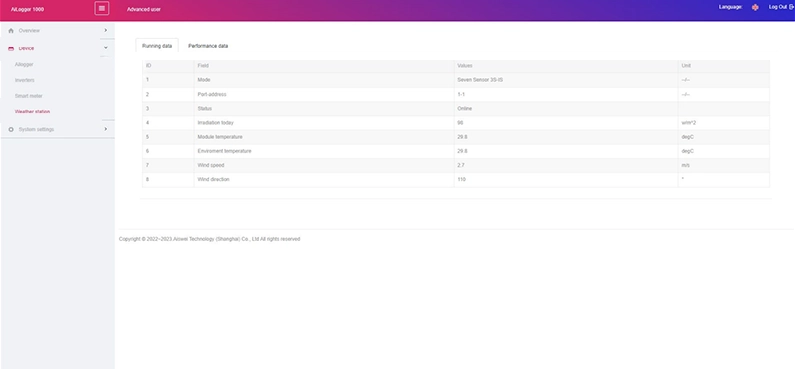
Here’s a brief summary of the process. For details, please refer to the Solplanet compatibility list, setting instructions, and our configuration video.
- Install the sensors on the PV plant according to the installation instructions in the user manual.
- Connect the RS485 communication lines to the isolator then connect the isolator to the Ai-Logger 1000 and power cables to a suitable power supply.
- Select SEVEN Sensor 3S-IS as Device Model.
- By clicking on the “Weather station” menu, you can see the meteorological data provided by SEVEN Sensors.
- Verify the live reads and confirm that the data appears on the Ai-Logger 1000 webpage and in Solplanet Cloud.
If you wish, our team can provide remote support for the commissioning process after installation.
Which irradiance sensor models are compatible with Solplanet?
The following models connect to the Ai-Logger 1000 via RS485 Modbus RTU. The irradiance sensor acts as a hub; the external sensor column shows what can be added to each model.
| Model | Communication | Connectable External Sensors |
| 3S-IS-LR | RS485 Modbus RTU | External sensors cannot be connected. |
| 3S-IS | RS485 Modbus RTU | External sensors cannot be connected. |
| 3S-IS-1 | RS485 Modbus RTU | Ambient Temperature OR Module Temperature Sensor |
| 3S-IS-2 | RS485 Modbus RTU | Ambient Temperature OR Module Temperature Sensor Wind Speed Sensor |
| 3S-IS-2T | RS485 Modbus RTU | Ambient Temperature Sensor Module Temperature Sensor |
| 3S-IS-3 | RS485 Modbus RTU | Ambient Temperature Sensor Module Temperature Sensor Wind Speed Sensor |
| 3S-IS-4-WD | RS485 Modbus RTU | Ambient Temperature Sensor Module Temperature Sensor Wind Speed Sensor Wind Direction Sensor |
Frequently Asked Questions (FAQ)
Is this weather station compatible with the Solplanet datalogger?
Yes. The weather station is designed to be fully compatible with Solplanet's Ai-Logger 1000 datalogger.
How does the weather station communicate with the Ai-Logger 1000?
Ai-Logger 1000 communicates with the device via RS485 using Modbus RTU.
Can I monitor the data received from Solplanet Weather Station remotely?
Yes. Ai-Logger 1000 connects to Solplanet Cloud. This allows you to remotely monitor the status of the power plant and weather data without being in the field.
What measurements are included in a standard installation?
Irradiance, ambient temperature, module temperature, wind speed, and wind direction are standard PV meteorological inputs.
Can I add or remove sensors as needed?
Yes. The irradiance sensor box functions like a hub and supports up to four sensor inputs. This allows you to customize the station with the sensors you need.
What is the delivery time for the Solplanet weather station?
Delivery time varies depending on the order quantity. For a single standard set including irradiance, module temperature, ambient temperature, wind speed, and wind direction sensors, the typical shipping time is approximately one week.
What is the price of the Solplanet weather station?
Since every solar project has different needs, the price varies depending on the sensors you choose. For a complete professional installation including irradiance, module temperature, ambient temperature, wind speed and wind direction, the range is approximately between 470 EUR and 1045 EUR.
Do I need any special settings to view the Solplanet Weather Station data?
The sensor box is automatically detected. You do not need to manually add or configure it on the Ai-Logger 1000. You can follow our setting instructions and configuration video for detailed steps. Please note that an isolator is required for the connection and must be supplied by the user.