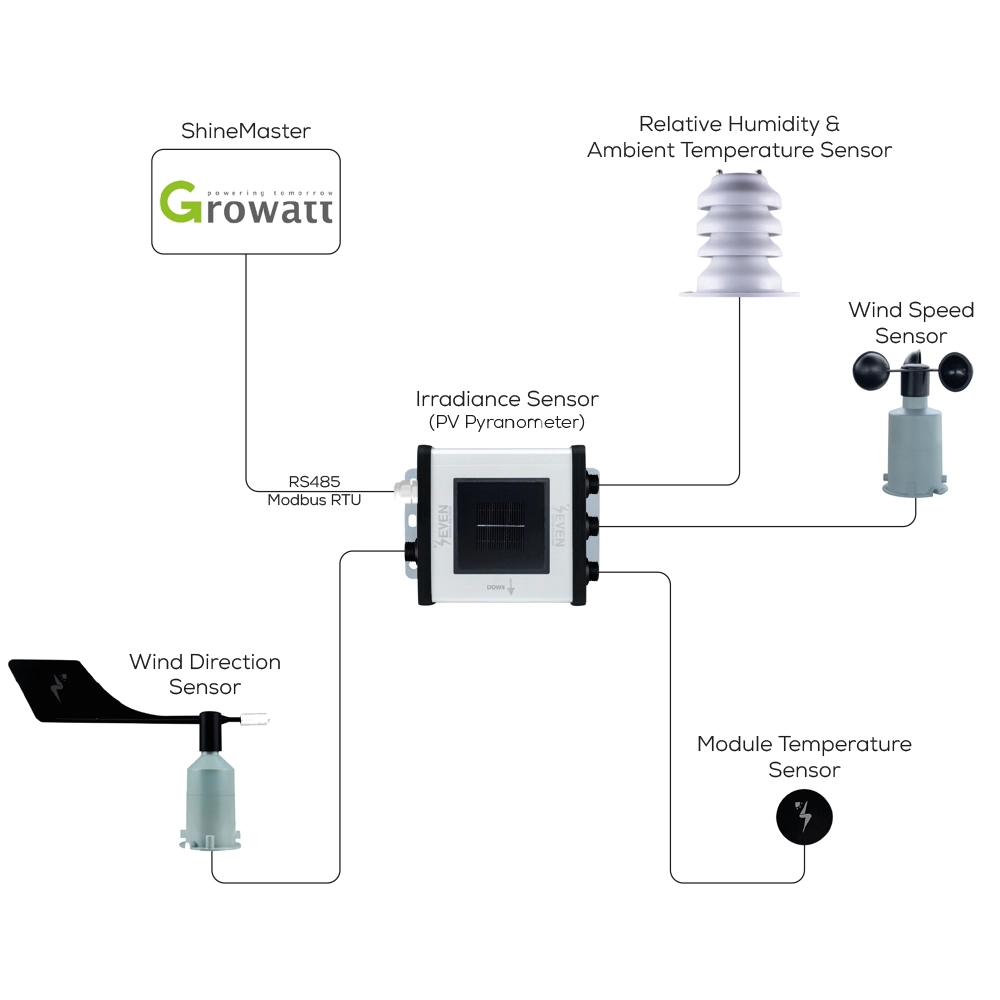
Growatt Weather Station
SEVEN Sensor offers reliable, high-precision weather station solutions designed to accurately monitor the performance of photovoltaic power plants and compatible with Growatt ShineMaster. Our solutions enable real-time measurement of solar irradiance, module temperature, and other environmental conditions, helping you optimize plant efficiency and ensure data-driven operations.
The required sensors in your weather station
| Product Photo | Sensor |
|---|---|
|
|
|
|
|
|
|
|
|
|
|
|
What Is the Growatt Weather Station Used For?
The Growatt weather station is used to measure on-site environmental conditions that directly affect the performance of a solar power plant. Instead of relying solely on inverter production data, operators can also view irradiance, temperature, wind conditions, and other site parameters that explain the reasons behind the plant’s current performance.
This is important because production data alone does not always tell the whole story. When weather measurements are added, it becomes much easier to compare expected output with actual production, investigate low performance, and determine whether changes in output are due to environmental factors or an equipment-related issue.
A Growatt-compatible weather station is typically used for the following purposes:
- performance monitoring
- yield verification
- fault detection and troubleshooting
- operational reporting
- long-term O&M analysis
In any solar power plant where monitoring quality is critical, weather data is not merely an additional feature. These data are a fundamental part of understanding the plant’s behavior.
Which Sensors Are Required in a Growatt Weather Station?
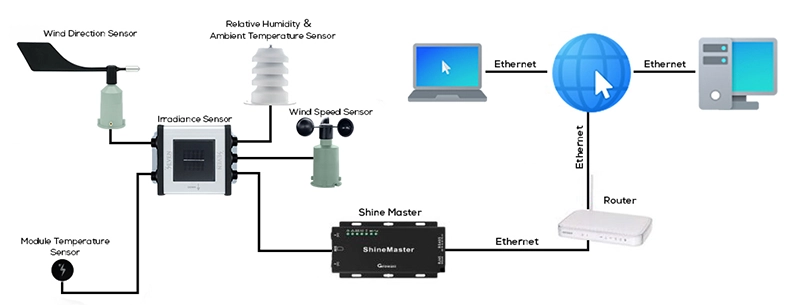
A fully equipped Growatt weather station may include the following basic sensors:
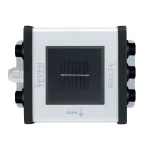
Irradiance Sensor
The irradiance sensor is one of the most critical components in the system, as it measures solar irradiance, the fundamental reference value for evaluating PV performance. This sensor is also defined as a PV pyranometer and reference cell-type solution featuring a Modbus RTU output and multiple additional sensor inputs.
This sensor helps operators compare actual energy production with real-world solar conditions on-site. It also includes an internal cell temperature sensor to provide a compensated irradiance value, making it particularly useful in solar energy applications.
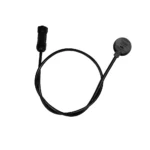
Module Temperature Sensor
The module temperature sensor measures the temperature on the back of the module and provides a much more realistic picture of actual PV operating conditions compared to what can be derived from ambient temperature alone. The temperature of the panel will have an affect on the production performance of the panel. This measurement is particularly useful for performance analysis and is commonly used when evaluating plant efficiency and performance ratios.
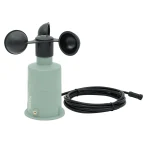
Wind Speed Sensor
The wind speed sensor measures on-site wind conditions and transmits the data to the Growatt monitoring system. In solar energy projects, this measurement can help provide a more comprehensive environmental picture, particularly in open areas and larger installations.
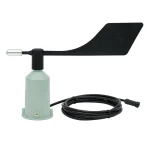
Wind Direction Sensor
The wind direction sensor is used in situations where wind direction data is also required. This can be particularly important in large-scale projects and at sites where a more comprehensive environmental monitoring system is necessary.
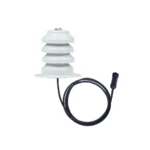
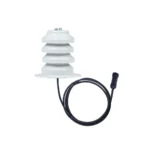
Relative Humidity and Ambient Temperature Sensor
The system may also include a transmitter that collects both relative humidity and ambient temperature data. This provides the facility operator with an additional layer of environmental data and can be useful in projects where more detailed weather monitoring is required.
Why Is the Growatt Weather Station Important for Solar Power Plants?
Solar energy production is directly affected by weather conditions, but production data alone does not explain everything. Without site-specific irradiance and temperature measurements, it becomes much more difficult to determine whether low output is caused by weather conditions, plant design, soiling, shading, inverter operation, or another technical issue.
The Growatt weather station helps you with the following:
- Compare plant yield with actual on-site conditions
- Analyze performance losses more accurately
- Support PR calculations and reporting
- Improve troubleshooting and fault detection
- generate more reliable operational reports
A simple real-world interpretation looks like this:
If plant efficiency drops and irradiance also drops, the cause is likely weather conditions. If irradiance remains constant but efficiency drops, the operator has a much stronger reason to inspect the plant themselves.
How Does the Growatt Weather Station Connect to ShineMaster?
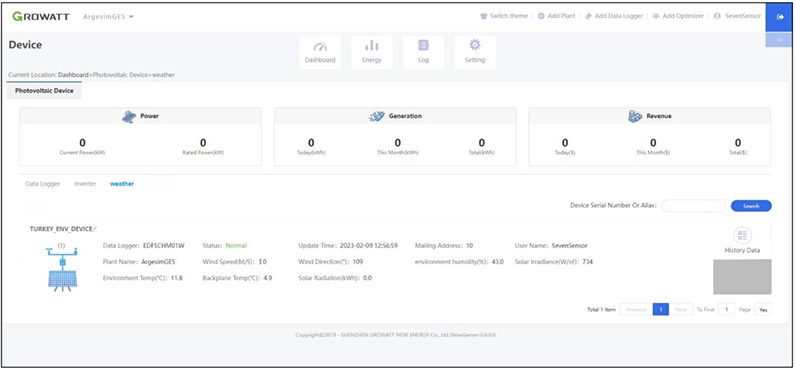
Growatt’s ShineMaster is a multifunctional data logger used to monitor photovoltaic devices via RS485, and SEVEN sensors can be set up directly as predefined devices in the Growatt monitoring system.
The Growatt weather station communicates with the ShineMaster via RS485. This allows weather station data to be reliably transferred to the Growatt monitoring system for further analysis and visualization.
A typical connection setup includes the following:
- RS485 communication lines between the SEVEN sensor box and the Growatt data logger
- A DC power supply connection to provide power to the sensor box and connected sensors
- Monitoring of the sensors in the Growatt Monitoring System
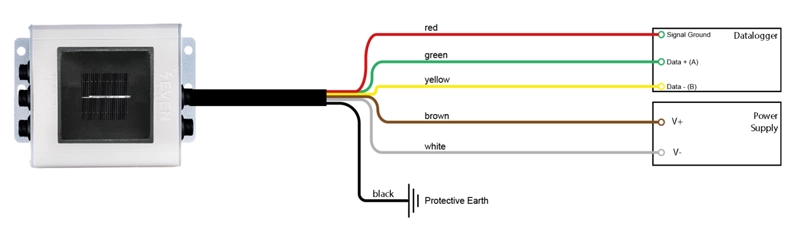
SEVEN provides setting instructions, configuration support, and technical guidance during integration.
Where Can the Growatt Weather Station Be Used?
The Growatt weather station is suitable for a wide range of solar energy applications, including the following:
- large-scale solar power plants
- commercial and industrial rooftop photovoltaic systems
- Growatt-based monitoring projects
- facilities requiring accurate environmental measurements
- projects requiring reporting, PR monitoring, and operational visibility
This is particularly important for solar power plants where weather data is used not only for visualization but also for performance verification and maintenance decisions.
Why Choose SEVEN Sensor for Growatt Weather Station Solutions?
SEVEN Sensor offers a comprehensive weather station solution designed around real PV monitoring needs. The value lies not only in the hardware itself but also in compatibility, integration support, and practical engineering expertise.
With SEVEN Sensor, customers benefit from the following advantages:
- Comprehensive weather station solutions for PV plants
- Compatibility with Growatt data logger infrastructure
- High-precision sensors designed for solar energy applications
- Global delivery support
- Engineering guidance during selection and installation
- Flexible quantity support without unnecessary purchasing barriers
Frequently Asked Questions (FAQ)
Is the SEVEN weather station compatible with the Growatt ShineMaster?
Yes, the SEVEN Growatt weather station is designed to work with Growatt's data logging infrastructure, including installations based on the ShineMaster.
What measurements are typically included in a Growatt weather station?
Depending on project requirements and the desired level of monitoring, a standard configuration includes irradiance, ambient temperature, module temperature, wind speed, wind direction and relative humidity.
How does the weather station communicate with the Growatt system?
It communicates with the Growatt data logger via RS485. This enables measurement data to be transferred to the monitoring system for analysis and reporting.
What is the delivery time for a Growatt Weather Station?
Delivery schedules are determined by the specific order volume. For a single standard set including irradiance, module temperature, wind speed, wind direction, relative humidity & ambient temperature sensors, the typical shipping lead time is one week.
What is the price of the Growatt Weather Station?
Since every solar project has different needs, the price varies based on the sensors you choose. For a full professional setup including irradiance, module temperature, wind speed, direction, humidity, and ambient temperature you’re looking at a range between 645 EUR and 1.175 EUR.
Why is irradiance measurement important in a PV plant?
Irradiance is the primary reference value for understanding how much solar energy is available at the site. Without irradiance data, it is much more difficult to determine whether a change in plant performance is due to weather conditions or an issue with the plant itself.
Can I customise the Growatt Weather Station sensor configuration?
Yes. Depending on the design of the facility and the monitoring requirements, the weather station can be configured with different sensors. This is compatible with the flexible setup logic already used on weather station pages that align with your brand.
Does SEVEN Sensor provide support during the Growatt Weather Station installation?
Yes, SEVEN provides setup instructions, configuration resources and engineering support to help customers with installation and integration.
Can this solution be used in both rooftop and utility-scale projects?
Yes. Depending on the required measurement scope and system architecture, Growatt-compatible weather station solutions can be used in utility-scale, commercial, and industrial PV projects.