Low-Cost Irradiance Sensor – 3S-IS-LR
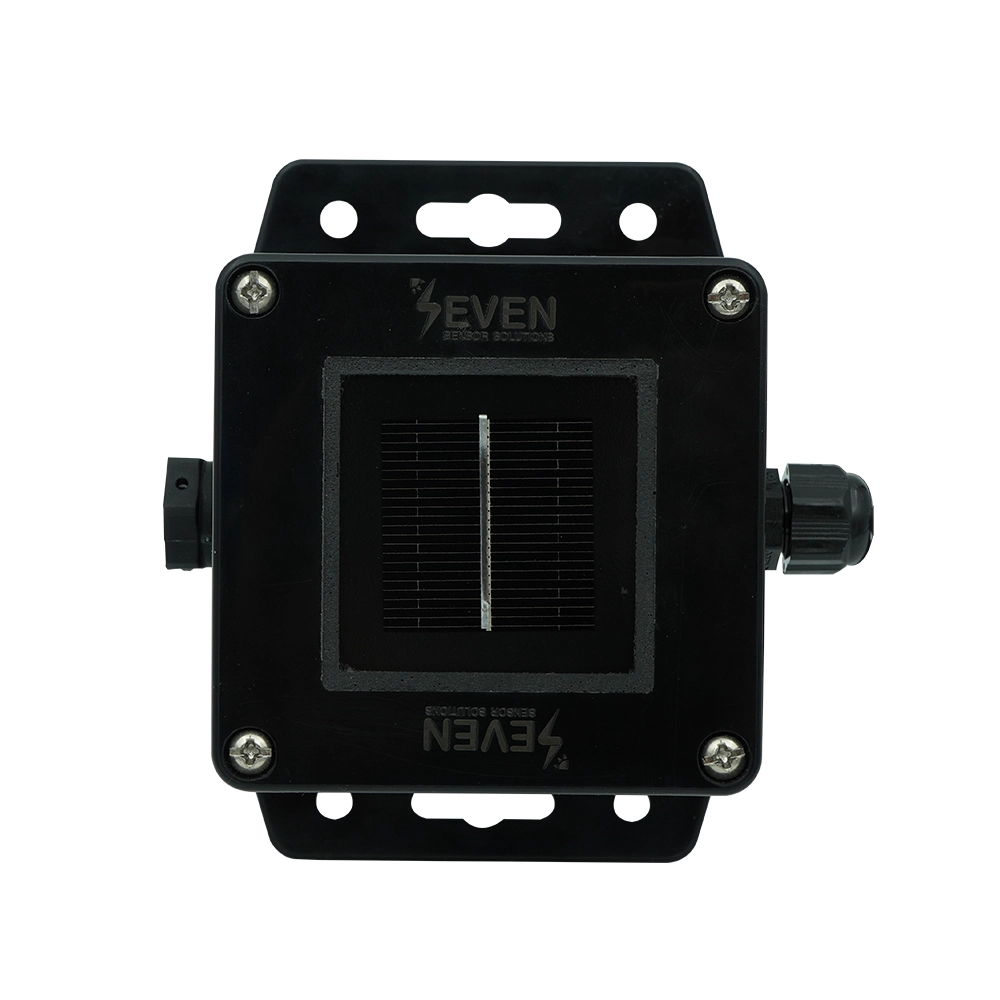
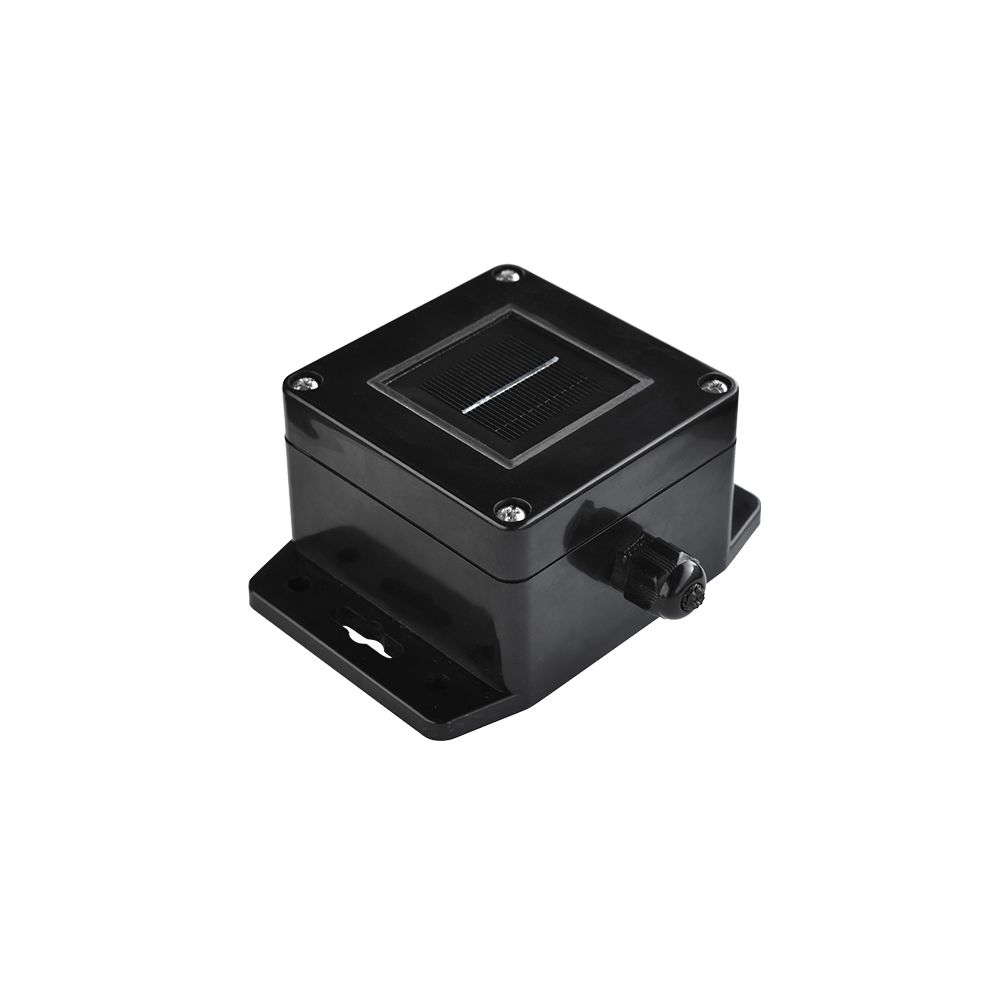
The Low-Cost Irradiance Sensor measures solar irradiance for residential, rooftop, and other small-scale PV projects. While industrial, commercial, and utility-scale systems demand advanced features and the highest accuracy, this level isn’t typically necessary for smaller applications where cost should match system scale. SEVEN delivers exactly that with the Low Cost Irradiance Sensor. Measured data are sent to monitoring devices, data loggers, and other receivers via an RS-485 serial interface using the Modbus RTU protocol.
TECHNICAL SPECIFICATIONS OF LOW COST IRRADIANCE SENSOR
| Item Code | 3S-IS-LR |
| Reference Cell | Monocrystalline Silicon (31 mm x 31 mm) |
| Irradiance Range | 0 – 1600 W/m² |
| Uncertainty | ≤3% |
| Resolution | 0.1 W/m² |
| Drift | Very small drift of <0.3%/ year |
| Output Rate | 1/s |
| Data Output | RS485 up to 38400 Baud |
| Communication Protocol | Modbus RTU |
| Power Supply | 12 to 30 V DC |
| Power Consumption | 10 mA max @24 VDC |
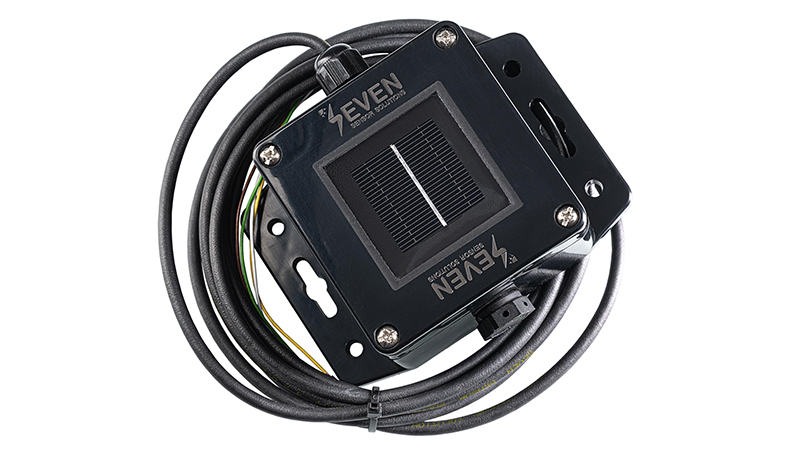
| Electrical Connection | 1 m LIYYC11Y PUR Cable, UV and Weather Resistant |
| Galvanic Isolation | 1000 V between power supply and RS485 bus |
| Box Dimensions | 118 mm x 84 mm x 55 mm (WxLxH) |
| Weight | 300 gr |
| IP Rating | IP67 |
| Sensor Housing Material | ABS |
| Standard | IEC 61724-1:2021 and IEC 60904 |
Why Does The Low Cost Irradiance Sensor Exists?
Not every PV project needs a Class-A meteorological station. Residential and small commercial sites need trustworthy irradiance data to validate performance and support simple O&M at a cost that matches the system scale. That’s the gap 3S-IS-LR fills: right-sized accuracy, right-sized budget.
What Does the Low Cost Irradiance Sensor Measure and How it Helps?
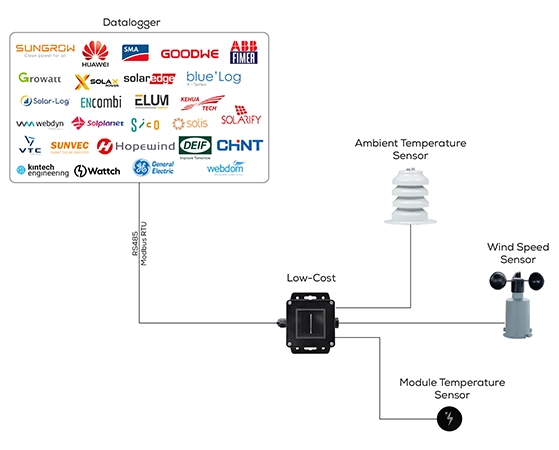
SEVEN’s Low-Cost Irradiance Sensor measures POA (plane-of-array) irradiance and, depending on the model, it can also connect to up to three external sensors. This gives you a more complete set of environmental and performance data for monitoring and troubleshooting.
- POA irradiance (W/m²): the on-module sunlight your array actually “sees”, the right input for meaningful Performance Ratio (PR) checks.
- Module Temperature: Measures the temperature on the back of the PV module. Module temperature is one of the most important factors affecting energy production and overall field performance.
- Ambient Temperature: Measures the air temperature around the PV plant. Ambient temperature influences module cooling/heating and therefore impacts cell temperature and energy output (higher temperatures typically reduce PV power).
- Wind Speed Sensor: Measures horizontal wind speed. According to IEC 61724-1:2021, wind speed is important for estimating module temperature and can also support warranty claims related to wind-driven damage.
Below are the available models. The only difference between them is how many and which external sensors can be connected.
| Model | Communication | External Sensor Options |
| 3S-IS-LR | RS485 Modbus RTU | No external sensor can be connected |
| 3S-IS-LR-1 | RS485 Modbus RTU | Ambient Temperature Sensor OR Module Temperature Sensor |
| 3S-IS-LR-2 | RS485 Modbus RTU | Ambient Temperature Sensor OR Module Temperature Sensor
Wind Speed Sensor |
| 3S-IS-LR-2T | RS485 Modbus RTU | Ambient Temperature Sensor
Module Temperature Sensor |
| 3S-IS-LR-3 | RS485 Modbus RTU | Ambient Temperature Sensor
Module Temperature Sensor Wind Speed Sensor |
What are the Key Advantages of 3S-IS-LR Low Cost Irradiance Sensor?
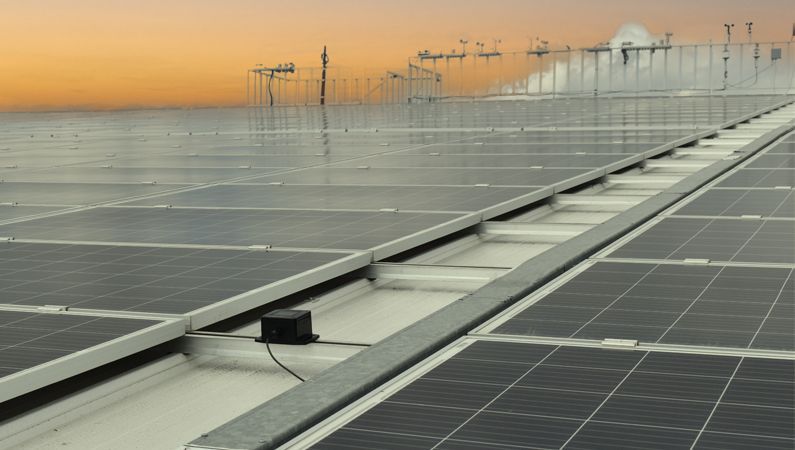
The SEVEN Low-Cost Irradiance Sensor is designed to deliver reliable POA irradiance measurement with easy installation and seamless integration.
- Budget-friendly, installer-friendly: fast to mount, fast to wire, priced for wide deployment.
- SunSpec-compliant + Modbus RTU: smooth integration with inverters, loggers, and third-party SCADA.
- Rugged build: IP67 enclosure and UV-resistant cable.
- Confidence features: galvanic isolation, stable long-term drift spec, ongoing software support, and 5-year warranty.
How to Install and Commission the Low Cost Irradiance Sensor?
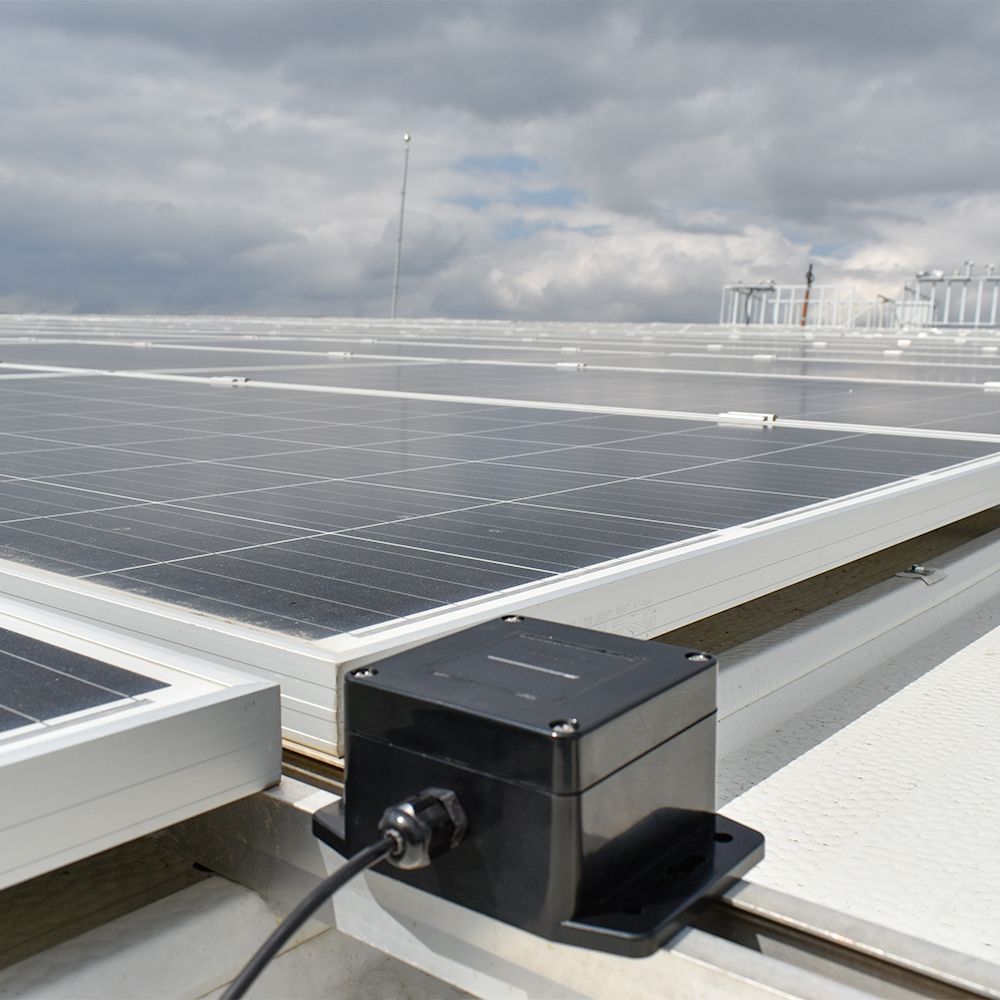
- Mount for POA
Install on the same tilt and azimuth as the array. Keep the sensing surface co-planar with modules to reflect true operating conditions. - Avoid shading & reflections
Check for conduit, rails, or nearby objects that could shade the cell through the day/year. Keep at least a few module frame widths away from edges if possible. - Wire RS485
Connect data and power cables to their designated ports. It will automatically start taking measurements. - Maintenance
Wipe the surface periodically. Dust and bird residue will under-read. Add a monthly reminder in your O&M checklist. For more details check out our user manual.
When to Choose a Different Low Cost Irradiance Sensor Model?
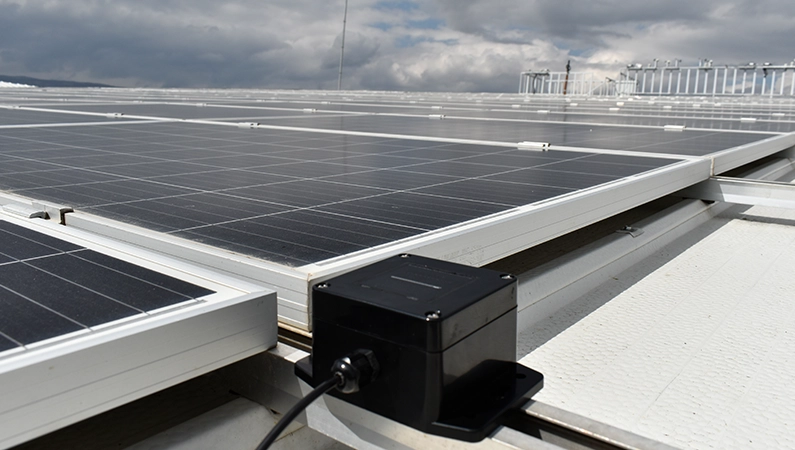
If your project must comply with IEC 61724-1 Class A (e.g., utility-scale, EPC performance guarantees), step up to SEVEN’s higher-class irradiance sensors. For residential/small C&I where ≤3% uncertainty is appropriate, 3S-IS-LR is the value choice.
Frequently Asked Questions (FAQ)
What is the accuracy of the Low Cost Irradiance Sensor?
Less than 3% uncertainty with less than 0.3%/year drift is designed for residential/small PV monitoring and PR checks. For stricter Class-A needs, use a higher-class model.
Where can you use the 3S-IS-LR Low Cost Irradiance Sensor?
Residential rooftops: homeowners & installers who want clear PR insights without over-engineering the met station.
Small commercial & C&I add-ons: quick retrofits to existing plants for better service calls and warranty clarity.
What’s the enclosure protection?
The sensor has IP67 rating and is equipped with a UV-resistant PUR cable built for rooftop life.
Will the Low Cost Irradiance Sensor work with my SCADA/datalogger?
If your device has an RS485/Modbus RTU, yes you can connect it to any SCADA/datalogger.
What options does the Low Cost Irradiance Sensor offer?
3S-IS-LR (standard): POA irradiance via RS485/Modbus RTU.
3S-IS-LR-1: adds an input for an external module or ambient temperature sensor.
3S-IS-LR-2: adds two inputs for external module or ambient temperature and wind speed sensors
3S-IS-LR-2T: adds two inputs for external module and ambient temperature sensors
3S-IS-LR-3: adds three inputs for external module, ambient temperature and wind speed sensors
Included: 1 m LIYYC11Y PUR cable. Extra cable length is available on request.
What is the price of the Low Cost Irradiance Sensor?
Depending on the model and included accessories, the 3S-IS-LR series is available between 190 EUR and 250 EUR.
What are the delivery times for the low cost irradiance sensor?
Our delivery times vary depending on the purchase volume.
Small orders: approx. 1-2 weeks
Bulk orders (100 pcs): approx. 6-7 weeks