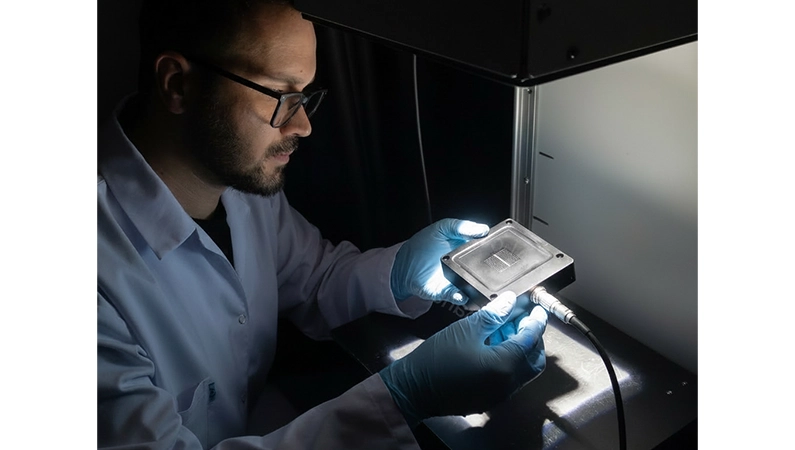
The World Photovoltaic Scale Reference Cell, known as WPVS Reference Cell, is a special model of calibrated photovoltaic cell used to measure solar or simulated irradiance in a way that is representative of photovoltaic modules. This makes WPVS very important for two main reasons. First, it helps out with calibrating other irradiance sensors by giving a dependable reading when comparisons need to be made.
Second, it is a must while testing PV modules by offering relevant sun exposure data along with temperature info. WPVS cells are used in different applications, from tests run in solar simulators to IV curve tracing and the final checks of irradiance sensors.
In PV testing and performance analysis, the quality of irradiance measurement is vital for all findings including performance ratio (PR) and IV curve interpretation. The WPVS reference cell is designed to measure irradiance as accurately as possible considering the behavior of PV module under actual conditions by using silicon reference cell and measuring reference cell temperature.
As a producer of high-quality sensors for photovoltaic industry, SEVEN manufactures WPVS reference cells for laboratory and field-based PV measurement applications.
The technical drawing of SEVEN WPVS reference cell models are as follows;
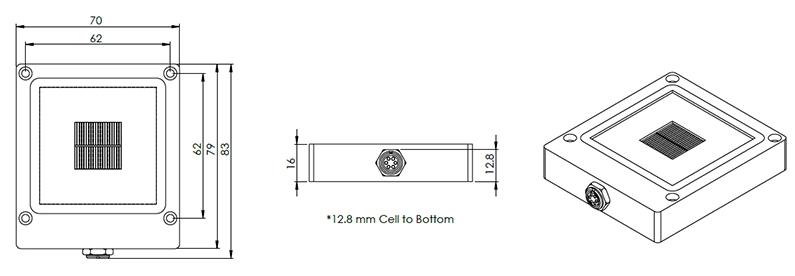
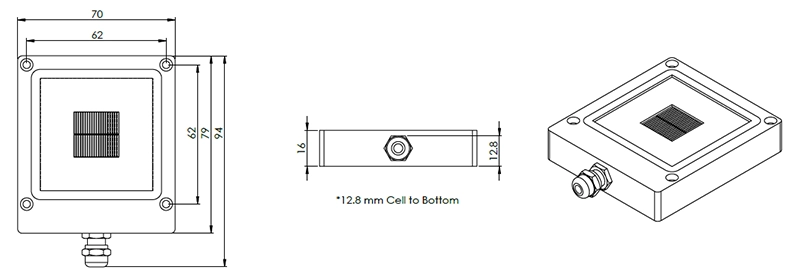
All the mentioned dimensions are in mm.
Why is WPVS Reference Cell Necessary for Irradiance Sensor Calibration and PV Module Testing?
There are many sensors that can measure sunlight, yet for PV testing, you need specific irradiance data to assess how PV devices perform electrically. This is where a WPVS reference cell comes in; it does not only measures irradiance with a PV cell but also tracks its own temperature. Both parameters allow for a better understanding of PV module performance, particularly during varying conditions.
The WPVS reference cells are usually used in the following applications:
- Calibration and verification of irradiance sensors used in PV monitoring systems.
- PV module testing under natural sunlight or solar simulators.
- IV curve measurement, where irradiance must be synchronized with electrical measurements.
- Commissioning and acceptance tests for PV systems.
- Laboratory R&D, quality control, and measurement chain validation.
Essentially, the WPVS gives you irradiance figures in watts per square meter and keeps track of its temperature. Best part? It offers a reliable PV benchmark for sensor comparisons, checking module quality, and fine-tuning test results.
The WPVS reference cell will give you:
- Irradiance measurement either in mV or mA it depends if you use the model with shunt resistor or without.
- Reference cell temperature measurement
…which would allow you to evaluate the results and correct them if necessary.
What Are the Requirements of a WPVS Reference Cell?
A WPVS reference cell needs to meet certain features and measurement standards for calibrating irradiance sensors and testing PV modules. The most important requirements are listed below.
- It needs a silicon sensing element to match the spectral and electrical response of PV modules.
- The calibration of the reference cell must follow the guidelines in IEC 60904-2 and IEC 60904-4 standards.
- The WPVS cell should measure temperatures accurately since PV cell output changes with temperature. SEVEN uses a class A PT1000 temperature sensor for this. The measured temperature helps in interpreting the readings correctly.
- For reliable calibrations and comparisons, the cell’s output must be steady and reproducible.
- The standard field of view (FOV) for a World Photovoltaic Scale (WPVS) reference cell is approximately 162° to 164°. This design allows the device to capture a wide angle of global horizontal or plane-of-array irradiance, fully complying with the IEC 60904-2 standard specifications for terrestrial PV performance measurements.
- Suitable connector and mechanical design: Laboratory applications and field IV curve tracing may require different connector types, cable interfaces, and mechanical robustness. As per IEC standard, the housing of WPVS cell must be black and the connector to be used must be Lemo connector.
What is SEVEN WPVS Reference Cell?
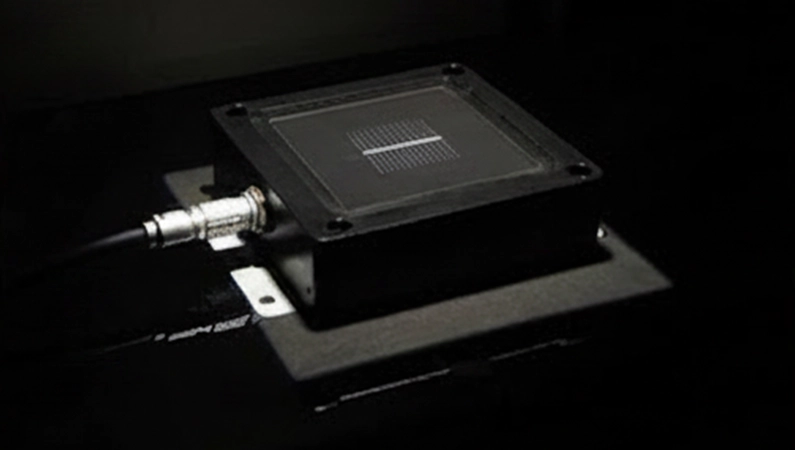
SEVEN WPVS reference cell is a PV-specific irradiance sensor which uses silicon reference cell (20 x 20 mm) as the sensing element. When the sun or light hits the cell, it produces an electric signal proportional to irradiance. Thanks to the silicon detector, the behavior of the cell is closer to the PV technologies than most irradiance sensors.
Also, it features PT1000 Class A temperature sensor (EN 60751) for measuring reference cell temperature, and for calculating the temperature-compensated irradiance value.
What are the WPVS Models SEVEN offers and How to Select One?
SEVEN provides two models, each tailored to a different environment:
1) 3S-WPVS-L: Laboratory Model (LEMO Connector)
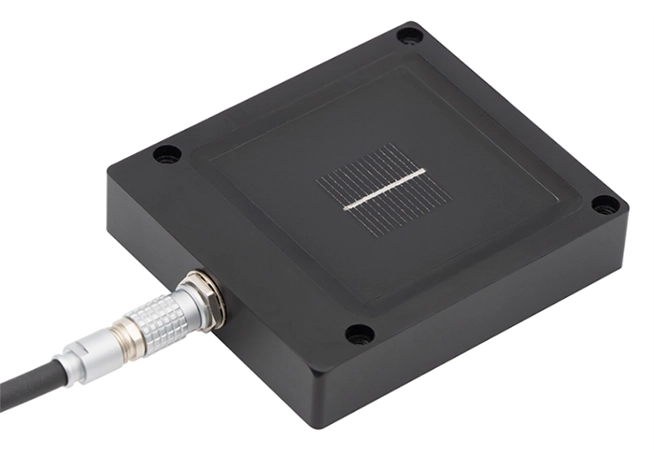
Intended for laboratory and test bench applications, where reliable connections and interface are required.
The used connector: LEMO EGG.0B.306.CLL, which allows the connection of 4 wires from PT1000 sensor and 2 wires for irradiance output.
SEVEN can offers a double connector WPVS cell as well when 4 wires are needed to be used for irradiance output.
This model is usually used in PV labs, solar simulator test benches, measurement chain development…
2) 3S-WPVS-IV: IV Curve Tracer Model (M8 Connector)
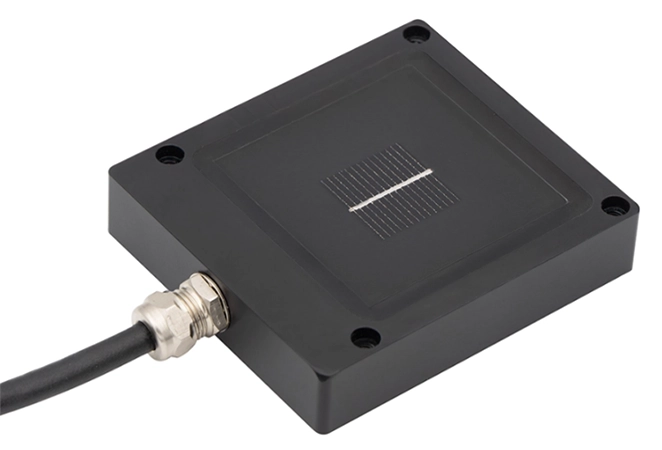
Designed for use with IV curve tracers in commissioning and testing.
Used connector: M8 metal gland connector
Typical application: portable IV curve tracer, acceptance testing, O&M testing
3) Optional Albedo WPVS Reference Cell
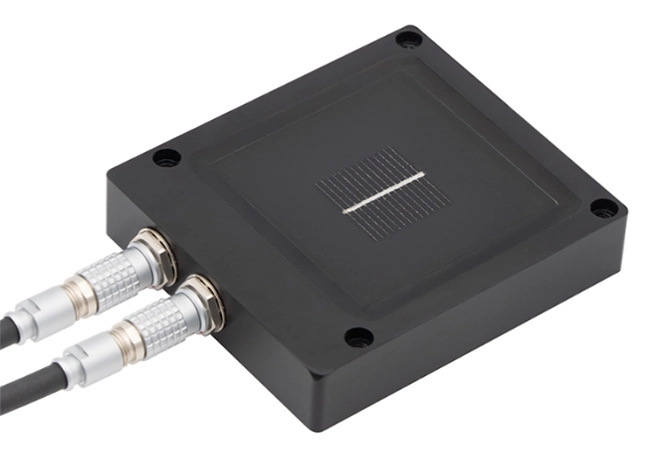
SEVEN offers also another model which is an albedo type WPVS, which can help in carrying out complex PV analyses.
The above consists of:
- One sensor that measures incident irradiance (POA)
- One sensor that measures reflected irradiance
This model is especially applicable for:
- Bifacial PV systems
- Measurement of solar albedo
- Performance ratio calculation
Solar albedo is described as the fraction of reflected irradiance over incident irradiance.
What are the Applications Where WPVS Reference Cells Are Used?
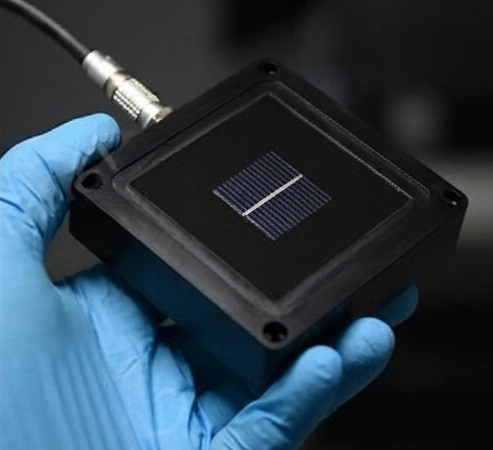
WPVS reference cells are typically used for:
- Laboratory measurements: module/cell testing, solar simulator testing, controlled testing, irradiance sensor calibration (good fit for 3S-WPVS-L)
- Commissioning/Acceptance Testing: confirming expected performance in field (commonly combined with 3S-WPVS-IV)
- O&M Diagnostics: detection of underperformance through validation of irradiance measurement used in analysis
- IV Curve Measurements: reference irradiance measurement synchronized with I-V data (target application of 3S-WPVS-IV)
What Are the Main Technical Features of SEVEN WPVS Reference Cell?
Technical specifications of SEVEN WPVS reference cell include the following:
- Measured parameters: Irradiance + reference cell temperature
- Field of view: 162°
- Operating temperature: from −40°C to +85°C
- Housing: Black Anodized Aluminum
- Ingress protection: IP68
- Reference standard: IEC 60904-2
- Custom production available: double connector for 8 wires connection, with/without shunt resistor…
Calibration and Standards
Calibration of SEVEN WPVS Reference cell is done with the use of a reference cell calibrated by ISFH (Germany), in compliance with IEC 60904-2 and IEC 60904-4 standards, under AAA-class solar simulator.
This is very important since photovoltaic performances evaluation should be done based on standardized measurements, not just “a sensor reading.”
Recommended Selection Guide of WPVS Reference Cell
The following table can be used to select the correct model for your application.
| Select this model | If your application is |
| 3S-WPVS-L (LEMO) | Laboratory testing, solar simulator or sun simulator, R&D benches, fixed DAQ systems |
| 3S-WPVS-IV (M8) | Integration with an IV curve tracer, commissioning in the field, acceptance testing, portable measurement kit |
Frequently Asked Questions
What is the main purpose of a WPVS reference cell?
The main purpose of WPVS reference cell is to provide PV-representative irradiance and reference cell temperature measurements for irradiance sensor calibration and PV module testing.
Which model would be best suited for integration with an IV curve tracer?
The 3S-WPVS-IV model would be best suited for such an application due to its design and the usage of the M8 connector that is common among field instruments.
Which model is best suited for laboratory applications?
The 3S-WPVS-L model is best suited for laboratory applications due to its design and the usage of the LEMO connector.
What is the price of SEVEN WPVS reference cell?
SEVEN offers different WPVS reference cell models with a price range between 550 EUR to 1300 EUR.