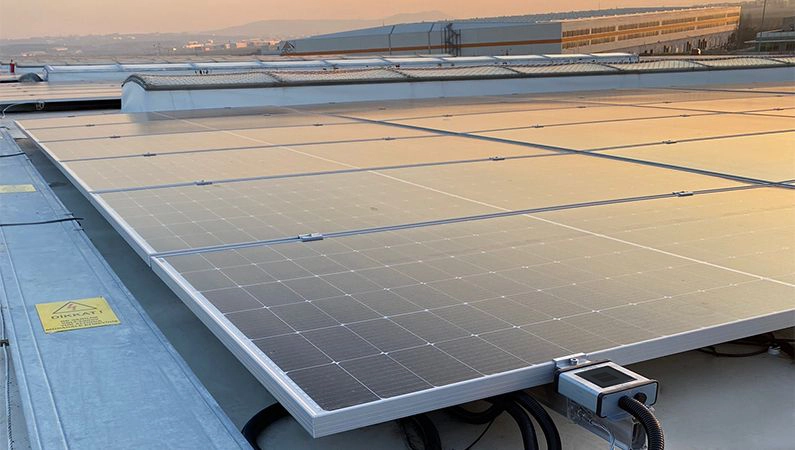
In order to optimize the performance of PV plants, it is crucial to have accurate and reliable irradiance data. This is where irradiance sensors come in. These specialized sensors measure the intensity of solar irradiance and provide important data to help PV plant operators measure and improve their energy output.
What is Irradiance Sensor?
Irradiance sensors are devices that measure the amount of sunlight that falls on a specific surface in a given time period. These sensors are widely used in photovoltaic (PV) plants to measure the amount of solar irradiance that is available for conversion into electricity. The data collected by irradiance sensors is critical for the effective operation and maintenance of PV plants. It is used to optimize the performance of PV panels and to ensure that they are operating at their maximum efficiency.
What are the types of Irradiance Sensors?
There are two main types of irradiance sensors in terms of Output Signal: Modbus and Analog.
Irradiance Sensor with Modbus RTU Output
Modbus Irradiance Sensors are Sensors with Digital Output that use Modbus communication protocols, RTU or TCP/IP, to transmit data to the datalogger or SCADA system via a 3-wire RS485 bus. The length of the communication cable between the Modbus Irradiance Sensor and Datalogger can be up to 800m according to the tests performed by SEVEN R&D team.
SEVEN’s Irradiance Sensors with Modbus RTU Output are compatible with many well-known datalogger brands, and all the Scada-PLC systems supporting Modbus RTU Protocol. SEVEN Irradiance Sensors are SunSpec compliant as well.
SEVEN manufactures different models of Modbus irradiance sensors based on the number of external sensors to be connected. All these models include an internal cell temperature sensor to calculate the temperature-compensated irradiance value.
The following table summarizes the different options SEVEN provides for Modbus Irradiance Sensor Models.
| Item Code | Irradiance Sensor Description |
| 3S-IS-T-I | No External Sensor can be connected |
| 3S-IS-T-1,5V | No External Sensor can be connected |
| 3S-IS-T-10V | No External Sensor can be connected |
| 3S-IS | No External Sensor can be connected |
| 3S-IS-1-MT | 1 input port that allows the connection of Module Temperature sensor |
| 3S-IS-1-AT | 1 input port that allows the connection of Ambient Temperature sensor |
| 3S-IS-2-MT | 2 input ports that allow the connection of Module Temperature sensor, and Wind Speed sensor |
| 3S-IS-2-AT | 2 input ports that allow the connection of Ambient Temperature sensor, and Wind Speed sensor |
| 3S-IS-2T | 2 input ports that allow the connection of Ambient Temperature Sensor and Module Temperature sensor |
| 3S-IS-3 | 3 input ports that allow the connection of Ambient Temperature Sensor, Module Temperature Sensor and Wind Speed Sensor |
| 3S-IS-4-WD | 4 input ports that allows the connection of Ambient Temperature Sensor, Module Temperature Sensor, Wind Speed Sensor, and Wind Direction Sensor |
| 3S-IS-4WD/AT-MT | 3 input ports that allow the connection of Ambient Temperature Sensor, Module Temperature Sensor and Wind Direction Sensor |
| 3S-IS-4-WD/MT-WS | 3 input ports that allow the connection of Module Temperature Sensor, Wind Speed Sensor and Wind Direction Sensor |
| 3S-IS-4-WD/AT-WS | 3 input ports that allow the connection of Ambient Temperature Sensor, Wind Speed Sensor and Wind Direction Sensor |
| 3S-IS-4-WD/WS | 2 input ports that allow the connection of Wind Speed Sensor and Wind Direction Sensor |
| 3S-IS-4-WD/MT | 2 input ports that allow the connection of Module Temperature Sensor and Wind Direction Sensor |
| 3S-IS-4-WD/AT | 2 input ports that allow the connection of Ambient Temperature Sensor and Wind Direction Sensor |
| 3S-IS-4-WD/ | 1 input port that allows the connection of Wind Direction sensor |
| 3S-IS-4-RH | 3 input ports that allow the connection of Module Temperature Sensor, Wind Speed Sensor and Relative Humidity & Ambient Temperature Sensor |
| 3S-IS-4-RH/WS | 2 input ports that allow the connection of Wind Speed Sensor and Relative Humidity & Ambient Temperature Sensor |
| 3S-IS-4-RH/MT | 2 input ports that allow the connection of Module Temperature Sensor and Relative Humidity & Ambient Temperature Sensor |
| 3S-IS-4-RH/ | 1 input port that allows the connection of Relative Humidity & Ambient Temperature Sensor |
| 3S-IS-5 | 4 input ports that allows the connection of Module Temperature Sensor, Wind Speed Sensor, Wind Direction Sensor and Relative Humidity & Ambient Temperature Sensor |
| 3S-IS-5/RH-WD | 2 input ports that allows the connection of Wind Direction Sensor and Relative Humidity & Ambient Temperature Sensor |
| 3S-IS-5/WS | 3 input ports that allows the connection of Wind Speed Sensor, Wind Direction Sensor and Relative Humidity & Ambient Temperature Sensor |
| 3S-IS-5/MT | 3 input ports that allows the connection of Module Temperature Sensor, Wind Direction Sensor and Relative Humidity & Ambient Temperature Sensor |
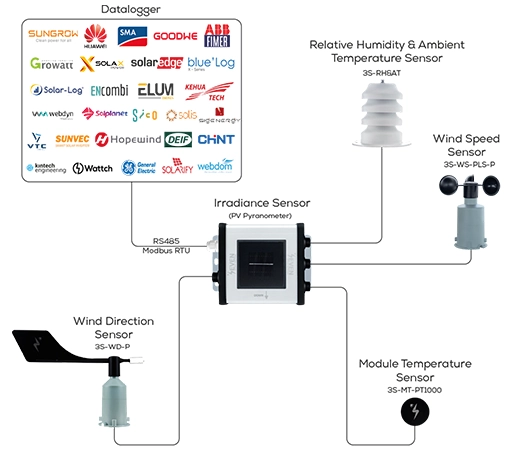
In addition to the models mentioned above, SEVEN also offers a low-cost irradiance sensor with Modbus RTU output. This model is designed for small-scale applications, such as residential solar projects.
Unlike the other models, this model doesn’t include an internal cell temperature sensor, which means that the irradiance value it provides is not temperature-compensated. However, the sensor supports the connection of external sensors, such as module temperature, ambient temperature, and wind speed sensors.
The available models are shown in the table below.
| Item Code | Low-Cost Irradiance Sensor Description |
| 3S-IS-LR | No External Sensor can be connected |
| 3S-IS-LR-1-MT | 1 input port that allows the connection of Module Temperature sensor |
| 3S-IS-LR-1-AT | 1 input port that allows the connection of Ambient Temperature sensor |
| 3S-IS-LR-2-MT | 2 input ports that allow the connection of Module Temperature sensor, and Wind Speed sensor |
| 3S-IS-LR-2-AT | 2 input ports that allow the connection of Ambient Temperature sensor, and Wind Speed sensor |
| 3S-IS-LR-2T | 2 input ports that allow the connection of Ambient Temperature Sensor and Module Temperature sensor |
| 3S-IS-LR-3 | 3 input ports that allow the connection of Ambient Temperature Sensor, Module Temperature Sensor and Wind Speed Sensor |
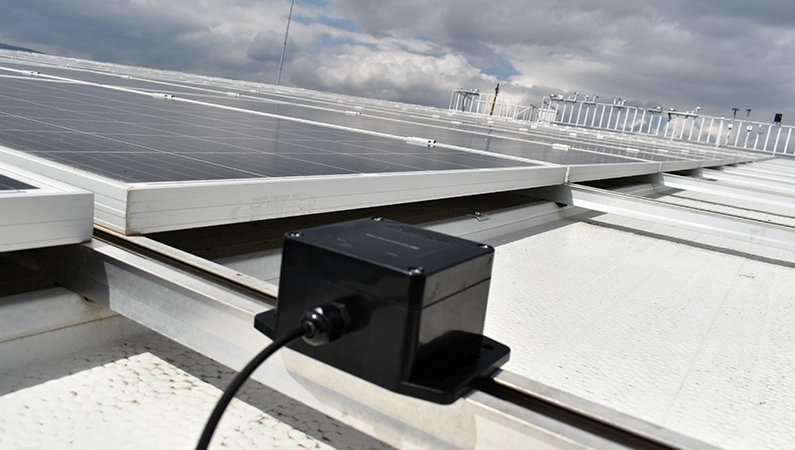
There are two other models of Modbus Irradiance Sensors which can be added to this model range, which are Dual-Orientation and Multi-Orientation Irradiance Sensor models. As their name describes, these models are specifically designed for Dual Orientation or Multi Orientation PV plants in rooftop projects. In fact, this system should be used to accurately calculate the performance ratio of two, three, or four-orientation PV plants because it calculates the average irradiance value according to the number of panels in each direction by using an extra irradiance sensor connected to the master one or to the electrical box, which has a custom-designed electronic card. This ensures an accurate PR calculation.
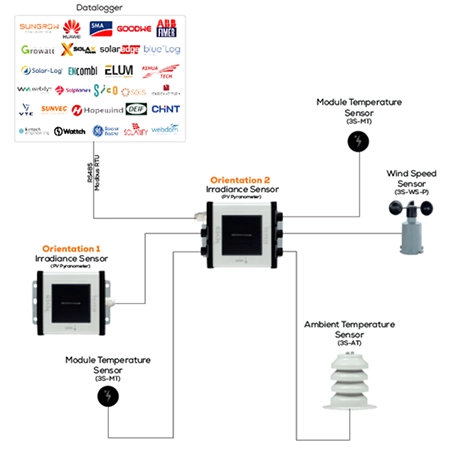
Dual-Orientation Irradiance Sensor
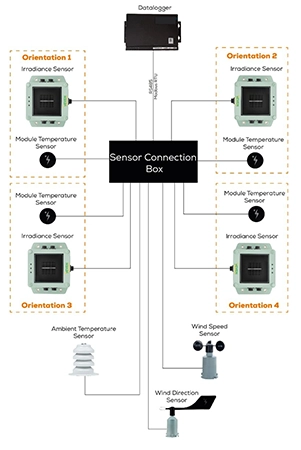
Multi-Orientation Irradiance Sensor
Irradiance Sensor with Analog Output
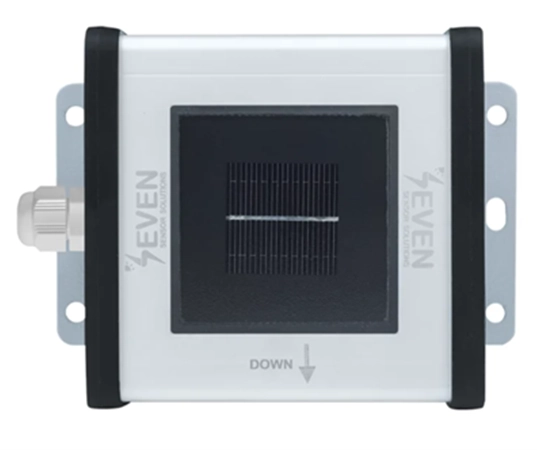
Analog Irradiance Sensors use analog signals to transmit data to the Datalogger or SCADA System. SEVEN provides three types of Analog Signals for Irradiance Sensor Models; 4-20mA 0-1,5V, and 0-10V. All models include an internal cell temperature sensor to measure the temperature-compensated irradiance value. While Irradiance Sensor with 4-20mA is used with Dataloggers and SCADA systems having a 4-20mA input port, the Irradiance Sensor with 0-1,5V is used with Dataloggers with 0-1,5V or 0-2V input port, such as SolarEdge. Lastly, the 0–10 V irradiance sensor is connected to the appropriate analog inputs of data loggers or other receiving units.
 What is the difference between Modbus and Analog Irradiance Sensor?
The Irradiance Sensor with Analog Output can transfer the data to the datalogger by using a cable generally not longer than 20 meters. Otherwise, signal interference may happen which can lead to inaccurate data readings. This is the main reason why users may prefer the Modbus option although it is more expensive than the analog one.
On the other hand, whether the output is Modbus or Analog, the accuracy of SEVEN Irradiance Sensor is less than 1%, which means that they are all Class A as per IEC61724-1. In fact, all models except the low-cost ones are calibrated by using similar procedures; Each sensor is calibrated under Class AAA Sun Simulator as per IEC 60904-2 by using a reference cell calibrated by ISFH-Germany.
Frequently Asked Questions (FAQ)
What is irradiance sensor?
An irradiance sensor is a device that measures the intensity of solar irradiance (sunlight power per unit area) falling on a surface over a given time. In PV plants, it measures how much solar energy is actually available to be converted into electricity.
Why should we use an irradiance sensor?
We should use an irradiance sensor because it is crucial to have accurate and reliable irradiance data in order to optimize the performance of PV plants.
What is the accuracy of SEVEN irradiance sensor?
The accuracy of SEVEN irradiance sensor is less than 1%, fully compliant with IEC 61724-1 Class A requirements.
What external sensors can be connected to the irradiance sensor?
The SEVEN irradiance sensor can support the connection of the following external sensors:
• Module temperature sensor
• Ambient temperature sensor
• Wind speed sensor
• Wind direction sensor
• Relative humidity sensor
Where can low-cost irradiance sensors be used?
Low-Cost Model of Irradiance Sensor with Modbus RTU Output is used in small-scale projects such as residential projects.
What distinguishes Modbus-output irradiance sensors from analog models?
Unlike analog irradiance sensors, Modbus RTU provides digital communication, minimizes signal loss over long distances, and allows for multiple sensor connections in a daisy chain.
What is the price of irradiance sensors?
Depending on the model and included accessories, the 3S-IS series is available between 175 and 530 EUR.