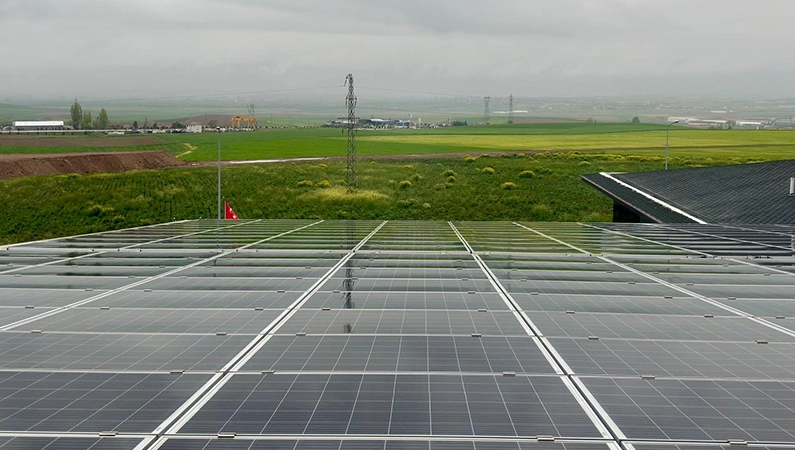
Even though solar panels are designed for outdoor use throughout several years of operation, this does not mean that they will remain clean automatically. Dust, bird droppings, sand, salt, and other contaminants gradually accumulate on the surface of solar panels. These contaminants are referred to as soiling, and they have a negative effect on the efficiency of the solar power plant.
That is why the questions regarding the necessity of cleaning solar panels become quite common among the plant owners and managers. Do solar panels require cleaning? Or will rain and wind clean them by themselves? There is no definite answer as it depends on many aspects including the level of contamination and acceptable efficiency loss.
Why Solar Panel Cleaning Matters?
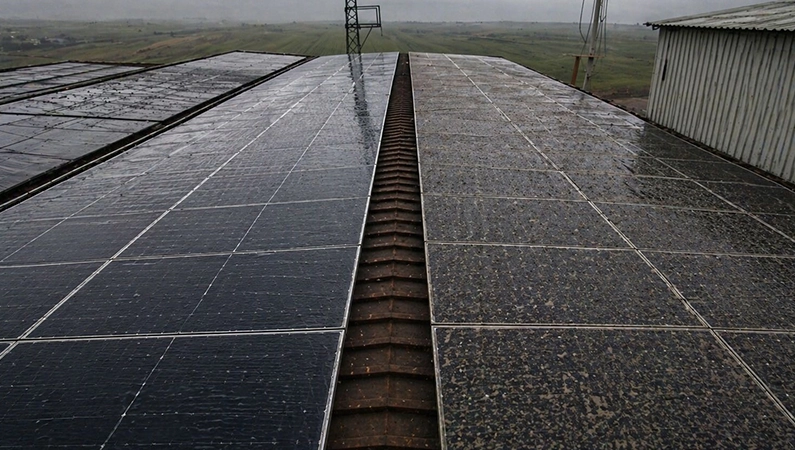
A soiled solar panel will produce less electricity than a clean panel. Even a small amount of soiling will result in reduced levels of light reaching the solar panel. The more soiling, the lower the energy produced, which in turn impacts the plant performance, economic benefits, and maintenance schedules.
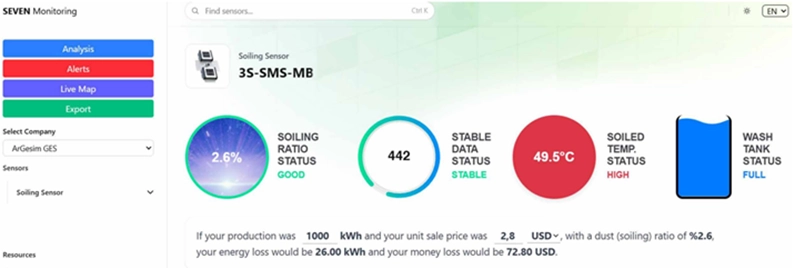
At SEVEN, we like to put this into context by saying that the Soiling Ratio = Energy Loss.
However, it is not easy to spot soiling issues visually only. The panel might be a bit dirty but still be producing energy at a reduced level, which means that the soiling issue cannot be detected with the human eye alone.
Does Rain Clean Solar Panels?
It is possible for rain to clean dust and other light dirt from solar panels, especially if the plant is being cleaned regularly. In some cases, heavy rains will actually clean the panels better and increase efficiency.
However, there is an exception to that case since rain is not always sufficient for such purposes. The problem with sticky dust, bird droppings, mud and other similar substances is that even heavy rains won’t wash them off the panels. In addition, light rain may cause more damage by leaving stains or spreading the dirt rather than removing it. In certain conditions, rain itself can even create more dust due to the moist surface. If the plant is not periodically cleaned, rain can worsen the situation and make the panels dirtier.
This means that rain cannot be viewed as a reliable source of cleaning solar panels. Generally, the plant needs to be cleaned 1 to 2 times per year, whether it rains or not.
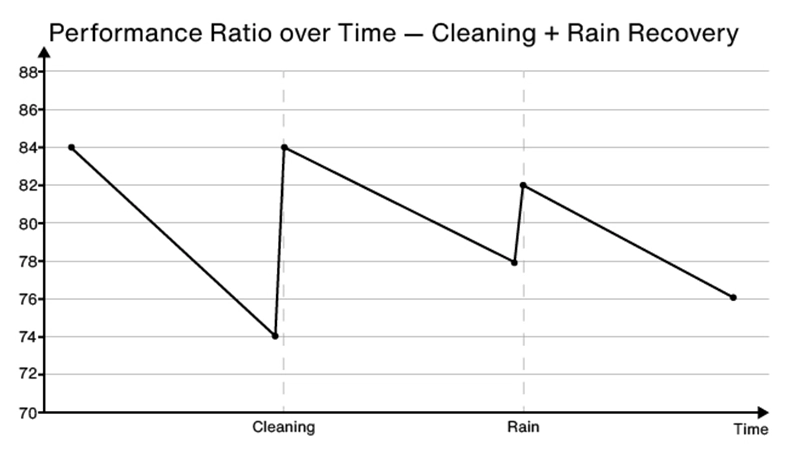
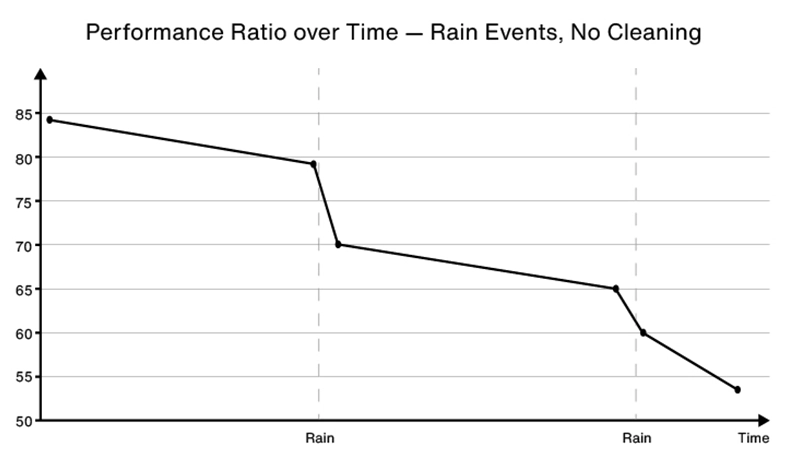
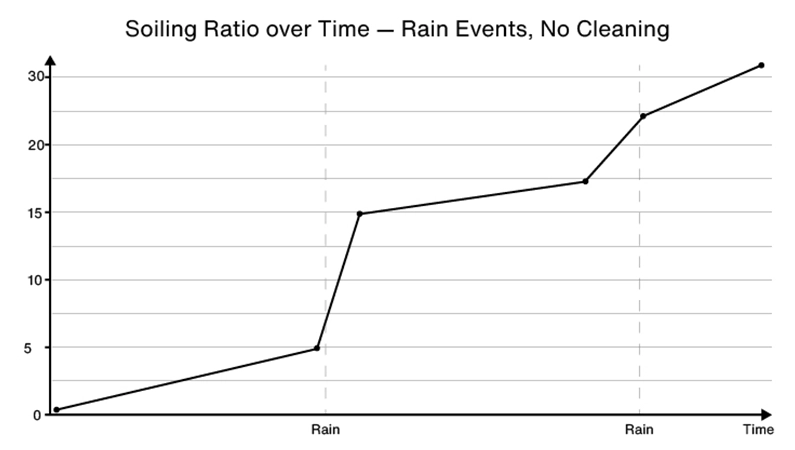
As illustrated in the following graphs, PR decreases gradually over time due to soiling accumulation. In the first case, the cleaning event restores the PR back to 84%, while the soiling ratio drops sharply to 0%, showing the positive impact of cleaning. Afterward, PR starts decreasing again until the rain event partially improves the condition by increasing PR to around 83% and reducing soiling. In the second case, without cleaning, rain events have a negative impact on PR, causing sharp drops, while the soiling ratio increases suddenly and continues rising over time. Overall, the figures highlight that cleaning effectively recovers performance, while rain events may either partially improve or worsen performance depending on the site conditions.
Case1: Periodical Cleaning Done
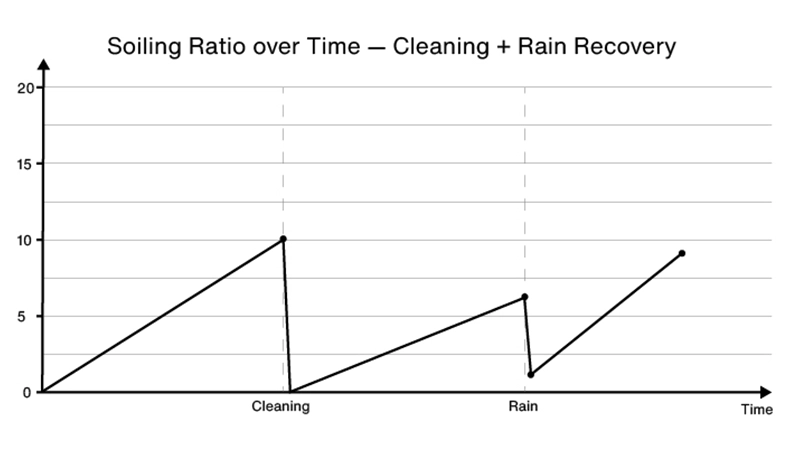
Case2: Periodical Cleaning skipped:
Does Wind Clean Solar Panels?
In some environments, wind can help remove loose dust from the panel surface. At the same time, wind can also carry new dust and dirt onto the panels.
So, just like rain, wind cannot be treated as a reliable cleaning method. A windy day should never be considered the same as a cleaning day.
Cleaning Should Be Based on Real Conditions
The real question is not only “Did it rain?” or “Was it windy?” but rather “Did the weather actually clean the panels enough?”
In practice, the best cleaning strategy depends on actual site conditions and measured performance loss. Cleaning too often can increase water consumption and operating costs. Cleaning too late can lead to avoidable energy losses.
That is why many plant operators monitor soiling and plan cleaning based on real data instead of guessing. A data-based approach helps improve maintenance timing and supports better operational decisions.
How SEVEN Soiling Sensors Help
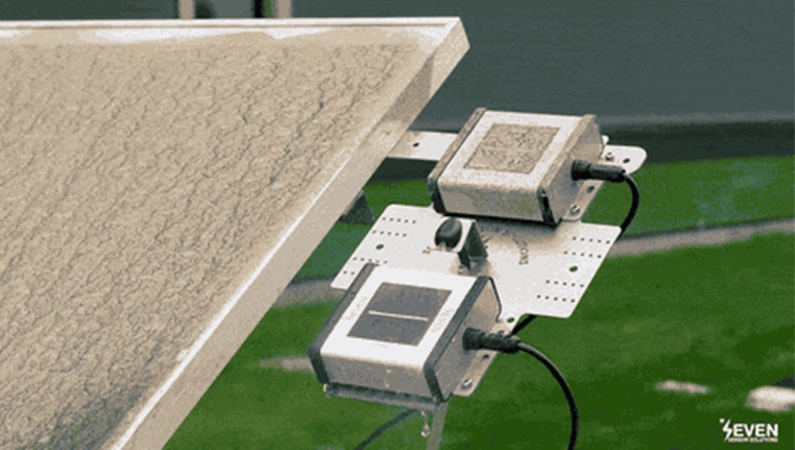
SEVEN Sensor Solutions offers soiling sensors that help operators understand when panel cleaning is truly necessary.
These sensors measure the impact of dirt on solar performance by comparing a clean reference surface with a dirty reference surface exposed to the same environmental conditions. The result is the soiling ratio, which shows how much performance is being lost because of dirt accumulation.
This makes it easier to answer practical questions such as:
- Is the current dirt level affecting production?
- Did the recent rain really clean the panels?
- Is cleaning needed now, or can it wait?
SEVEN offers different soiling sensor options for different needs, including permanent monitoring solutions and portable field devices. With this information, plant owners and O&M teams can make better decisions and avoid relying only on visual checks or weather assumptions.
Real Case Study: Harvesting of Cotton Next to PV Plants in Türkiye
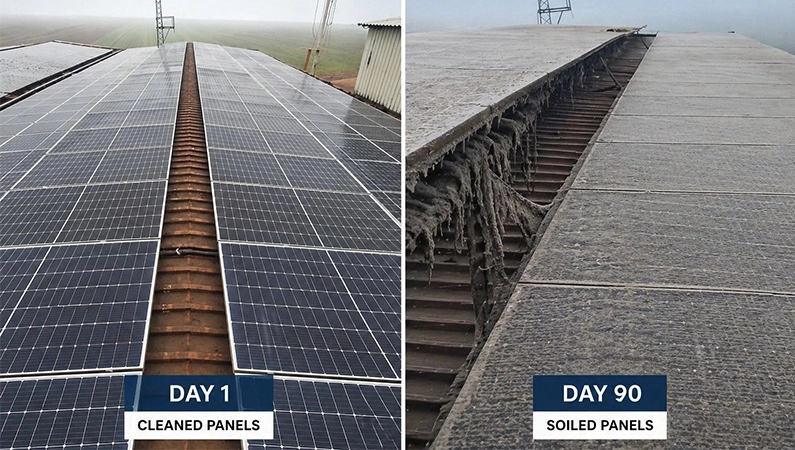
This case study involves a PV plant in Türkiye where we can clearly understand how local climatic conditions can quickly affect the plant’s performance due to soiling problems. In this case, the PV modules were installed only six months prior, while harvesting of cotton occurred at the site over the past three months. It is important to point out that no soiling monitoring took place; it is highly probable that there was little to no performance monitoring conducted as well. In any case, dust, soil, and cotton fibers blew from the harvesting site and attached themselves to the surface of the modules when mixed with rain. Actually, it is the wind that carried cotton fibers and agricultural dust from the surrounding fields onto the module surfaces. Then, instead of cleaning the panels, rainfall helped the material stick to the glass, creating a more persistent soiling layer. Thus, over the next few months, the plant experienced considerable energy loss. This case clearly shows why site-specific monitoring is essential and why wind and rain should not be assumed to provide effective panel cleaning.
Frequently Asked Questions (FAQ)
Do solar panels need cleaning?
Yes, in many cases they do. Dust, pollen, bird droppings, and other contaminants can reduce the sunlight reaching the cells and lower energy production.
Does rain clean solar panels completely?
Not always. Rain can remove some loose dirt, but it may not fully clean sticky residues, pollen, bird droppings, or uneven soiling across the site.
Can rain be enough in some locations?
Yes, at times. In regions where there are only light amounts of dust and frequent heavy rains, rain can help reduce the level of soiling. However, this is not always true, depending on the conditions in the area and types of soil found on the solar panels. Sometimes, especially in locations with heavy amounts of dust, pollen, salt, and other pollutants, rain alone cannot effectively remove the dirt on the panel.
How can I tell when my solar panels need cleaning?
The best way is to conduct a soiling test through the use of SEVEN Soiling Sensor.
What does the SEVEN soiling sensor detect?
SEVEN soiling sensors measure the impact of dirt on panel performance by comparing a clean reference surface with a dirty one. This helps show how much energy may be lost due to soiling.
Can SEVEN soiling sensors help after rain?
Yes. They can show whether rainfall has reduced the soiling level enough or whether cleaning is still necessary.
Why is soiling monitoring useful?
Soiling monitoring helps plant operators make better cleaning decisions, reduce unnecessary maintenance, and protect energy yield.