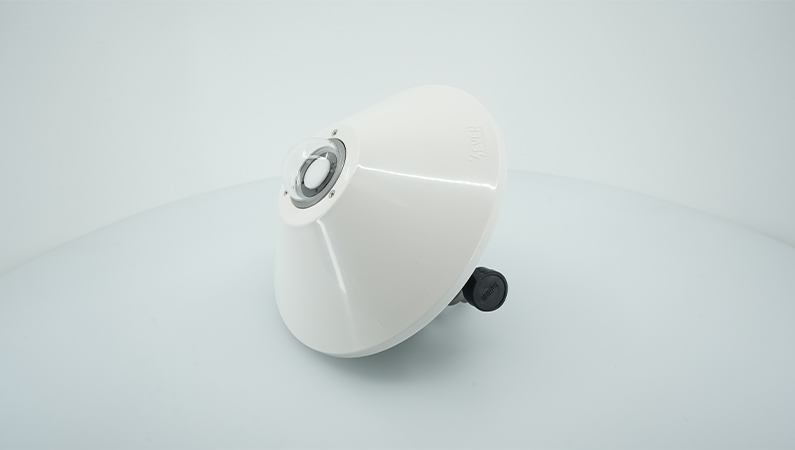
A Pyranometer is a sensor used to measure solar irradiance. It is used in different fields such as meteorology, agriculture, ecology, and photovoltaic (PV) systems.
The Pyranometer plays an important role in photovoltaic projects as they are essential tools for monitoring performance.
As per IEC 61724-1 standard for PV monitoring systems, the following types of irradiance sensors are suitable for measuring solar radiation:
- Thermopile Pyranometers
- PV Pyranometers (Irradiance Sensor with Reference Cell)
- Photodiode Sensors
This article focuses on the two most widely used types which are: thermopile pyranometers and PV pyranometers (also known as reference cell irradiance sensors).
Types of Pyranometers
- Thermopile Pyranometers
These are one of the oldest pyranometer types, originally designed for measuring global solar irradiance. Due to their long history, they are also among the most well-known. With their distinctive dome-shaped design, thermopile pyranometers are commonly used for capturing global solar radiation.
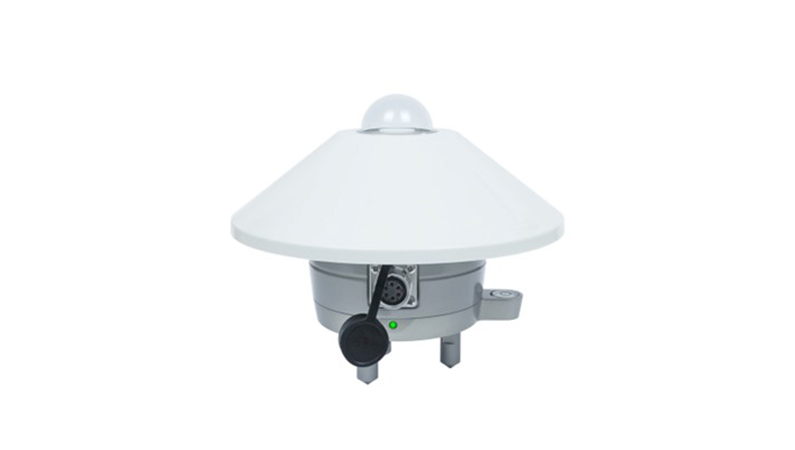
Thermopile Pyranometers are based on the principle of using the thermal response of two dissimilar metals.
One junction is exposed to a black surface that absorbs solar radiation, while the other is in contact with a surface that doesn’t. The sensor indirectly measures irradiance by detecting the temperature difference between these two points. The sensing element, typically a copper-constantan thermocouple (%55 copper, %45 nickel alloy), is placed beneath a double-layered glass dome. These sensors respond to temperature changes rather than direct light, so they tend to have slower response times. Thermopile Pyranometers are generally used to measure global or diffuse irradiance.
- Photovoltaic Pyranometers
Also known as reference cell irradiance sensors, these devices are designed to measure solar irradiance — particularly on the plane of array (POA). They consist of three main components: a protective enclosure, a photovoltaic cell, and an electronic board.
With the advancement of photovoltaic systems, a specific type of pyranometer known as the photovoltaic pyranometer — or reference cell irradiance sensor — has emerged. These sensors are typically used to measure the performance of solar power plants. Their design is flat, just like actual PV panels, making them ideal for realistic performance monitoring.

In the solar energy industry, thermopile pyranometers tend to be more widely recognized. However, each type has its own advantages depending on the application. To learn more about the differences and when to choose one over the other, you can check out our detailed comparison article: Comparison of Pyranometers vs. Reference Cell Solar Irradiance Sensors