Advanced Irradiance Sensor – 3S-IS+
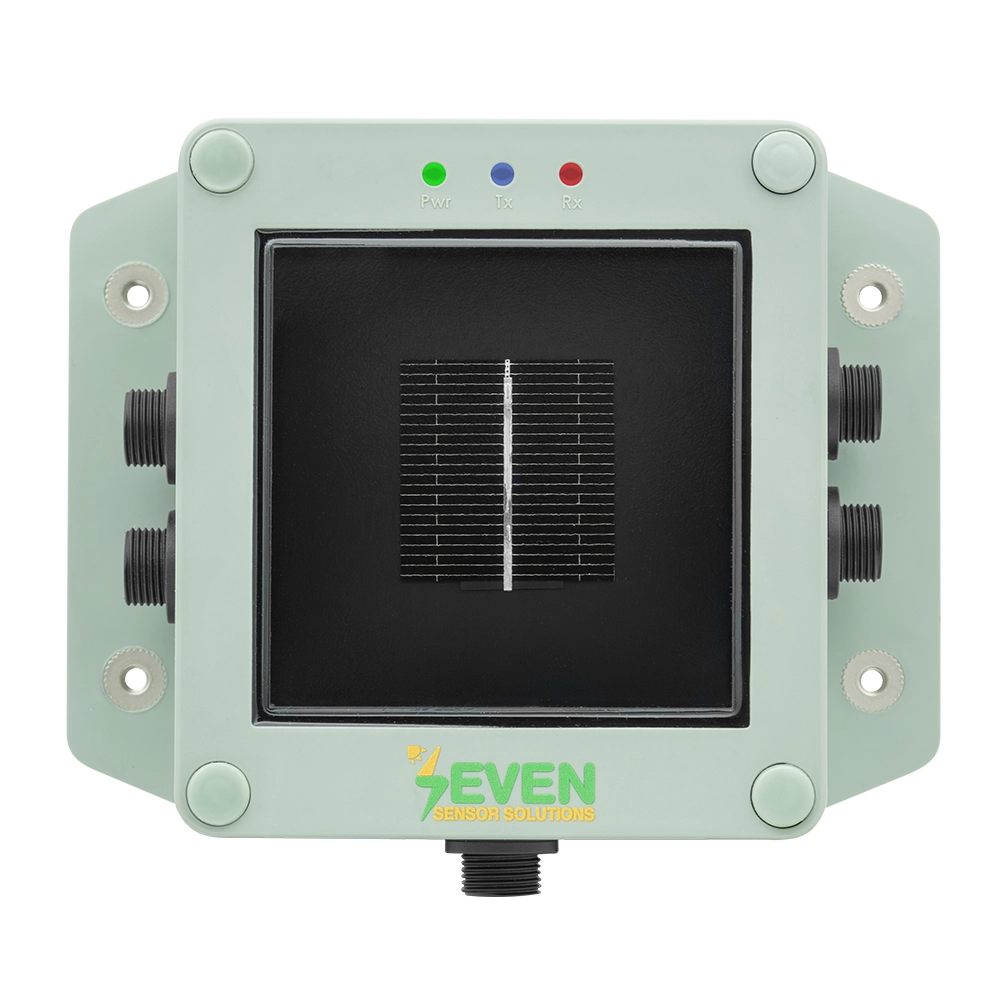
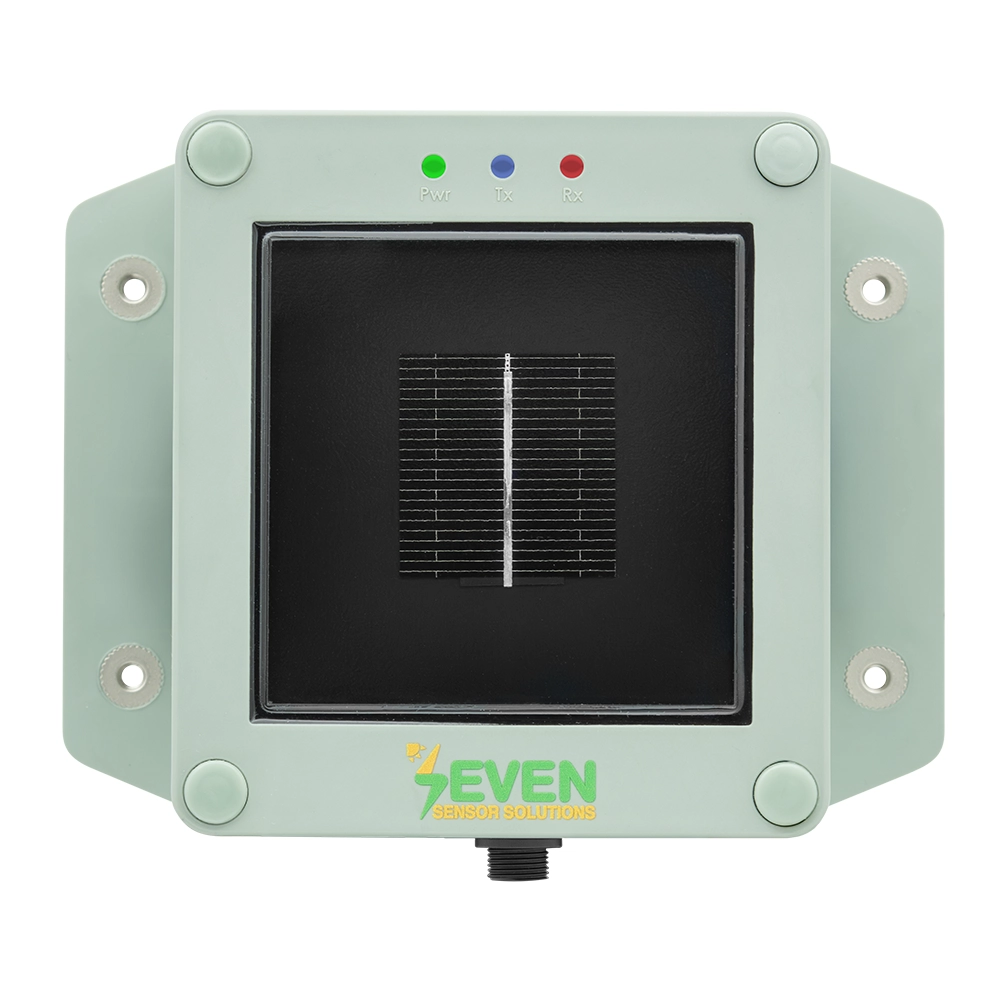
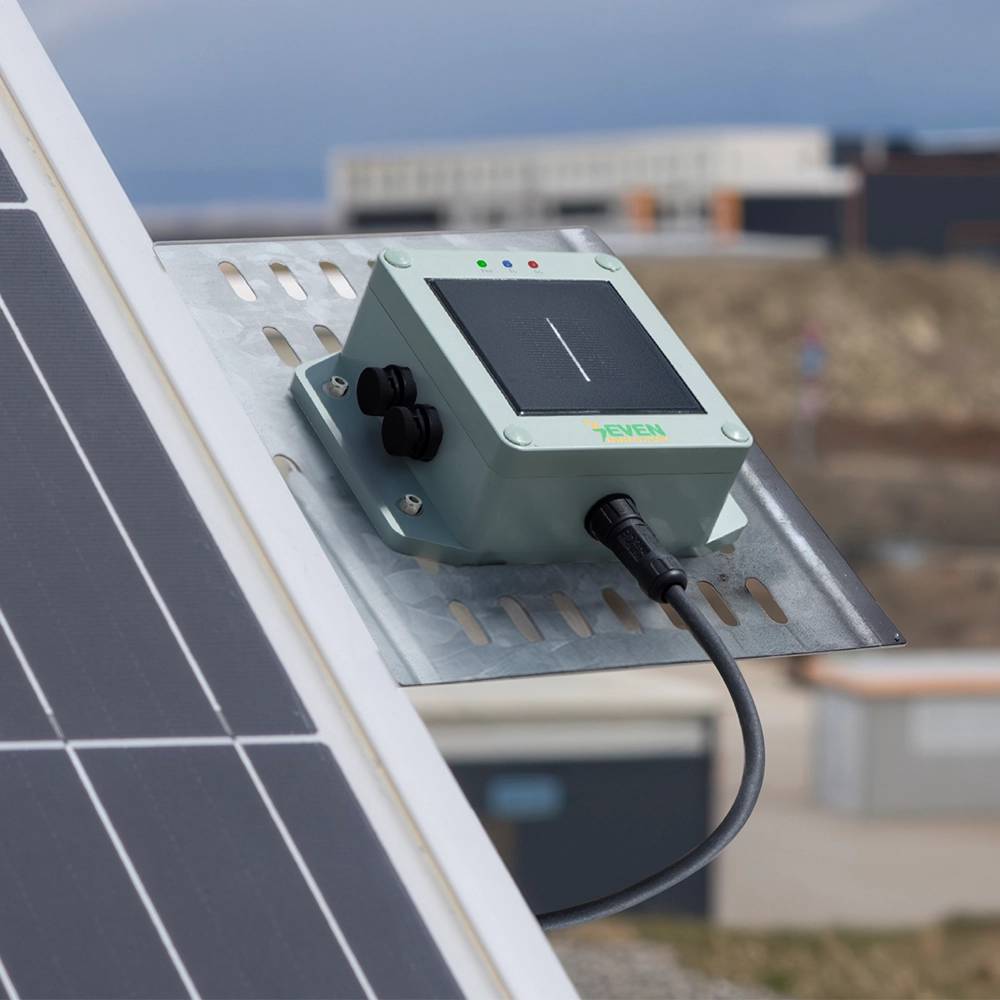
3S-IS+ is an Advanced Class A irradiance sensor designed for photovoltaic power plants. It measures solar irradiance falling on the PV panel in W/m² and helps you monitor the performance of the power plant. Thanks to its modular structure, you can directly connect module temperature, ambient temperature, wind speed & direction, relative humidity, and pressure sensors to it. All measured data is transmitted to receiver units via Modbus RTU.
TECHNICAL SPECIFICATIONS OF ADVANCED IRRADIANCE SENSOR
| Product Code | 3S-IS+, 3S-IS-1+, 3S-IS-2+, 3S-IS-2T+, 3S-IS-3+, 3S-IS-4+, 3S-IS-5+, 3S-IS-6+ |
| Sensor Type | Monocrystalline Silicon Reference Cell (31 mm x 31 mm) |
| Measured Data | Irradiance and internal cell temperature; module/ambient temperature, wind speed/direction and relative humidity/pressure via external sensors. |
| Irradiance Range | 0 – 1600 W/m² |
| Uncertainty | ≤ 1% (Class A as per IEC61724-1 standard) |
| Resolution | 0,1 W/m² (Class A as per IEC61724-1 standard) |
| Response Time | 1 second (Class A as per IEC61724-1 standard) |
| Drift | < 0,3% / year |
| Field of View | 170° |
| Data Output | RS485 up to 38400 Baud |
| Communication Protocol | Modbus RTU |
| Power Supply | 12 – 30 V DC (24 VDC recommended) |
| Power Consumption | Typical 21 mA, maximum 30 mA @ 24 V DC @ 25°C |
| Galvanic Insulation | 1000 V between the power supply and the RS485 line. |
| Cell Temperature Sensor | PT1000 Class A according to EN 60751. |
| Cable | 3 m 3x2x0.22 mm2, 24 AWG LI2YC11Y-TP PUR cable, UV and weather resistant. |
| Operating Temperature Range | -40°C to +85°C |
| Operating Humidity Range | 0% – 100% RH |
| Dimensions | 135 x 105 x 50 mm (W x D x H) |
| IP Rating | IP54 (optional IP68) |
| Housing Material | ASA |
| Calibration | Each sensor is calibrated under Class AAA Sun Simulator as per IEC 60904-2 and IEC 60904-4 by using a reference cell calibrated by ISFH-Germany |
| Compliant Standard | IEC 61724-1:2021 and IEC 60904 |
| Origin | Türkiye |
What is the purpose of an irradiance sensor?
To understand how efficiently a photovoltaic power plant actually operates, you need to know how much solar irradiance falls on the panels. The irradiance sensor measures exactly this. The value it provides in W/m² allows you to compare expected production with actual production and calculate the performance ratio (PR).
When output drops, it’s difficult to distinguish whether the problem is due to the environment or the system. Irradiance data clarifies this distinction. That’s why irradiance sensors are a fundamental part of professional PV monitoring systems.
How does 3S-IS+ work?
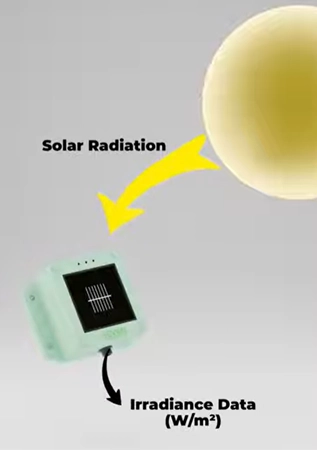
The 3S-IS+ contains a monocrystalline cell. The cell reacts to light just like a solar panel. The current produced by the cell is converted into a measurable signal via a precision shunt resistor.
Temperature is one of the most important factors affecting the measurement. The PT1000 temperature sensor at the back of the cell corrects this effect. The electronic board calculates the temperature-compensated irradiance value in W/m² and transmits it to the data loggers via Modbus RTU over the RS485 line.
It is important that the reference cell behaves in the same way as a solar panel, because the sensor mirrors the conditions that the panels actually experience.
The box features diagnostic LEDs.
Power LED
Indicates that the sensor is powered correctly. When the supply voltage is within the required operating range, typically 12–24 VDC, the LED turns on, allowing quick confirmation that the power connection is correct.
Tx LED — Transmit
Blinks when the sensor is sending data via Modbus RTU. This indicator helps verify that the sensor is actively transmitting information to the connected master device, such as a data logger, PLC, or SCADA system.
Rx LED — Receive
Blinks when the sensor receives a valid Modbus request. This is useful for checking whether the master device is polling the sensor and whether communication settings such as baud rate, slave address, and protocol configuration are correct.
Why Choose 3S-IS+ Advanced Irradiance Sensor?
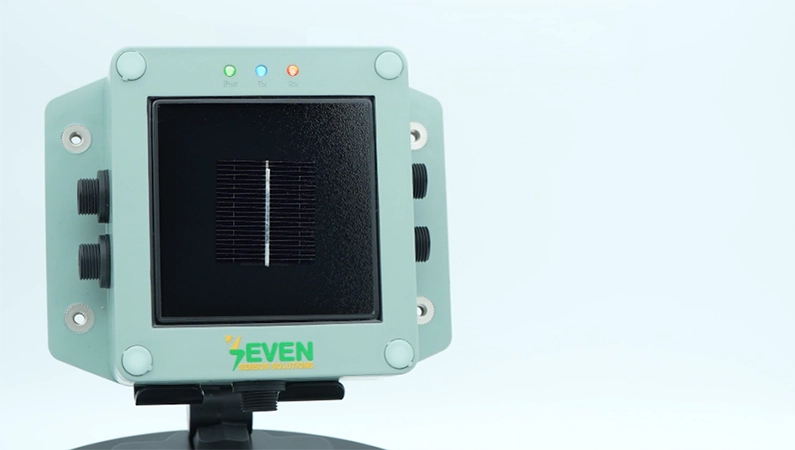
- Class A accuracy. Compliant with IEC 61724-1, with an uncertainty of less than 1%. Each sensor is calibrated with a reference cell calibrated by the ISFH Institute in Germany and under a Class AAA solar simulator.
- Modular design. By adding module temperature, ambient temperature, wind, humidity, and pressure sensors to a single main unit, you can build a complete weather station in the field.
- Speaks the same language as the panel. The reference cell has a similar structure to a PV panel and responds to light in the same way as the panels.
- Fast data. Response time is one second and can be reduced to 500 ms on demand.
- Easy multi-connection. Thanks to the termination resistor that you can turn on and off via the GUI, you can quickly establish daisy chain connections without additional hardware.
- Designed for field use. The glass fiber reinforced, UV-resistant ASA housing and UV-resistant PUR cable withstand harsh outdoor conditions.
- Long-lasting reliability. Comes with SunSpec compliance, galvanic isolation, free software updates, and a 5-year warranty.
Available Models of the 3S-IS+ Advanced Irradiance Sensor
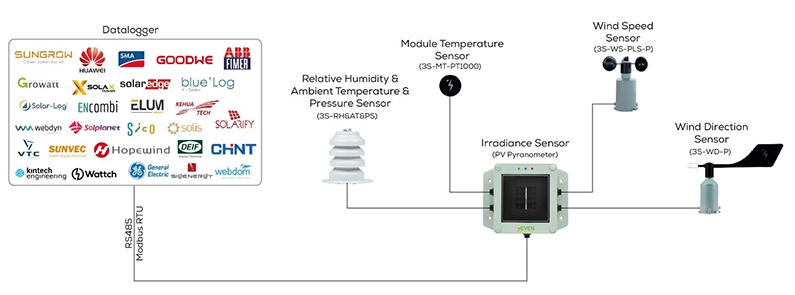
All models below are IEC 61724-1:2021 Class A compliant, factory-calibrated, and built with the same durable construction. The only difference is the number and type of external sensors that can be connected via RS485 Modbus RTU.
Note: IP54 protection class may pose a risk in terms of sealing in tracker systems and rear-side irradiance measurement. IP68 is recommended for systems moving at high angles. Evaluate the protection class selection according to your field conditions.
| Model | Communication | Uncertainty | External Sensor Options |
| 3S-IS+ | RS485 Modbus RTU | ≤1%, as per IEC61724-1 standard Class A | No external sensor can be connected |
| 3S-IS-1+ | RS485 Modbus RTU | ≤1%, as per IEC61724-1 standard Class A | Ambient Temperature Sensor OR Module Temperature Sensor |
| 3S-IS-2+ | RS485 Modbus RTU | ≤1%, as per IEC61724-1 standard Class A | Ambient Temperature Sensor OR Module Temperature SensorWind Speed Sensor |
| 3S-IS-2T+ | RS485 Modbus RTU | ≤1%, as per IEC61724-1 standard Class A | Ambient Temperature SensorModule Temperature Sensor |
| 3S-IS-3+ | RS485 Modbus RTU | ≤1%, as per IEC61724-1 standard Class A | Ambient Temperature SensorModule Temperature SensorWind Speed Sensor |
| 3S-IS-4+ | RS485 Modbus RTU | ≤1%, as per IEC61724-1 standard Class A | Ambient Temperature SensorModule Temperature SensorWind Speed SensorWind Direction Sensor OR Relative Humidity Sensor |
| 3S-IS-5+ | RS485 Modbus RTU | ≤1%, as per IEC61724-1 standard Class A | Module Temperature SensorWind Speed SensorWind Direction SensorRelative Humidity and Ambient Temperature Sensor |
| 3S-IS-6+ | RS485 Modbus RTU | ≤1%, as per IEC61724-1 standard Class A | Module Temperature SensorWind Speed SensorWind Direction SensorRelative Humidity, Ambient Temperature, and Pressure Sensor |
What is the difference between 3S-IS+ and 3S-IS?
Both models share the same measurement motor. Both are IEC 61724-1 Class A, have uncertainties below 1%, and use the same Modbus RTU communication. Therefore, you can choose between the two without compromising accuracy. The difference lies in the few details.
| Features | 3S-IS+ | 3S-IS |
| Diagnostic LEDs | Yes (Power, Tx, Tr) | No |
| Enclosure dimensions | 135 x 105 x 50 mm | 140 x 110 x 42 mm |
| Power Consumption | Typical 21 mA, maximum 30 mA @ 24 V DC @ 25°C | 30 mA – 60 mA max. @24 V DC |
| Housing material | ASA | Aluminum |
Frequently Asked Questions (FAQ)
Which datalogger brands are SEVEN advanced irradiance sensors compatible with?
SEVEN irradiance sensors are compatible with a wide range of well-known datalogger brands, including:
- ABB
- Blue’Log
- Chint
- DEIF
- Elum
- ENcombi
- Fimer
- General Electric
- GoodWe
- Growatt
- Hopewind
- Huawei
- Kehua Tech
- Sico
- Sigenergy
- SMA
- Solplanet
- SolarEdge
- Solar-Log
- SolaX Power
- Solis
- Sungrow
- SUNVEC
- Wattch MET
- Webdom
- Webdyn
What exactly does the 3S-IS+ measure?
It measures irradiance (W/m²) and internal cell temperature. External sensors can be used to add module temperature, ambient temperature, wind speed and direction, and relative humidity and pressure.
What is the uncertainty of the 3S-IS+ advanced irradiance sensor?
The uncertainty is ≤ 1% and fully meets the requirements of IEC 61724-1 Class A.
Is Advanced Irradiance Sensor Class A compliant?
Yes. Except for the low-cost irradiance sensor, all SEVEN irradiance sensor models are Class A according to IEC standards.
How are the Advanced Irradiance Sensors calibrated?
Each irradiance sensor is calibrated under a Class AAA Sun Simulator as per IEC 60904-2 and IEC 60904-4, using a reference cell calibrated by ISFH-Germany.
How often should I recalibrate the Advanced Irradiance Sensor?
Recalibration every 2 years is recommended by IEC standards for maximum accuracy.
Where can I recalibrate the advanced irradiance sensor?
SEVEN Sensor provides calibration services at its facilities. Calibration is performed using a Class AAA Sun Simulator, in accordance with IEC 60904-2 and IEC 60904-4 standards, and referenced against a calibration cell certified by the ISFH Institute in Germany.
Additionally, we offer user-friendly interface where users can recalibrate the sensors in their home country and enter the new calibration values into the system.
We also provide turnkey calibration laboratory solutions, designing and establishing indoor or outdoor calibration laboratories tailored to customer requirements. Our turnkey service covers system design, equipment selection, installation, software integration, commissioning, and practical training, enabling customers to perform their own calibrations in accordance with international standards.
Are the advanced irradiance sensors Class A?
Yes. All SEVEN advanced irradiance sensor models — 3S-IS+, 3S-IS-1+, 3S-IS-2+, 3S-IS-2T+, 3S-IS-3+, 3S-IS-4+, 3S-IS-5+, and 3S-IS-6+ — are Class A as per IEC standards.
Can Advanced Irradiance Sensor connect directly to my SCADA system?
Yes. If your system supports RS485 / Modbus RTU, the sensor is fully compatible.
Does Advanced Irradiance Sensor come with a cable?
Yes. Each product comes with a 3m PUR cable that is UV and weather resistant. The cable has a 6-wire twisted structure including grounding for data and power. Different lengths are available upon request.
What power supply does Advanced Irradiance Sensor need?
It operates with 12-30 V DC; we recommend 24 V.
What is the price of the Advanced Irradiance Sensor?
Depending on the model and added accessories, the 3S-IS+ series ranges from 200 EUR to 600 EUR. Contact us for a precise price.
What are the delivery times for Advanced Irradiance Sensor?
Delivery time varies depending on the order quantity. Small orders are shipped in approximately 3-5 days, while bulk orders (100 units) are shipped in approximately 4-6 weeks.
What is the warranty period for SEVEN Advanced Irradiance Sensor?
The period time is 5 years.