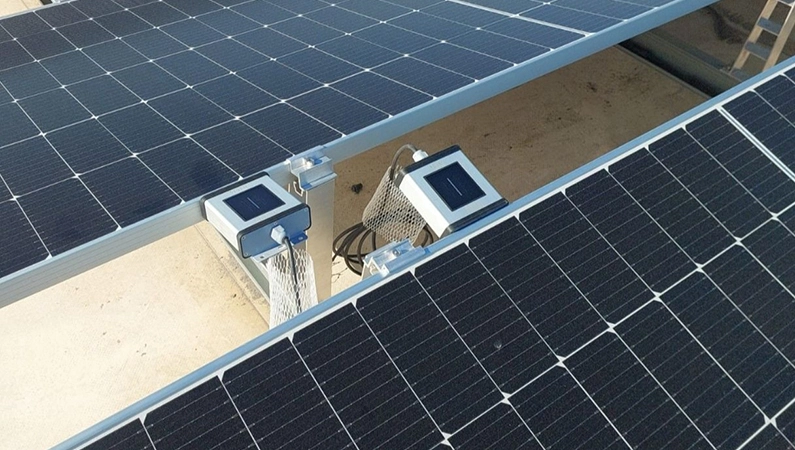
Solar PV plants do not convert “sunshine” into electricity in a general way.
They convert the sunlight that actually reaches the surface of the PV modules.
This is the reason Plane Of Array irradiance or POA irradiance is one of the crucial factors when it comes to measuring PV system performance.
If you want to understand whether a PV plant is performing correctly, you need to know how much irradiance is reaching the same plane as the solar modules. Without POA irradiance, performance ratio calculations can become incomplete or misleading.
SEVEN Sensor Solutions provides irradiance sensors, pyranometers, and complete PV weather station solutions for solar PV plants.
What Is Plane of Array Irradiance?
The term “plane of array irradiance” refers to the irradiance of the sun falling onto the inclined or tilted plane of the photovoltaic modules.
In simple terms, it can also be called the amount of sunlight that falls on the solar panels’ surface.
For example, when the photovoltaic modules have been mounted with a tilt of 25°, the POA irradiance will also be taken at the same angle of tilt. In case of mounting the modules facing South, East, West, or any other direction, the POA meter needs to be mounted in the same direction.
POA irradiance must not be confused with horizontal irradiance, which measures sunlight on a flat horizontal surface.
Difference Between POA and GHI
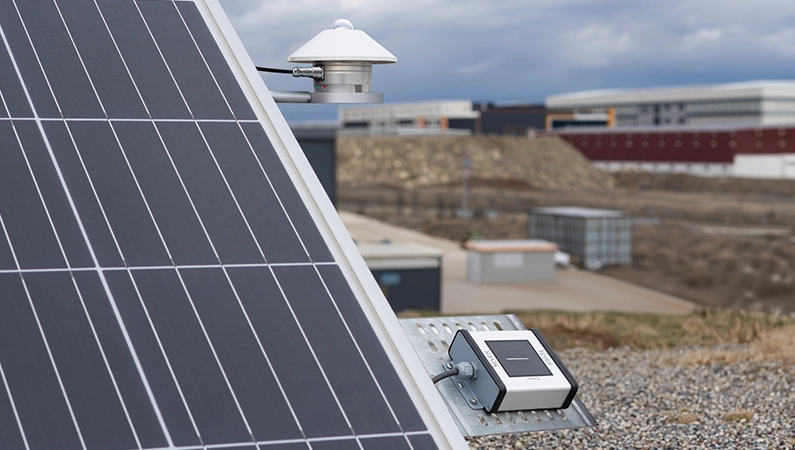
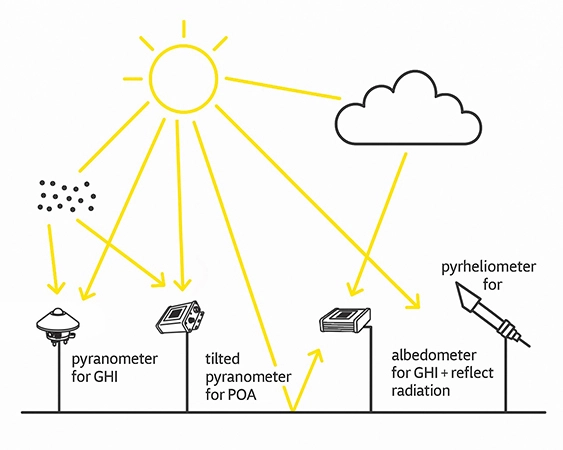
In order to understand POA, it is essential to compare it with GHI.
GHI: Global Horizontal Irradiance
The term “GHI” stands for Global Horizontal Irradiance. This represents the total amount of solar irradiance that falls on a horizontal plane.
The measurement of GHI takes place using a horizontally positioned thermopile pyranometer.
POA: Plane of Array Irradiance
POA refers to the irradiance falling on the tilted surface of the PV panels.
The measurement of POA takes place by using either a reference cell irradiance sensor or a thermopile pyranometer placed at the same tilt-azimuth angles as the panels.
The difference is quite straightforward:
GHI indicates the total amount of solar irradiance received by a horizontal surface, while POA indicates the solar irradiance received by the surface of the PV panels.
For PV performance ratio, POA is often more directly relevant.
Why POA Irradiance Matters in PV Performance Ratio
Performance ratio gives us information about how efficiently a PV installation transforms available solar energy into electrical energy.
For a PV plant, the main source of available sunlight would be sunlight falling on the plane of the PV module.
This explains why POA irradiance is significant.
If we use performance ratio calculations based on irradiance data unrelated to the actual module plane, we cannot talk about real plant performance.
POA irradiance helps answer questions such as:
- Is a PV plant generating the required amount of energy given the incoming sunlight?
- Is there any underperformance related to degradation, shading, or technical failures?
- Are modules, strings, and inverters working properly?
- Is the performance ratio correct?
- Is there anything wrong with the monitoring system?
Without accurate POA data, these answers become less certain.
How POA Irradiance Is Measured
The measurement of POA irradiance involves installing an irradiance sensor or pyranometer in the same orientation as the PV panels.
Thus, the sensor must be compatible with the module in the following aspects:
- Tilt angle
- Orientation
- Mounting plane
- Exposure condition
- Shading condition as far as possible
SEVEN pyranometers are capable of measuring GHI, POA, GTI, diffuse, and reflected irradiance.
Irradiance sensors or reference cells can also be used in the measurement of POA irradiance, particularly for monitoring purposes related to PV performance.
SEVEN Irradiance Sensor for POA measurement
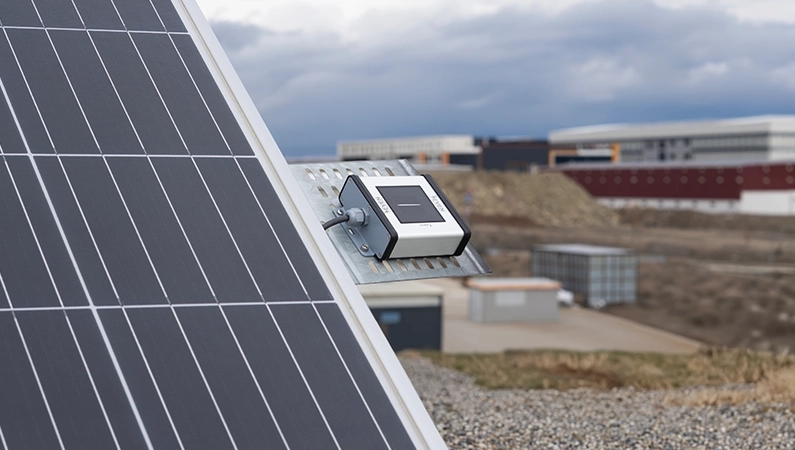
SEVEN’s 3S-IS irradiance sensor uses a monocrystalline silicon solar cell and includes built-in PT1000 cell temperature measurement for temperature compensation.
Reference cell irradiance sensor can be used if one wants to:
- Calculate the performance ratio of PVs
- Measure POA irradiance
- Monitor PV plant performance
- Support SCADA system
- Detect losses in performance
- Compare PV module behavior
It is a good choice for performance monitoring based on POA irradiance measurement in the majority of PV plants.
SEVEN Thermopile Pyranometer for POA Measurement
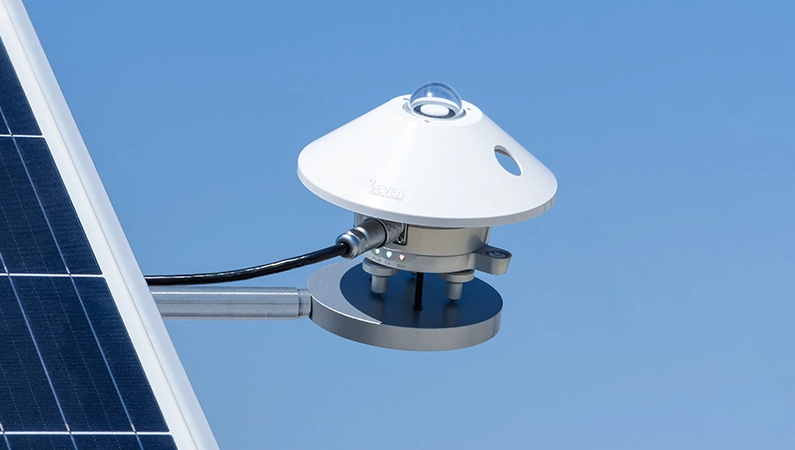
SEVEN thermopile pyranometer can also be used for POA irradiance measurement if installed in the plane of the same modules.
Pyranometers are widely used for more extensive solar irradiance measurements and are helpful in measuring GHI, POA, GTI, diffuse and reflected irradiance.
SEVEN thermopile pyranometer can be preferable if the purpose is:
More extended spectral measurement
- Solar resource monitoring
- Meteorological measurement
- Independent measurement of irradiance
For advanced PV monitoring, some plants may use both a reference cell and a pyranometer.
POA Irradiance in Multi-Orientation PV Plants
All PV plants do not always follow a single direction.
Many rooftop, commercial, industrial, and complex PV plants incorporate various orientations of the solar modules like:
- East-facing modules
- West-facing modules
- South-facing modules
- Differing tilt angles
- Different roof segments
- Bifacial modules
- Tracking mechanisms
Here, one POA sensor will not be able to capture irradiance for the whole plant.
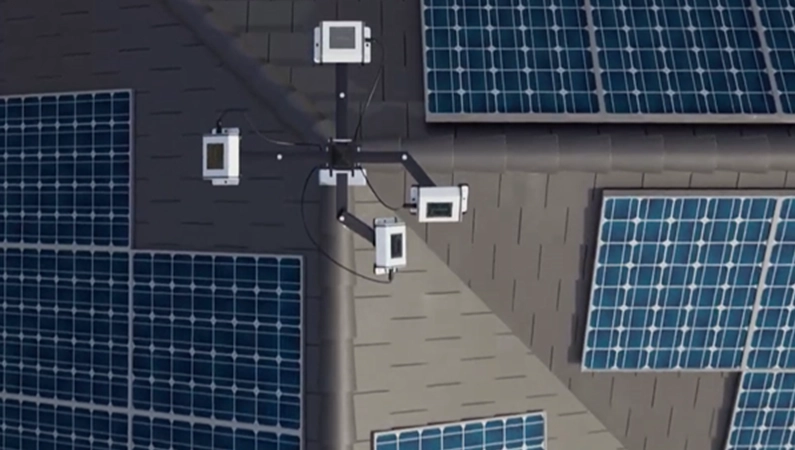
SEVEN offers dual-orientation and multi-orientation irradiance sensor options in its irradiance sensor product range.
These solutions can help plants measure irradiance across different orientations more accurately.
Frequently Asked Questions (FAQ): Plane of Array Irradiance
What is Plane of Array irradiance?
The solar irradiance received in the same tilted plane as the PV modules is termed POA irradiance.
Why is POA irradiance important?
POA irradiance is important since it represents the irradiance that is incident on the surface of the solar panels. This makes it important for the PV performance ratio calculation.
How does POA differ from GHI?
POA irradiance refers to solar irradiance in the tilted plane of the PV panels. The GHI is solar irradiance in a horizontal plane.
Is POA more relevant or GHI for PV performance ratio?
POA is more relevant for PV performance ratio than GHI.
What is the procedure for POA irradiance measurements?
The method of measuring POA irradiance is placing the sensors or pyranometers at the same angle and direction as the PV panels.
Can pyranometer be used to measure POA?
Yes, pyranometer can measure POA irradiance if placed in the same plane as the PV panels.
Can reference cell measure POA?
Yes, the reference cell irradiance sensor can measure POA irradiance.
What would be the best sensor for POA measuring?
For monitoring the performance of PV system, an irradiance sensor or reference cell is a reasonable option. For the measurement of solar resources, a thermopile pyranometer might be preferable.
What consequences will result from POA measuring mistakes?
Mistaken POA measuring can affect the performance ratio, the underperformance analysis results and the PV system report data negatively.
Does SEVEN offer any sensors for POA measuring?
Yes. SEVEN provides irradiance sensors, pyranometers, and complete PV weather station solutions that can support POA and other solar irradiance measurements.